Get Full Government Meeting Transcripts, Videos, & Alerts Forever!
Get email alerts on the Police Oversight topic
No spam. Unsubscribe anytime.
Kissimmee commission holds first reading to create civilian police oversight board; public speakers split
Summary
The Kissimmee City Commission approved first reading of an ordinance to establish a Civilian Police Oversight Board under Florida Statute Chapter 166.0486. Supporters urged the step to rebuild trust; critics said the proposed board lacks power to address documented problems in the police department.
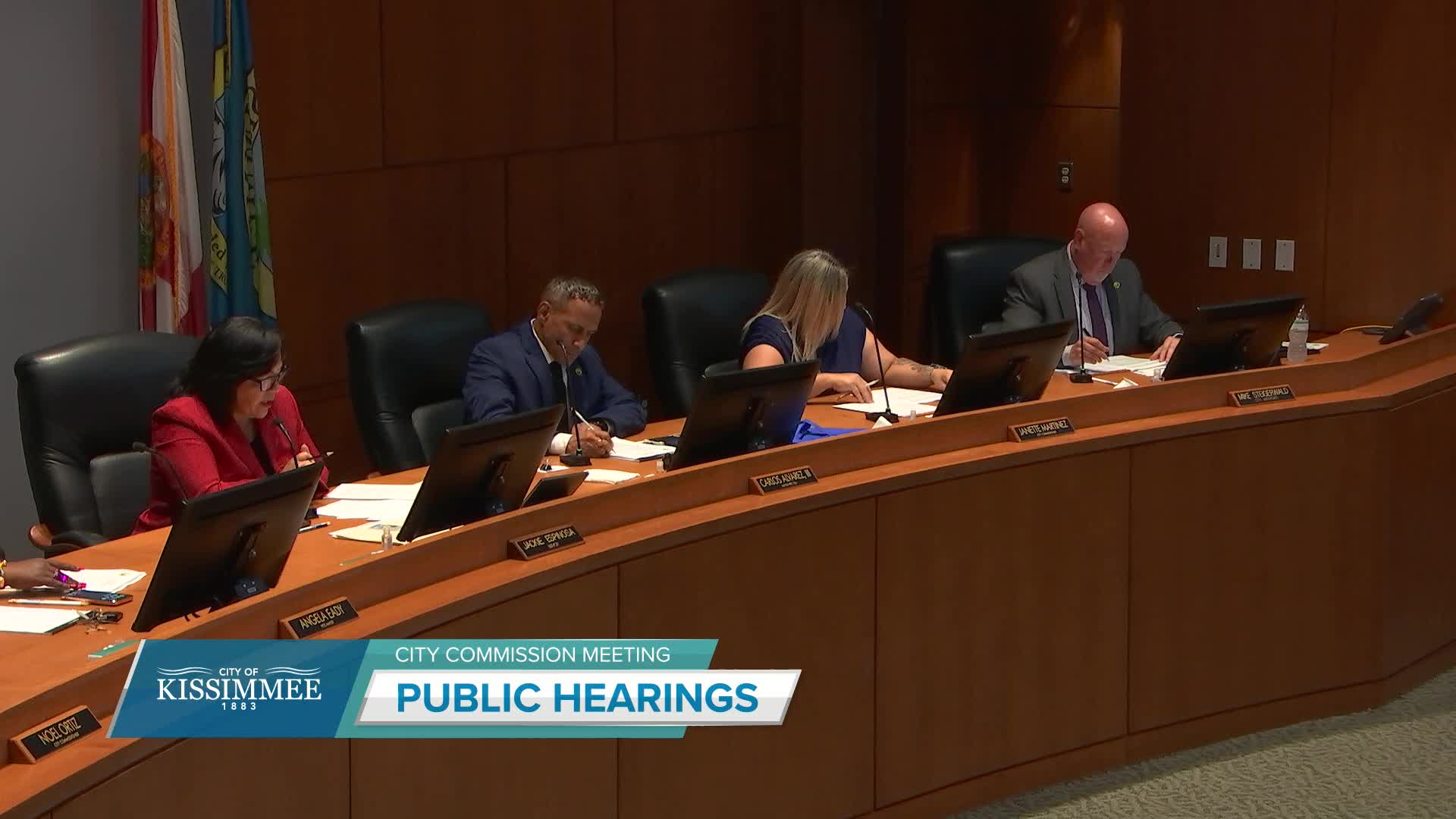
The Kissimmee City Commission on first reading approved an ordinance to establish a Civilian Police Oversight Board in accordance with Chapter 166.0486 of the Florida Statutes.
The ordinance, presented by city staff at the public hearing, would create a five- to seven-member board with two-year terms and a limit of three two-year terms per member. The rules in the draft require that members either live, work or own property within the city; one board seat must be filled by a retired law-enforcement officer; and appointees may not hold elected office or be a qualified candidate for elected office. Staff recommended approval following the hearing.
At the podium, Claudia Zucco of Kissimmee criticized the proposal as insufficient to address what she called longstanding problems in the Kissimmee Police Department, including missing and damaged evidence and failures to report officers. "I would recommend the commission and that the community demand of the commission real transparency," Zucco said during public comment. Jeremy Fetzer, a local business owner who said he owns property in Downtown Kissimmee, told the commission he applauded the board as a step toward rebuilding trust and said state law, not the local ordinance, limits what the board can do. "If you have an issue with this, I would go to Tallahassee and lobby your state legislatures," Fetzer said.
After the public hearing, Vice Mayor Eady moved to approve the ordinance on first reading; Commissioner Alvarez seconded. The commission voted in favor; the motion carried.
The ordinance is a first reading only; additional public input and a second reading will be required before final adoption. Staff noted the ordinance follows the statutory template and recommended the commission approve the first reading as presented.
Votes at the meeting were recorded by motion with no roll-call tally read into the record for the item; the chair declared the motion carried.
The ordinance and the public comments reflect a community divided over whether a local oversight body will materially change police accountability or merely operate within limits set by state law. City staff and commissioners did not propose any immediate changes to the draft ordinance during the hearing.
Looking ahead, the ordinance will return for a second reading and final vote at a later meeting, where the commission may adopt amendments or request clarifying language about responsibilities and powers.