Get Full Government Meeting Transcripts, Videos, & Alerts Forever!
Get email alerts on the Homelessness topic
No spam. Unsubscribe anytime.
Pinellas Hope outlines shelter operations, medical respite and housing outcomes to council
Summary
Pinellas Hope Director Joe Pandolfino updated council on operations, describing a 255-person capacity shelter that combines tents and renovated shipping-container cottages, a medical respite program, and a $3.1 million operating budget largely supported by donations and county funding.
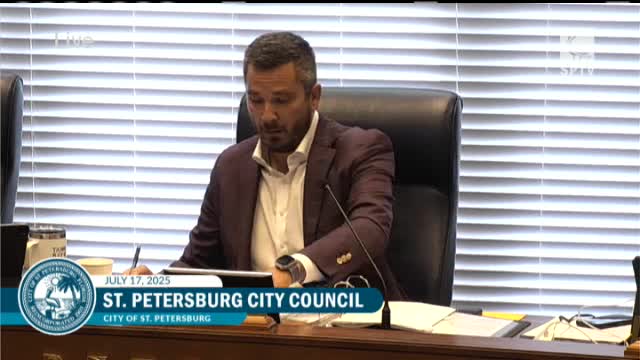
Joe Pandolfino, director of Pinellas Hope, briefed the St. Petersburg City Council on Thursday about the nonprofit—s shelter and supportive-housing operations, describing a program that combines temporary shelter, medical respite and permanent supportive apartments.
"We serve a capacity of 255 homeless individuals in our shelter at a time," Pandolfino told council, saying that figure combines 96 renovated shipping-container cottages and 159 tent platforms. He said the program targets a 90-day engagement window but that the actual average length of stay was about 117 days; some residents remain longer because of complex medical, behavioral-health or housing-barrier issues.
Pandolfino described a medical-respite building that serves people recently discharged from hospital care and a mobile medical unit partnership that brings primary-care services on-site. He said the operation also manages 156 permanent supportive apartments on site, many filled with formerly homeless residents; 48 of those apartments use vouchers, and the St. Petersburg Housing Authority provided about 40 vouchers.
Pandolfino said Pinellas Hope—s operating budget is about $3.1 million annually, of which roughly $1 million is funded directly and the rest is covered through in-kind donations and partnerships. He said Pinellas County is the organization—s largest public funder, contributing just over $500,000, with additional municipal and private support. "Three hundred sixty-five days a year every meal is donated," he said, describing the broad network of congregations and volunteers who supply food and services.
Council members praised the program and asked questions about storm recovery and demand. Vice Chair Hanowitz asked about the shelter—s recovery after the 2024 storms; Pandolfino said the site was displaced for about three weeks after fallen trees and flooding, but that he could restore operations quickly with county support and volunteer help. Pandolfino said the cottages fared far better than tents during the storms.
Council members pressed on access and outcomes. Council Member Deborah Fig Sanders asked about residents who do not seek housing services; Pandolfino said engagement and motivation vary, and that case management, rules, chores and referrals to treatment programs are part of efforts to support people ready to pursue housing. Council Member Corey Givens asked for data on repeat use and chronic homelessness; Pandolfino said he prioritizes first-time entrants when shelter capacity is limited and that the shelter maintains follow-up calls and case management to track housing retention.
Pandolfino invited council members to tour the site and praised the network of partners, including BayCare, USF and several social-service agencies, for medical and housing supports. "We're part of the solution," he told council, citing collaborations with Volunteers of America, BOLI and other agencies that manage permanent supportive housing units.
Why it matters: The update frames Pinellas Hope as a central shelter and transitional-housing hub for the county, with operational needs (funding, storm resilience, staffing and donated meals) that bear on the city—s response to homelessness. Council members discussed ways the city and diocese might support capital needs such as shade, shower facilities and repairs.
What—s next: Council members committed to follow-up visits and further conversation about municipal and diocesan support; the council indicated continued financial support through the budget process and additional coordination with county partners.