
Milton presents FY2026 budget recommendation prioritizing public safety, infrastructure and reserves
Get AI-powered insights, summaries, and transcripts
Subscribe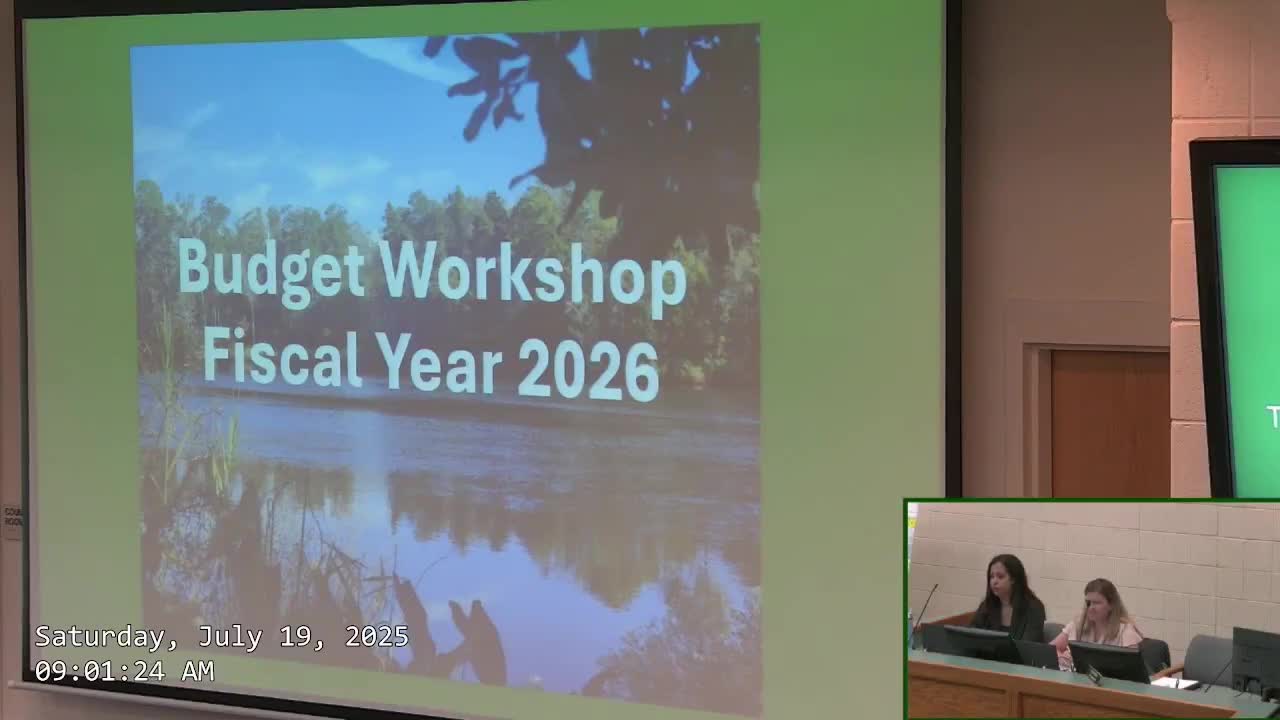
Summary
City Manager Ed Spears and staff outlined the proposed FY2026 budget, highlighting firefighter pay increases, a move toward proactive code enforcement, a new gas service crew and limits on transfers from enterprise funds to the general fund.
City Manager Ed Spears and budget staff presented a proposed fiscal 2026 budget for the City of Milton that emphasizes public safety, infrastructure maintenance and preserving reserves while adjusting how the city recovers administrative costs from its utility funds.
Spears said the recommendation reflects the city’s “values clearly demonstrated, public safety, infrastructure, quality of life,” and aims to “create a reality budget” based on three-year average actual spending rather than last year’s appropriations. Laura MacDill, the city’s budget director, told council the proposed overall increase in the general fund is 4.65% over FY2025 and that the budget currently assumes using $1.4 million in reserves to balance the plan.
The nut of the proposal is a package of pay and staffing changes combined with capital investments and a new indirect cost allocation plan. The plan sets self-imposed limits on how much may be transferred from enterprise operations to the general fund; staff said that would shrink transfers from about $5.8 million in FY2025 to $4.0 million in the proposed FY2026 budget (a 32% reduction). The city’s general fund reserve is described in the presentation as about 9.3 months of operating capital.
Public safety: The proposed budget includes an 8.25% pay increase for firefighters after bargaining with the union, a measure Spears said is intended to keep the department competitive with neighboring jurisdictions. Police Chief Jennifer Frank and the city’s fire chief (transcript reference: “Chief Bridal”) were both introduced in the presentation as part of the public-safety emphasis.
Code enforcement and planning: The budget includes staffing changes for code enforcement. Spears said the request would raise a part-time code enforcement position from 0.25 FTE to a full-time position. At a later point in the presentation, Planning Director Tim Milstead described a plan to move from complaint-driven to proactive code enforcement and said the department’s internal slide shows an increase from 1.25 to 2.0 code enforcement positions; Milstead warned council that a proactive approach will likely generate more enforcement cases and more public complaints from those cited. Staff said they will return with formal policy and ordinance language if council desires the proactive shift.
Gas utility and customer-connection policy: The recommendation adds a three-person gas crew to address a reported backlog for new gas service installations and to support federally funded gas line replacement work. Staff said the recurring personnel cost for the crew is about $170,000 with one-time equipment costs on the capital list. City staff presented a case study: a homeowner (identified in the presentation as Mr. Overby) had a calculated connection cost of $6,122.93 for a generator hookup; the city’s revenue estimate for that connection was about $140.80 annually and five-year revenue of about $704, leaving a net five-year shortfall of roughly $5,419 under the current practice. Spears said, “I will be bringing to you an installation fee schedule that will allow the city to reasonably recuperate the cost to connect to our system.” He added staff will pursue a natural gas rate study through the Florida Gas Utility membership.
Capital and facility needs: Major capital items highlighted include the Laughlin Lake dredge work moving into phase 2 (staff said construction cost savings allowed advancing shoreline stabilization), a proposed $300,000 replacement of the community center HVAC system, and multiple parks projects including a multi-hundred-thousand-dollar replacement for failing light poles at Hindle Park. Parks staff said the Hindle Park poles lean and some poles have fallen in past years; the replacement estimate discussed in the presentation was roughly $602,000 with partial funding and carryovers noted.
Finance, reserves and methodology: Laura MacDill said the budget uses an overhead/indirect cost allocation plan created in response to a state audit finding (identified in the presentation as state audit finding number 8). That plan both documents the administrative fee charged to utility funds and sets self-imposed transfer limits (examples given on the slides: a 30% maximum transfer for natural gas and water/sewer and different caps for other funds). Staff emphasized the plan’s purpose is to use a consistent, documented methodology for transfers in lieu of the prior practice of setting transfers to whatever amount was needed to balance the general fund.
Other details: Staff noted the parks and events programs served thousands of residents (parks and rec said more than 2,400 participants this year) and that the city’s public information officer’s social media reach exceeded two million views year to date. The presentation also included recruitment and HR topics: FY2026 assumes a 2.6% COLA (used for modeling) and a 3.5% increase in health benefits costs; the combined COLA and benefits increase carried through the budget is 6.1%.
What’s next: Staff told council the presentation is a workshop recommendation and that the budget and any administrative methodologies (for example the installation fee schedule or proactive code enforcement policy) will return for formal action in the budget adoption process. They also warned some figures will change between this workshop and the September budget vote as actual year-end carryovers and final insurance or other rates are confirmed.
Ending: The city manager and budget director asked council for feedback and committed to returning with ordinance and policy language for changes such as proactive code enforcement, the gas installation fee schedule, and the indirect cost allocation details.