Get Full Government Meeting Transcripts, Videos, & Alerts Forever!
Get email alerts on the Homeless Services Cooling Station topic
No spam. Unsubscribe anytime.
Gastonia mayor, council clash with staff after cooling-station plan not implemented
Summary
Gastonia leaders said a council consensus to open a cooling station at a city-owned Salvation Army building was not followed by city staff, despite a Friday fire inspection that cleared the site; council members called for accountability and threatened further emergency meetings.
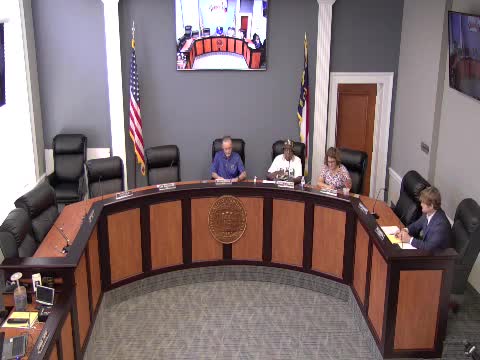
Gastonia Mayor Franks and several City Council members criticized city staff on Monday after a council consensus to open a cooling station at a city‑owned Salvation Army building was not implemented, leaving volunteers and unhoused residents without the planned indoor relief during an extreme heat period.
The meeting, convened as an emergency session, focused on why the building was not used after a Friday fire inspection cleared it. Council members said the council had given direction to staff on Monday, that the direction was relayed to the city manager, and that city leaders nonetheless allowed the site to remain closed on the planned day of service.
The disagreement centered on who had authority and on whether safety and procedural steps were complete. Councilwoman Littlejohn said the fire department had cleared the building on Friday. “The building is safe,” Littlejohn said, referring to a report she said she had reviewed from Fire Chief Welch. Mayor Franks said council direction was ignored. “We were given direction … the direction was not followed,” Franks said, adding that he would press for accountability and could call daily emergency meetings until he secures a quorum to act.
Assistant City Manager Quentin McFadden confirmed in the meeting that a council consensus had been relayed to the city manager but said the city manager later proposed a different approach. “That consensus was relayed to you, and the consensus was relayed to the city manager,” McFadden said in response to the mayor’s question about who made decisions regarding the building.
Council members and volunteer organizers described rapid, last‑minute planning that left procedures and training incomplete. Councilwoman Stepp (invocation speaker earlier in the meeting) and Councilwoman Stipp emphasized that the lack of preexisting operational plans, not a lack of concern, led to an inadequate temporary setup. Stepp said the rapid effort produced “not acceptable” conditions even though many volunteers and churches rallied to help.
Council members outlined several specific operational issues that were raised during inspections and walk‑throughs: two exit‑sign light bulbs needed replacing and a riser for the fire suppression system required service; the portion of the building intended for use is segregated and not covered by the building’s sprinkler system. Volunteers had served homemade food once but were told to stop because that conflicted with occupancy rules for the site.
Council members also raised process concerns: they said the city manager, Michael Peoples, was on planned vacation and that the council was told a leave notice had not been filed with the city clerk. Mayor Franks said that, because the council hires the city manager, the council must hold senior staff accountable when council direction is not followed.
Representatives of the local Continuum of Care and Health Net Gaston — the agency identified in meeting remarks as the lead on homelessness planning — were present and acknowledged gaps in planning and communication. Council members said the lead agency responsibility for coordinating cooling‑station response and outreach will be reviewed; Franks said the council might consider changing the lead agency if failures recur.
Council members who had been active at the site — notably Tasha White and several churches and volunteer groups — were singled out for praise by council members for mobilizing food, tents and volunteers. Councilmembers said some volunteers were told by a continuum agency liaison not to show up, creating confusion after people had already gathered.
The emergency meeting ended without a formal vote. Council members said they would continue to press for answers, possibly convening additional emergency meetings and seeking personnel accountability. The council directed staff to report back with a clear plan for opening and operating cooling stations that addresses safety, staffing, procedures and lead‑agency roles, and to provide the underlying inspection and communication records.
The issue had also been discussed at a January council meeting when the Continuum of Care and its lead agency were questioned about winter shelter planning; council members referenced that earlier discussion during Monday’s session and said the recurrence of inadequate planning was unacceptable.
The council planned follow‑up at a future meeting and said staff would be expected to deliver documentation and a corrective plan in writing.