
Crestview presents balanced preliminary budget and lists capital priorities; utility rate changes proposed
Get AI-powered insights, summaries, and transcripts
Subscribe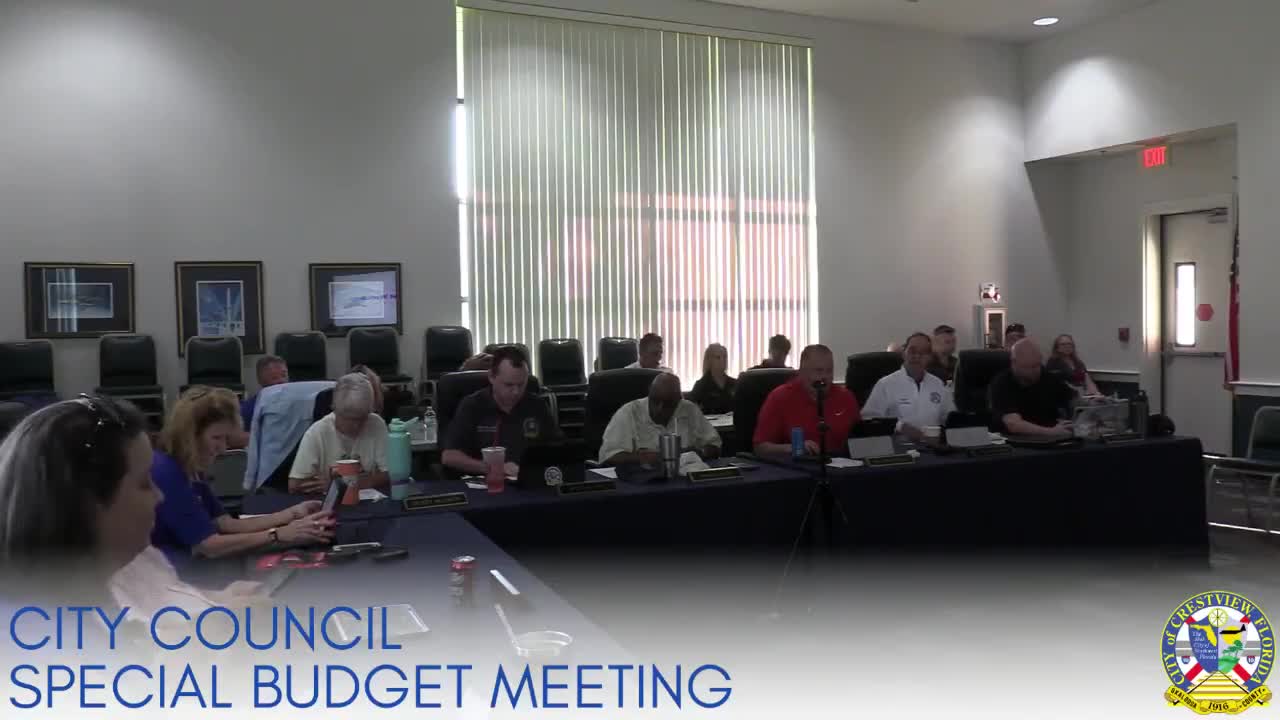
Summary
City staff presented a draft balanced budget at a July workshop, outlined carry‑forward capital projects and proposed an 11% average increase to water and sewer rates; no final budget votes were taken at the workshop.
City of Crestview staff presented a draft, balanced preliminary budget and a multi‑year capital plan at a workshop, identifying carry‑forward projects, utility infrastructure needs and a proposed increase to water and sewer rates.
The nut graf: The presentation covered carry‑forward capital projects (roads, parks, lift‑station upgrades, wastewater treatment plant work), several state appropriations that will speed some projects, and a utility rate study recommendation that would raise water and sewer rates roughly 11% on average; council discussion at the workshop did not produce final votes to adopt rates or a final budget.
City Manager (interim) Jessica Levens opened the budget workshop and said staff were presenting a draft budget with room for tweaks; staff described revenues as “trending at or above expectations” while flagging some line items below projection such as permitting/inspections as development slows. Finance staff noted the package presented is a draft intended to gather council direction ahead of statutorily required public hearings.
On capital projects staff listed multiple carry‑forward items across funds: road resurfacing and sidewalks (Redstone, Garden Street signal), Brookmeade Park and RC Track amenities (TDC partial funding), Fire Station 3 construction, wastewater treatment plant capacity upgrades, several lift station replacements, and many water and sewer projects including the Benjamin Street septic‑to‑sewer project and a bypass reuse line for irrigation. Staff said some bids are open and some projects remain in design; several items were supported by recent state appropriations, which staff said could accelerate schedules.
Staff also displayed a citywide projects map to show distribution of investments and identified recreation projects (skate park, irrigation repairs, backstops), camera upgrades at Twin Hills and the planned RC track roof, and improvements at the Civic Complex and community center. Staff said the community center remains heavily used and is subsidized by the general fund.
On utilities, Jacobs Engineering’s rate study was presented in summary form. Staff said the study’s recommendation would raise combined water and sewer bills at the minimum consumption level by about $5.27 per month (roughly an 11% average increase) to fund capital work and operations; staff said the formal fee schedule and a resolution adopting rates will return to council after the required notices and the statutory TRIM (property‑tax) cycle. Staff warned the stormwater fund does not yet cover its full costs and discussed staged approaches to commercial stormwater charges to limit sudden impacts on businesses.
Council discussion ranged from project timelines (Redstone resurfacing and sidewalks), use of state appropriations and matching requirements, the timing for bid openings and contractor selections, and options to make stormwater and other special funds more self‑sustaining. Council members and staff also discussed ongoing capital lease/fleet replacement needs managed through Enterprise Fleet Management.
Ending: Staff emphasized that the document shown is a draft. Formal budget adoption and any rate changes will require public hearings and the statutory notice process; staff will return with fee‑schedule resolutions, further cost breakdowns, and refined project timing at upcoming meetings.