Get Full Government Meeting Transcripts, Videos, & Alerts Forever!
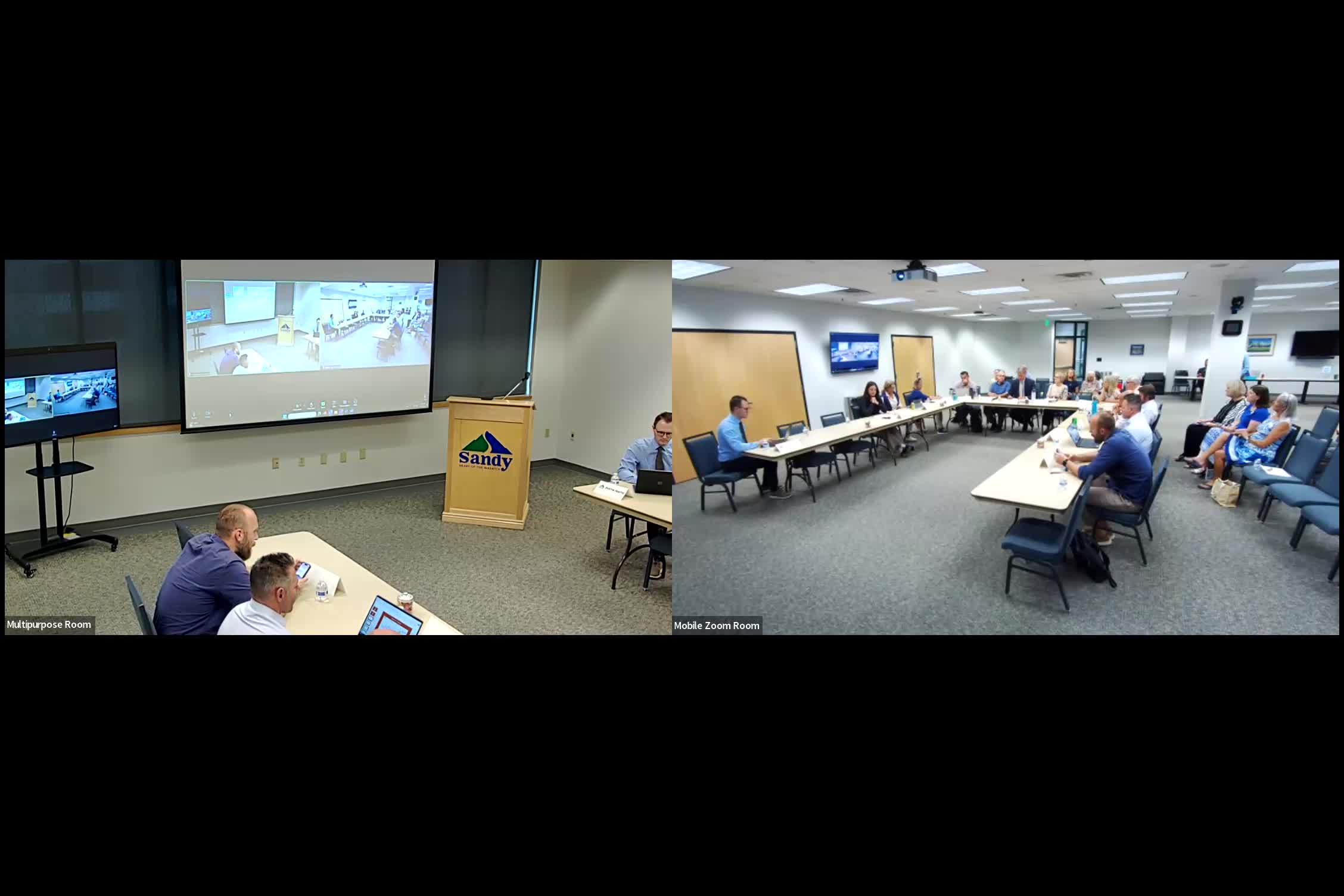
Sandy housing workshop reviews barriers, tax-credit tools and condo obstacles; staff to circulate priorities for Sept. 2 meeting
Summary
City officials and outside experts told Sandy council members on July 22 that rising interest rates, higher construction and land costs, and smaller tax‑credit equity pools are constraining affordable housing development — and that city incentives should be paired with enforceable affordability covenants.
SANDY, Utah — City officials and outside experts spent the bulk of a July 22 housing workshop outlining why producing affordable homes is difficult now and what local governments can do to improve the odds.
"My name's Lynn Pace. I'm the city attorney, and I know next to nothing about housing," Pace said as he opened the meeting and turned the floor over to three presenters: a multifamily developer, a regional planning official and a researcher from the Kem C. Gardner Policy Institute.
The presentations, and questions from council members, focused on four drivers that developers say make affordable housing projects hard to finance and build: higher interest rates, elevated construction costs, expensive land and persistent financing gaps for restricted‑rent projects.
Developer perspective: subsidies tied to enforceable restrictions
Lee, a multifamily developer with Calaway Partners, told the council high borrowing costs and rising construction prices have layered on top of land expenses to push projects beyond many household budgets. "Interest rates are high — it makes borrowing the money to do developments very costly," Lee said, and added that the cost of capital also raises investor return expectations.
Lee described how affordable rental deals commonly rely on Low‑Income Housing Tax Credits (LIHTC). In those projects the developer sells tax credits to banks as equity and records a deed restriction limiting rents and income eligibility, often for decades. "In that one, we've put a deed restriction on that property for 50 years," Lee said, describing a family project that will reserve units for households at a specified percent of area median income in exchange for tax credit equity and city subsidized loans.
He also noted the price banks pay for tax…
Already have an account? Log in
Subscribe to keep reading
Unlock the rest of this article — and every article on Citizen Portal.
- Unlimited articles
- AI-powered breakdowns of topics, speakers, decisions, and budgets
- Instant alerts when your location has a new meeting
- Follow topics and more locations
- 1,000 AI Insights / month, plus AI Chat