Get Full Government Meeting Transcripts, Videos, & Alerts Forever!
Get email alerts on the Homelessness Housing Policy topic
No spam. Unsubscribe anytime.
City staff recommend using regional Continuum of Care plan as Spokane Valley updates five-year homeless strategy
Summary
Staff briefed council on the Department of Commerce and HUD-aligned five-year homeless and housing plan; recording-fee revenue is about $350,000 annually and the city must adopt a plan by year-end. Staff recommended leveraging the regional Continuum of Care plan and asked council for input on priorities.
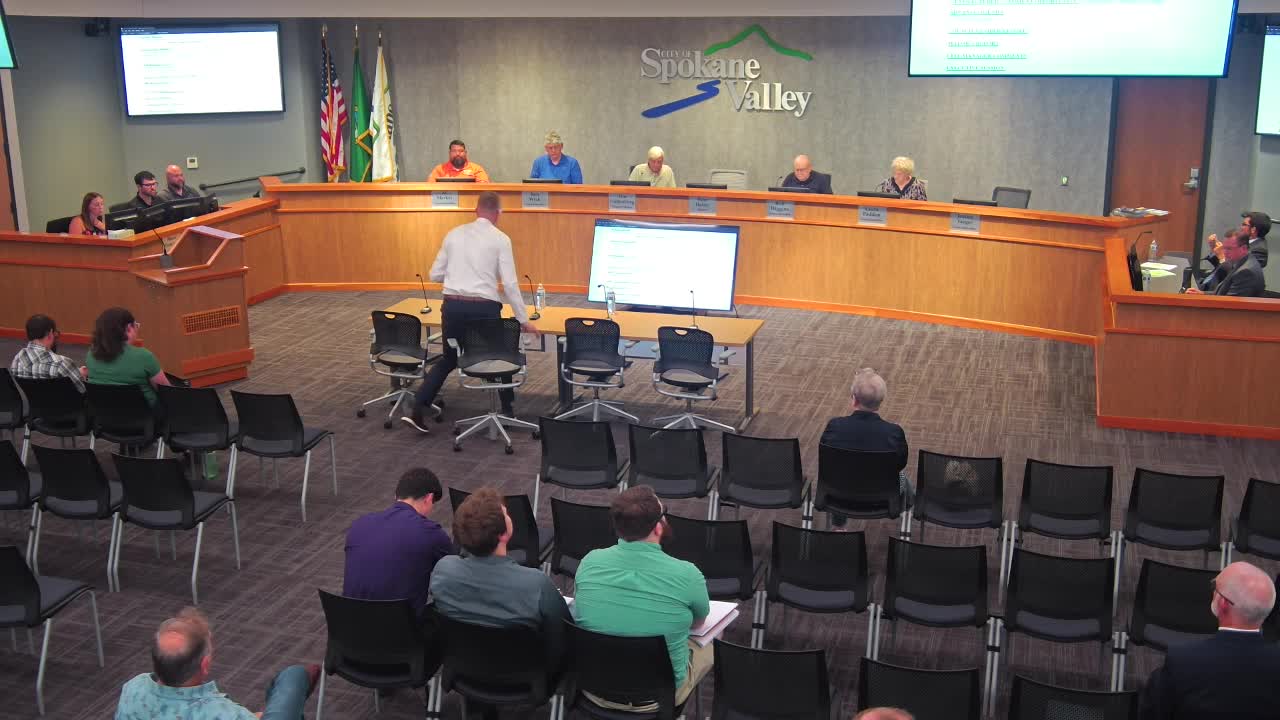
City staff presented an update on Spokane Valleys five-year homeless and housing plan during the July 22 meeting, telling council the city must adopt a plan in the current planning cycle and that staff recommend leveraging the regional Continuum of Care (CoC) plan rather than writing an independent local plan.
Lori Manns, city service administrator, and Eric Robinson, homeless and housing coordinator, summarized the planning requirements from the Washington State Department of Commerce and HUD, reviewed outreach conducted by the regional CoC and described the performance metrics that accompany the CoC plan. The presentation noted some new or emphasized objectives in the 2025–2030 guidance, including prevention strategies, strengthening the homeless service workforce and allowing for housing that addresses needs such as sober-based transitional housing.
Why it matters: the city administers local recording-fee revenue that funds homeless services. Staff reported roughly $350,000 collected in 2024 and an expected similar level in 2025; the city may use up to 10% of recording-fee revenue for administration. The plan the council adopts will frame how those and other local funds are prioritized for shelter, outreach, prevention and permanent housing.
Discussion and next steps Staff said the regional CoC conducted months of outreach (population-specific subcommittees, a community survey and board review) and is continuing to refine metrics. The council and staff discussed whether Spokane Valley should adopt the CoC plan or create a standalone city plan; staff noted advantages to leveraging regional planning (shared data, consistency with HUD reporting) but said the citys previously adopted homeless action plan could still guide local priorities.
Councilmembers requested time to review plan language and metrics. Staff recommended that the city use the regional CoC plan as the basis for Spokane Valleys plan and return with council comments incorporated; the homeless and housing task force will later make a recommendation to council.
Ending: Staff will incorporate council feedback and public comments into the regional plan materials and bring a recommendation from the homeless and housing task force to the council before the end-of-year deadline for adoption.