Get Full Government Meeting Transcripts, Videos, & Alerts Forever!
Get email alerts on the Solid Waste Contract topic
No spam. Unsubscribe anytime.
Kennewick council reviews Waste Management contract proposal, hears potential rate increases and carted recycling plan
Summary
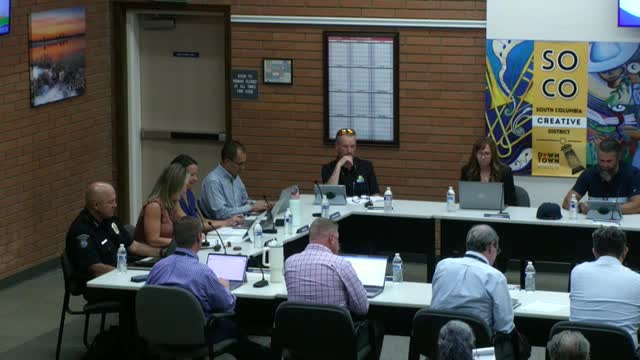
Kennewick City Council members discussed proposed changes to the city’s residential solid‑waste contract and possible rate corrections during a July 22 workshop presentation from city staff and representatives of Waste Management.
Kennewick City Council members discussed proposed changes to the city’s residential solid‑waste contract and possible rate corrections during a July 22 workshop presentation from city staff and representatives of Waste Management.
The most immediate issue is that the city’s current contract with Waste Management expires Dec. 31, 2025; staff and the company presented options for a contract amendment and an implementation timeline that would start in 2026. John Cowling, Kennewick’s public works director, introduced Waste Management staff Martin Nelson (stormwater/solid‑waste program engineer), Tyler McKay (Waste Management senior public‑sector manager) and Zach Stavros (senior account executive) to outline service changes, cost drivers and proposed pricing.
Why it matters: the presentation described a sizable “rate correction” driven by years of inflation and high local demand for extra carts; Waste Management estimates it is losing about $1,700,000 per year on the current service mix. Proposed changes would move the city from open 18‑gallon recycling tubs to lidded 96‑gallon carted single‑stream recycling (collected every other week), change the per‑cart pricing for additional garbage carts, and offer optional new garbage cart sizes. Council members focused on household impacts (space, ability to store large carts, fixed‑income households), effects on litter and curbside appearance, and how state legislation may force some changes.
Key proposal details and figures presented
- Recycling carts: Waste Management proposed replacing the 18‑gallon open tubs with lidded 96‑gallon blue carts for single‑stream recycling, collected every other week. McKay and Stavros said larger, lidded carts increase participation and protect cardboard and paper from weather-related contamination. McKay said current participation is about 30% and that similar conversions typically raise participation to about 70%.
- Cart pricing: The packet presented example 2026 rates for bundled garbage+recycling. The 96‑gallon base service shown in the presentation was about $32.10 per month. Waste Management proposed a new per‑cart schedule intended to “right‑size” subscriptions: a second 96‑gallon garbage cart at $9.99 per month and higher stepped charges (about $18 for a further additional cart) intended to discourage excess, very high cart counts.
- Scope of distributed carts and cost to buy them: implementing a 96‑gallon cart for every residential account would require a large up‑front purchase and distribution exercise; McKay said buying and distributing roughly 25,000 carts would total on the order of $1.8 million (presentation figure). Staff noted implementation would take roughly a year.
- “Free dump” coupons and related programs: the contract currently includes allotments of free transfer‑station dump coupons. Waste Management reviewed prior reductions (from 12 to 6 coupons in 2021) and presented options to reduce the annual allocation further (for example, from 6 to 2). The company estimated reducing coupons from 6 to 2 would lower average monthly bills by about $0.41 per account; eliminating the city’s fall leaf pickup program was shown as a potential additional monthly saving of about $0.14 per account. Council members repeatedly flagged the public‑cleanliness tradeoffs of reducing free dumps and many advocated retaining the current level of coupons.
- City in‑kind service to event centers: the presentation noted the Toyota Center and Convention Center have historically received in‑kind collection service that is not technically a city facility benefit; Waste Management estimated that continuing in‑kind service to those event centers is roughly $40,000 per year and would increase residential rates by about $0.16 per month if the city continues to subsidize that service.
- Transfer‑station pricing and bulky waste: Waste Management staff reported a typical self‑haul minimum charge of about $50–$58 (taxes included) for a single, truck‑size load at the transfer station; a two‑to‑three‑yard pickup is the typical small self‑haul volume. The company also noted bulky pickup options exist but are typically chargeable.
- Contamination and markets: Waste Management said recyclables collected locally are processed at its Spokane material‑recovery facility (a ‘‘smart center’’) and that the company has invested heavily in domestic MRF capacity. McKay cited an estimated contamination rate of about 15% in the local recycling stream and said recovered commodities are sold to domestic markets. The presentation also referenced recent and pending state actions: (1) a bill described in the presentation as HB 1497 that standardizes cart color/labeling (implementation phases through 2028 and a purchase restriction effective Aug. 1 of the presentation year), and (2) an extended producer responsibility (EPR) law that will create a producer responsibility organization to help pay recycling costs; both measures could change costs and equipment choices.
- Organics/composting (BOMA/ORCA): presenters discussed two state laws described in the meeting as affecting organics collections for businesses and residences. Kennewick currently lacks a local composting facility; staff said an exemption to certain residential organics mandates is possible while regional capacity is limited. The City of Richland was noted as the primary local composting provider and staff cited two cost‑estimate expansion options given by Richland (roughly $4 million or $13 million) to accept more regional organics.
Council reaction and staff direction
Council members raised multiple concerns: the visual impact and storage challenge of adding a 96‑gallon cart for every household (especially in neighborhoods with HOA or visibility rules), the effect on seniors and residents with small yards/garages, and whether some residents would instead stop using recycling if carts blow away or are inconvenient. Several council members asked for smaller recycling cart options (for example, 35 or 64 gallons) for people who cannot store a 96‑gallon cart; Waste Management said smaller recycling carts could be considered but increase program and inventory costs.
On program changes, several council members argued against further reducing no‑cost dump coupons from six because the transfer‑station minimum charge (~$50–$58) makes self‑haul burdensome for some households; others said the small per‑customer monthly savings are outweighed by the community cleanliness benefits of more available free dumps. On the fall leaf collection, staff said the program is sparsely used and that residents could use dump coupons instead.
Staff noted implementation constraints: the city must provide about 45 days’ notice for rate changes, and Waste Management said an agreement would need to be finalized in October for a Jan. 1, 2026 start; full cart distribution and education would likely take about a year.
No formal contract amendment or rate ordinance was adopted at the workshop. Instead, council discussion produced guidance for staff: maintain the city’s six free dump coupons (rather than reducing to two), consider retiring the fall leaf pickup program, and continue in‑kind service to the Toyota Center — while exploring whether smaller recycling cart options are feasible. Staff said they will prepare an amended agreement and return to council with contract language, rates and an implementation schedule for formal action later this year.
Quote highlights (verbatim from presenters and staff)
- “We’re currently losing about $1,700,000 a year in our residential line of business,” Tyler McKay, Waste Management senior public‑sector manager, said during the presentation. - “We estimate about 30% use the recycling program,” McKay said; he added that carted systems typically raise participation to about 70% in other cities. - “Everything that we collect does get recycled and it goes mostly to domestic markets,” McKay said when asked about whether local recyclables are actually reused.
Context and next steps
City staff and Waste Management will draft an amended agreement and a timeline for council review. Because the contract renewal involves rate changes, staff said council would need to act in October to meet a 45‑day notice requirement for a January 2026 billing/implementation timeframe. Staff flagged that final equipment purchases and distribution logistics (roughly 25,000 carts and an estimated $1.8 million cart purchase/distribution cost) and the evolving state rulemaking for cart standards and EPR rules may change implementation details.
Ending note
Council discussion on July 22 focused on balancing cost‑recovery for the hauler and program resilience with neighborhood impacts and equity for fixed‑income households. No final contract vote occurred at the workshop; staff will return with a draft amendment and formal ordinance for council consideration.