Get Full Government Meeting Transcripts, Videos, & Alerts Forever!
Get email alerts on the Dark Sky Ordinance topic
No spam. Unsubscribe anytime.
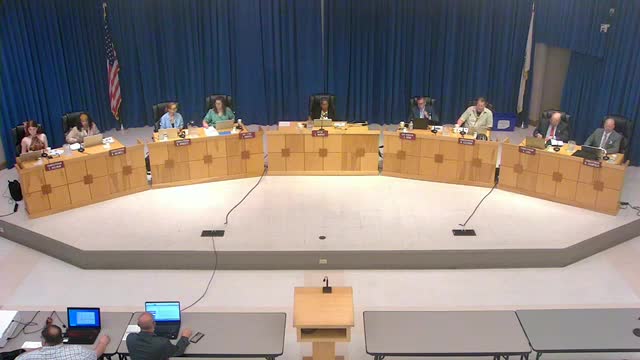
Carbondale council hears dark-sky presentation, asks staff to bring ordinance forward
Summary
A presentation on dark-sky policies by Harry Treece of the Astronomical Association of Southern Illinois prompted council members to request staff draft a dark-sky ordinance and return it for consideration; council members cited environmental, health and tourism benefits.
The Carbondale City Council on July 22 heard a presentation on dark-sky initiatives from Harry Treece, president of the Astronomical Association of Southern Illinois and local coordinator for NASA’s Night Sky Network, and several council members asked staff to place a dark-sky ordinance on a future council agenda.
Treece reviewed the causes and consequences of light pollution, explained engineering and fixture choices that limit glare and sky glow, and recommended full-cutoff and shielded luminaires rather than unshielded fixtures and poorly directed LEDs. “More light is not necessarily good. It’s more light where it needs to be,” Treece said during the presentation.
Councilmember Roberts, who said she had petitioned the city on the issue previously, described dark-sky rules as both “environmentally responsible” and “financially smart.” Councilmember Colombo and two other council members explicitly asked staff to draft a dark-sky ordinance; Councilmember Wolf added his support. Council discussion referenced the city’s Shawnee National Forest and local outdoor-recreation tourism as potential beneficiaries of clearer night skies.
The presentation cited model ordinances and resources from the International Dark-Sky Association and noted Illinois House support for municipal lighting initiatives. Council members emphasized the change could be phased in over time as fixtures reach end of life. Councilmembers also flagged ancillary opportunities such as concrete pads at city property for star-party telescopes and partnerships with local libraries’ telescope lending programs.
Council direction to staff was procedural (request to draft and place an ordinance on an upcoming agenda); no ordinance text or adoption vote took place at the meeting.