Get Full Government Meeting Transcripts, Videos, & Alerts Forever!
Get email alerts on the Automated Enforcement topic
No spam. Unsubscribe anytime.
Syracuse aims to expand school‑zone enforcement: bus‑stop arm, speed and red‑light cameras explained
Summary
City staff told a joint committee the bus‑stop arm camera program is active and that red‑light and school‑speed cameras will be added before the school year; vendors will host data but the city says it owns it and outlined revenue‑share and adjudication plans.
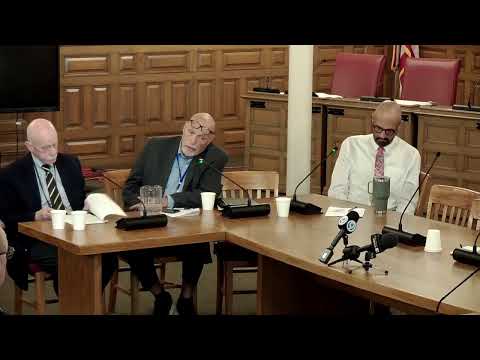
Syracuse — City staff briefed a joint Public Safety–Public Works committee on Oct. 26 on the city’s automated school‑zone enforcement programs, saying the school‑bus stop‑arm camera program is already operating and that red‑light and school‑speed cameras are planned to be online by the start of the school year.
Department of Public Works Councilor Neil Burke and city staff described three automated programs: bus stop‑arm cameras on student buses, red‑light cameras near school campuses, and automated speed cameras active only when school is in session. The city’s vendor model places equipment and initial installation costs with the private vendor while the city retains ownership of collected data, staff said.
Leah Whitmer, director of the Municipal Violation Bureau, said the bus stop‑arm program — the portion already deployed — generated 699 approved and ticketed violations between May 21 and June 25. Of those, Genoptic had recorded 55 contested hearings, 447 with payment due, 107 resolved or paid and 90 still in the printing process at the time the vendor pulled data for the city. Whitmer said evidence for each notice includes multiple camera angles and images accessible online via a citation number and PIN.
City staff said the red‑light cameras will operate 24 hours a day and are being sited in or near school areas; the speed‑camera program will be active only when school is in session, per New York State guidance (typically 6 a.m. to 6 p.m. on days when school is in session). The city said it requested state amendments to allow an initial allocation of cameras and planned a target of roughly one camera per school campus, with flexibility when campuses have multiple school‑zone streets.
Staff described the vendor and adjudication process. A vendor technician (Genoptic) conducts an initial review before the department reviews and signs off on each violation. Violations are civil and are adjudicated through the Municipal Violation Bureau; Whitmer said the bureau is working on staffing and business rules to process hearings and recommended retention periods. For bus‑arm evidence, state law requires that footage for incidents that do not result in tickets be destroyed by the vendor within 90 days; if a ticket is issued, the city set a business-rule retention of 1,095 days (about three years) for bus‑arm evidence while acknowledging that timeline is under review and may be shortened.
Ticket amounts and collections: Whitmer said currently the school‑bus stop‑arm violation starts at $250 for a first offense; second and subsequent penalties within an 18‑month window rise (transcript reflected step increases). Red‑light and speed zone violations are $50 under the rules described to the committee. The city and the vendor have proposed revenue share splits in a memo provided to council: for the bus‑arm program the split is 55% to the city and 45% to the vendor; for red‑light and speed programs the split is 65% to the city and 35% to the vendor.
Staff and councilors discussed collections for unpaid fines. The city has not yet adopted a specific long‑term collections mechanism for these programs; options under consideration include hiring a collection firm, holding registration at the DMV, or using booting/scofflaw procedures tied to multiple unpaid citations. Whitmer said the city is evaluating those options and will present a proposal if one of them is selected.
City staff noted the programs are intended to change driver behavior, reduce repeat violations and improve school‑zone safety rather than to generate revenue. Staff cited national experience that violations drop after enforcement is implemented.
No formal vote was taken at the meeting. Council members asked for further details on camera locations, the state statutes and local ordinances that enable the programs, the contract terms (including indemnification and equipment ownership), staffing levels for adjudication, and refined revenue projections.