Forsyth County staff outline plan to reallocate capital transfers, bond earnings to cover Winston‑Salem/Forsyth Schools request
Loading...
Summary
County finance and school leaders presented two funding plans that together would free roughly $8.6 million for Winston‑Salem Forsyth County Schools to use for operating needs amid a larger district deficit; commissioners asked for more detail and agreed to delay a vote until August 14.
County and school officials on July 21 briefed the Forsyth County Board of Commissioners on a school district request to reclassify or reallocate roughly $8.6 million of previously appropriated capital-related funds so the school system can use the money for current operating expenses.
Deputy Chief Financial Officer Lee Plunkett told commissioners the school request is made up of two parts: about $3.87 million drawn from prior-year general fund transfers that historically supplemented school capital maintenance accounts, and up to $4.7 million of unallocated investment earnings on 2023 general obligation bond proceeds that could be used to pay debt‑service interest this fiscal year, freeing property‑tax dollars for the schools. Plunkett said the mechanics would transfer those amounts back to the general fund, increase fund balance surpluses temporarily and then appropriate the amounts to the schools as current expense transfers — an approach his office projects would have “no impact on fund balance” in the current year if done as described.
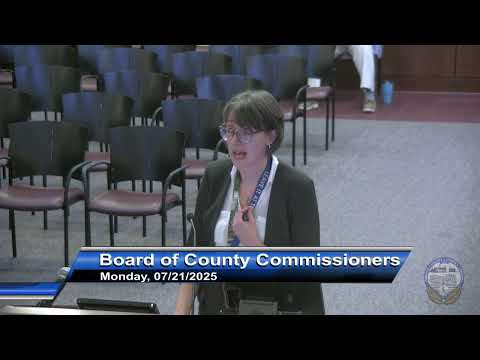
The school district’s interim superintendent, identified in the briefing as Interim Superintendent Moore, told commissioners the money would address a mounting deficit she described as the immediate funding “fire at our feet.” The district’s estimate of its total shortfall has shifted during the review: Moore said an earlier estimate of about $42 million has grown as more invoices and obligations were tallied and presented a working figure that rose toward $46.1 million. Moore and finance staff attributed the district deficit to several items, including: a $13.7 million state allotment shortfall identified in program code PRC003 (related to staffing and state funding reconciliation); a large substitute-teacher contractor obligation (ESS) and an SSC custodial contract and county vendor obligations that together account for roughly $15 million, of which the county portion was described at about $5 million; approximately $11 million of invoices that arrived after June 30 and are now counted as prior‑year payables; and other operating shortfalls.
Moore told the board the district has requested flexibility to use the $3.87 million in reimbursable prior-year transfers and the $4.7 million in bond investment earnings to be appropriated to the schools for current expenses. She said the Board of Education has also begun internal steps to reduce ongoing spending for fiscal 2026, including eliminating positions and cutting supplemental contracts; she said principals had been asked to identify additional local reductions where possible.
The briefing included details about a separate capital project tied to district long‑range plans. Ashley Elementary remains planned as a new 600‑student school. District staff gave an updated project estimate of about $46.1 million and said they expect to have a guaranteed maximum price (GMP) from a construction manager at risk around November 2025. The district said it expects the school to open in August 2027 if full funding is available; district staff estimated a potential funding gap on the project of about $2–4 million depending on final GMP and possible state lottery repair funds.
Officials also outlined several related developments that bear on the funding request and the board’s decision: the district has sent the North Carolina Department of Public Instruction a letter requesting a waiver of a DPI policy that charges 1% monthly interest on certain overpayments; the State Auditor’s Office is conducting an investigative audit into the district’s financial practices and staff said they expect findings; and the district is working to resolve several potentially mixed records with the Internal Revenue Service that relate to payroll withholding reports and several quarters of withholding where the IRS recorded cash receipts but said it did not receive the accompanying reports. Moore said the IRS items date back to 2021 and that the district has submitted the missing reports and is awaiting a reconciliation from the IRS; she said the district did not have evidence that withholdings themselves were unpaid but that penalties/interest might still be assessed.
Commissioners pressed for clarifying details. Commissioner Dan Bessey and others asked Plunkett to explain the legal and tax rules that allow investment earnings on bond proceeds to be applied to debt‑service interest under IRS rules and to confirm that the $1.735 million recurring annual general fund transfer that historically supplemented capital maintenance was general‑fund money (not bond proceeds) and therefore more flexible to reallocate. Plunkett and county staff explained that the $1.735 million was general fund support that rolled into the capital maintenance capital project ordinance alongside proceeds from the two‑thirds general obligation bond program; the two funding streams are distinct on the county’s books.
Moore and her staff also described internal budget actions already completed for fiscal 2026: the district said it has eliminated an estimated $44 million in planned spending through a combination of central‑office reductions, school allotment changes and cuts to supplemental contracts. Moore said the district reduced teacher allotments by about 140 positions for next year after applying the state’s enrollment projections and that the system started school‑based hiring only after that work to place remaining personnel. She said central‑office hiring is frozen and school non‑personnel budgets are being released at partial levels (50–100%) to preserve contingency while enrollment and state/federal allotments finalize.
Commissioners asked about fiscal mechanics and next steps. County Manager Chantel Robinson confirmed the county paid its budgeted allocation to the schools for fiscal 2024–25 in full and that the July 9 request from the school board had been supplemented with additional explanatory material over the subsequent weeks. The board’s consensus was to hold off taking final action at that meeting: one commissioner asked to move any formal vote to August 14 to allow time for additional information, including communication with the state delegation and any response from DPI and the State Auditor. The commissioners directed staff to include the request on the Thursday briefing agenda and then agreed by consensus to defer a formal decision to the August 14 meeting cycle so the board could review additional materials.
Why it matters: the proposals would allow the district to use funding originally planned for capital maintenance or bond‑related interest accounts to pay operating obligations and vendor arrears, reducing immediate vendor and payroll liabilities but potentially changing the county’s capital program timeline. County finance staff said the transfers and debt‑service changes would meet IRS conditions as described and that bond counsel had been consulted; they also cautioned that the accounting and legal steps must be followed precisely to avoid restricting bond‑proceeds compliance or tax consequences.
What’s next: the board requested more written detail and time to review the district’s supporting schedules, vendor repayment plans, and any state responses about the PRC003 interest waiver and audit findings. Commissioners also asked the district to continue outreach to state legislators and to provide regular updates on the IRS reconciliation and State Auditor report. No binding action was taken on July 21; commissioners agreed to revisit the request on August 14.
Key figures and dates
- Amount requested to be reclassified/reallocated: $8.6 million (school board request reported as $8,600,000). - Funding plan 1: Reimburse prior‑year general‑fund transfers to the schools; identified amount in staff briefing: $3,870,000. - Funding plan 2: Appropriate unallocated investment earnings on 2023 GO bond proceeds to pay fiscal‑year 2026 debt‑service interest on the school share: $4,700,000. - School district deficit range discussed in briefing: initially ~ $42 million; district working figure published in presentation ~ $46.1 million. - District state allotment shortfall (PRC003): $13.7 million (staff estimate). - Vendor obligations highlighted: ESS (substitute management), SSC (custodial), and county/vendor obligations totaling roughly $15 million; Forsyth County portion ~ $5 million. - Accounts payable (invoices arriving after June 30): estimated ~$11 million and still being reconciled. - Ashley Elementary: proposed capacity 600 students; estimated project cost ≈ $46.1 million; CMAR approval planned for Aug. 12; GMP targeted Nov. 2025; anticipated opening Aug. 2027 (contingent on funding). - Next formal commission review: staff placed the item on the Thursday briefing; commissioners agreed by consensus to delay a formal vote until Aug. 14.
Speakers (attributed quotes or claims come only from these people)
- Lee Plunkett — Deputy Chief Financial Officer, Forsyth County (government). - Chantel (Chantel Robinson) — County Manager, Forsyth County (government). - Interim Superintendent Moore — Interim Superintendent, Winston‑Salem/Forsyth County Schools (government). - Dan Bessey — Commissioner, Forsyth County Board of Commissioners (government). - Chair Martin — Chairman, Forsyth County Board of Commissioners (government). - Board Chair Kaplan — Chair, Winston‑Salem/Forsyth County Board of Education (referenced).
Authorities referenced (as presented in the briefing)
- IRS arbitrage and tax rules governing the permissible use of investment earnings on bond proceeds (referenced by county finance staff). (type: regulation) - 2023 Forsyth County General Obligation Bond proceeds (referenced as the source of investment earnings). (type: other) - North Carolina Department of Public Instruction policy on recoupment/interest for over‑allocations (referenced; district said it requested waiver of a 1% interest policy). (type: policy) - State Auditor’s investigative audit into school district finances (referenced). (type: other)
Actions (formal items recorded in the transcript)
- County staff briefed commissioners on two funding plans to reallocate/reclassify $8.6 million for school operating uses (no formal vote on July 21). (kind: other; outcome: no_action). - Commissioners reached consensus to delay any formal vote and revisit the request on August 14 (kind: other; outcome: direction). - The school district reported it has sent a letter to DPI requesting waiver of the 1% interest policy on state recoupments (district action; outcome: no_action recorded in the county meeting). (kind: other)
Discussion/Decision separation
- Discussion: Staff presented the two‑part funding plan; commissioners and staff asked detailed technical and legal questions about bond earnings, IRS rules, past transfers, and the district’s deficit drivers. District staff described vendor obligations, payroll/IRS questions, and their internal cost reductions. - Direction/Assignment: Commissioners asked for additional documentation and deferred a final decision to Aug. 14; county staff and the district were asked to provide follow‑up materials and continue outreach to the state delegation and DPI. - Formal action: None taken at this meeting; a consensus scheduling decision was recorded to revisit the matter on Aug. 14.
Clarifying details extracted from the briefing
- annual general‑fund transfer to school capital maintenance CPO: $1,735,000 (general‑fund dollars, not bond proceeds). - bond program referenced: $8,500,000 in two‑thirds general obligation bonds previously used for capital maintenance. - amount district asked to reallocate from prior transfers: $3,870,000. - investment‑earnings amount proposed to pay debt‑service interest: $4,700,000. - district PRC003 liability estimate: $13,700,000 (state allotment/overpayment issue). - vendor obligations to ESS/SSC and county vendors: ~ $15,100,000 total; Forsyth County local share ~ $5,000,000. - invoices arriving after fiscal year end and now treated as prior‑year payables: estimated ~$11,000,000 (still being reconciled). - child nutrition fund balance loan appropriated: $2,000,000 already; up to $4,000,000 additional available (district said it may draw up to $6,000,000 in total in special circumstances). - Ashley Elementary estimated cost: $46.1 million; estimate of known funding less than that figure (gap estimated at $2–$4 million). - timeline: CMAR selection scheduled Aug. 12; GMP expected by Nov. 2025; school opening projected Aug. 2027 (contingent on funding).
Proper names (as used in story)
[{"name":"Forsyth County","type":"agency"},{"name":"Winston‑Salem/Forsyth County Schools","type":"agency"},{"name":"Ashley Elementary","type":"school"},{"name":"North Forsyth High School","type":"school"},{"name":"Lee Plunkett","type":"person"},{"name":"Chantel Robinson","type":"person"},{"name":"Interim Superintendent Moore","type":"person"},{"name":"Dan Bessey","type":"person"},{"name":"Chairman Martin","type":"person"},{"name":"Board Chair Kaplan","type":"person"},{"name":"ESS","type":"organization"},{"name":"SSC","type":"organization"},{"name":"North Carolina Department of Public Instruction","type":"agency"},{"name":"State Auditor's Office (NC)","type":"agency"}]
Community relevance
- Geographies: Forsyth County; Winston‑Salem; Ashley Elementary attendance area; North Forsyth High School area. - Impact groups: public‑school students and families; district employees and teachers; county taxpayers; vendors contracted to the district (ESS, SSC). - Funding sources discussed: local general fund transfers, 2023 general obligation bond investment earnings, child nutrition fund balance, state allotments.
Meeting context
- Engagement level: Extensive; the schools portion dominated the July 21 briefing and drew sustained Q&A and cross‑talk between finance staff, the interim superintendent and multiple commissioners. - Implementation risk: Medium–high — several actions depend on external approvals (IRS rules and proper bond counsel documentation; potential waiver from DPI; resolution of IRS payroll report issues; State Auditor report outcomes). - History: District reported a prior FY2024 deficit and repeated budget practice issues that contributed to the current shortfall; county and district staff said some corrective steps have already been taken for FY2026 budgets.
Searchable tags
["school funding","Forsyth County","Winston‑Salem/Forsyth Schools","bond investment earnings","PRC003","Ashley Elementary","school consolidation","DPI","State Auditor","IRS payroll"]
provenance":{"transcript_segments":[{"block_id":"block_1087.6699","local_start":0,"local_end":600,"evidence_excerpt":"Thank thank you, mister chairman, and good afternoon, commissioners, staff, staff, and guests. So I have had the honor of getting to know and working closely with interim superintendent Moore over her, short time at the schools...the school's request, is broken into 2 different parts...the first is to reallocate some prior year transfers...the second is to utilize unallocated investment earnings that have been earned on bond proceeds to pay for some debt service that was originally funded with property tax revenue.","reason_code":"topicintro"},{"block_id":"block_8291.625","local_start":0,"local_end":300,"evidence_excerpt":"So I know that we are not in a formal meeting today, but I would like to make that motion that we wait until August 14...August 11, we would have another briefing like this. So at that time, we could have just an probably an update of what's happened between that period.","reason_code":"topicfinish"}]},