Get Full Government Meeting Transcripts, Videos, & Alerts Forever!
Get email alerts on the Expert Review Standardization topic
No spam. Unsubscribe anytime.
Real Estate Appraiser Commission forms committee to standardize expert review process
Summary
On July 21, 2025, the Tennessee Real Estate Appraiser Commission voted to form a small committee to develop standardized assignment conditions and review guidelines for contract expert reviewers, aiming to reduce subjectivity in complaint reviews and clarify expectations in RFPs for reviewers.
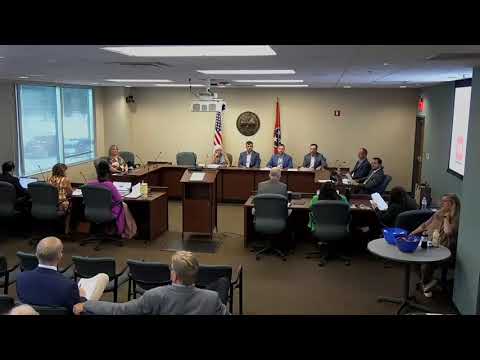
The Tennessee Real Estate Appraiser Commission voted July 21 to form a committee to develop a standardized appraisal-review framework for expert reviewers, the panel said during its regular meeting.
Commission staff and outside reviewers argued the change would reduce subjectivity in complaint reviews, clarify the scope of work in requests for proposals for contract reviewers and help the commission attract more qualified reviewers. The commission authorized a 3-member committee to draft a work product for later consideration by the full commission; the motion passed by voice vote.
Kevin McGuigan, a commission staff member who presented four documents for the board, described the proposal as an effort to produce “assignment conditions” and a standardized review worksheet so reviewers and applicants know what to expect. McGuigan said the standardization would not change the commission’s complaint process but would narrow committee work to the review methodology itself.
Appraisal reviewer Randy Button, who described himself as a long-time reviewer and former commission member, told the commission he had submitted a multi-page review framework and a one-page review process that breaks review work into discrete steps. “Consistency among the process throughout the process is something that can be invaluable to the board,” Button said, arguing a standardized checklist and training could reduce reviewer bias and aid contract reviewers and board members.
Commissioners said the initiative was intended to be exploratory and limited in scope. Several commissioners noted that while the commission recently received a favorable Appraisal Subcommittee (ASC) rating, there may still be opportunities to “stress test” current practices and improve clarity for reviewers and applicants.
Legal counsel cautioned that sample expert-review reports and attorney work product would be privileged; releasing such materials to the full commission could waive that privilege and make the documents public. Commissioners discussed that legal would “ride shotgun” during any committee work to prevent unintended consequences and protect privileged material.
A motion to form the committee listed three commission members to serve: Nelson Pratt, a second member whose full board role is recorded in the minutes as a commissioner; an additional member identified in the meeting as Mr. Haston; and Taylor Vandever, who the commission named committee chair. The motion directed the committee to meet as needed and bring a work product back to the full commission for consideration. The commission approved the motion by voice vote.
The commission did not adopt any immediate rule or change to complaint handling; the committee was authorized to draft recommended materials for future board review and potential adoption. Commissioners said committee work would be carried out in public meetings consistent with Tennessee open-meeting law and that staff would coordinate scheduling.
Next steps: the committee will convene to produce a draft review framework and, where appropriate, a checklist or training materials for contract reviewers; any final product will be presented to the full commission for further review and possible adoption.