Get Full Government Meeting Transcripts, Videos, & Alerts Forever!
Get email alerts on the Land Use Geologic Hazards topic
No spam. Unsubscribe anytime.
Newport council adopts ordinance widening who may prepare geologic-hazards reports
Summary
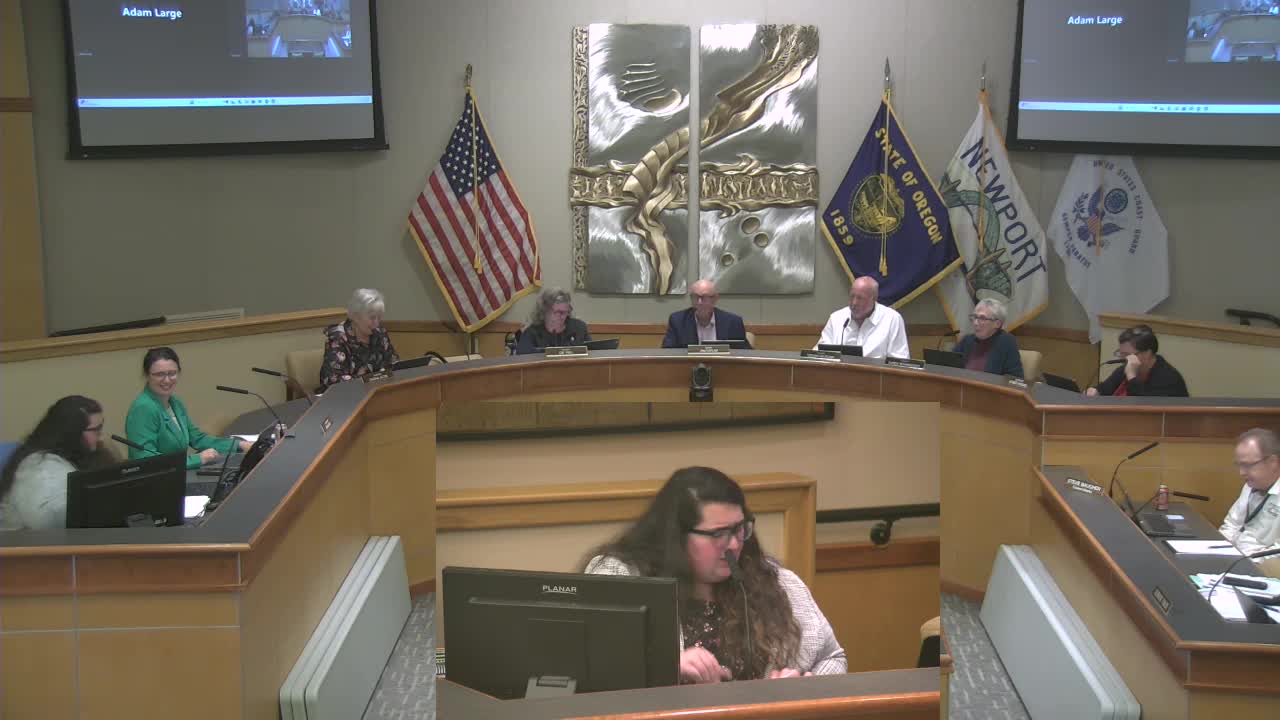
After a public hearing and questions about liability and "best practices," the Newport City Council adopted Ordinance 2025-03 to amend Newport Municipal Code Chapter 14.21 to allow a broader range of qualified professionals to prepare geologic-hazards reports, provided they submit credentials with reports.
The Newport City Council on a voice and roll-call vote adopted Ordinance 2025-03 amending Chapter 14.21 of the Newport Municipal Code to broaden which professionals may author geologic-hazards reports.
City Community Development Director Derek Tokos told the council the city adopted the current certified engineering geologist requirement in 2011 and the proposed change would allow other licensed professionals—such as geotechnical engineers—to prepare reports so long as the preparer includes credentials and required report content.
The ordinance drew public comment and written input. Adam Lark, an engineering geologist with H.C. Schlicker & Associates, told the council his firm had worked for the city for decades and that the proposed language could allow the public practice of geology by non‑geologists. He and the Oregon State Board of Geologists Examiners (OSBGE), by letter, urged caution.
Tokos and others said the draft follows a recent trend in some Oregon jurisdictions to give permitting staff flexibility while relying on licensing boards to police qualifications. "We will simply look to did they provide their their qualifications as required by the code along with the report?" Tokos said during the staff report, describing the city’s proposed approach.
Several councilors asked procedural and legal questions. One councilor asked for a legal opinion about potential city liability if the board of one licensing body objected; Tokos said Lori Cooper with Local Government Law Group reviewed the ordinance in advance. Councilor Cynthia pressed for clearer language defining what counts as "best practices" cited in the code so an outside manual could not be treated as definitive without standards. Other councilors said expanding the pool of qualified professionals could reduce delays for property owners who currently struggle to find certified engineering geologists.
Council discussion included two options the council could take: table the ordinance pending additional legal analysis or adopt tonight. The council voted to adopt the ordinance. The motion passed on a voice vote and a subsequent roll call; the council recorded unanimous support in the roll call presented at the meeting.
Why it matters: The change alters permitting for development in mapped geological-hazard areas by widening who can prepare required geologic documentation. Staff and supporters say it will reduce delays and lower costs for property owners; critics say it risks blurring professional boundaries and shifting dispute resolution to licensing boards rather than local review.
Implementation and next steps: The ordinance as adopted requires report authors to submit credentials with reports; staff said they will continue to accept professional complaints to the appropriate state licensing board rather than adjudicate qualifications locally. Council members said they may seek targeted legal clarifications or minor wording changes in future amendments if needed.