Get Full Government Meeting Transcripts, Videos, & Alerts Forever!
Get email alerts on the Public Housing Redevelopment topic
No spam. Unsubscribe anytime.
Richmond Housing Authority outlines redevelopment, financial plan and resident protections; councilors press for relocation details
Summary
Richmond Housing Authority officials described clean audit results and redevelopment strategy that relies on a nonprofit development arm (Richmond Development Corporation). Council members and residents pressed for concrete relocation plans and guarantees for voucher access during phased redevelopments.
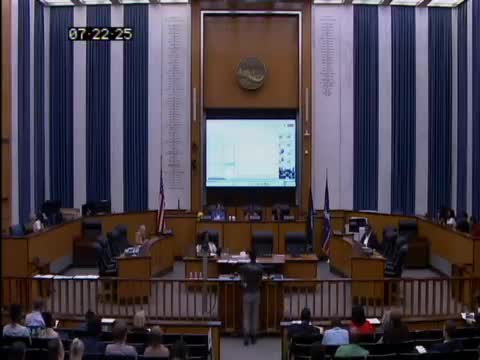
Richmond Housing Authority leaders briefed the Land Use, Housing and Transportation Standing Committee on the authority’s finances, redevelopment strategy and programs intended to support homeownership for public housing residents.
RHA CEO and representatives told the committee an external audit completed earlier this year found no audit findings for the first time in many years. RHA said it remains financially vulnerable because roughly 80% of its revenue is federally funded through the U.S. Department of Housing and Urban Development; officials said they seek to diversify revenue by using a nonprofit development arm, the Richmond Development Corporation (RDC), to attract philanthropic and private capital.
RHA’s plan and the nut graf: RHA described a multi‑phase redevelopment plan for Gilpin Court (10 phases estimated at roughly $466 million in the presentation materials), a “build-first” approach to reduce displacement, and a pledge to require winning development partners to reinvest a portion of project profits back into the redeveloped communities through the RDC.
RHA said the RDC is a 501(c)(3) wholly owned by RHA that can accept philanthropic grants and other unrestricted funding that the housing authority itself cannot receive. ‘‘Do you have a 501(c)(3) entity to receive those dollars?’’ the CEO recounted foundations asking; he said the RDC fills that role.
Council members and residents pushed for greater transparency and concrete relocation guarantees. Multiple councilors asked for data RHA had not provided at the hearing — notably the number and distribution of landlords who accept Housing Choice Vouchers and the inventory of deeply affordable units (those at or below 40% of area median income). RHA committed to provide that information and to circulate a draft relocation plan; the CEO said a more complete relocation/Section 18 plan would be produced by Aug. 15 and shared with council.
Residents and tenant advocates pressed for firm assurances on return rights and alternatives. Several public speakers described long-standing maintenance and safety problems in public housing and urged resident-led redevelopment. RHA leadership said residents would be engaged and that the authority would present a tenants’ bill of rights to residents first and then to the board; RHA said it will include resident participation in redevelopment governance and that the board is considering adding a resident voting member to the RDC board.
Committee members said they welcomed the build-first strategy and the idea of tying developer profits to community reinvestment, but emphasized that redevelopment in a period of constrained regional affordable housing supply requires explicit, enforceable relocation guarantees and a credible plan to ensure displaced residents have comparable housing options. Council members asked RHA to provide the promised relocation plan and data to the full council and committee for review.
Ending: RHA committed to provide a draft relocation plan and data on voucher acceptance and affordable-unit inventory; the committee said it will continue oversight and requested a September return for follow-up materials.