Get Full Government Meeting Transcripts, Videos, & Alerts Forever!
Get email alerts on the Housing Inspections topic
No spam. Unsubscribe anytime.
Richmond committee continues debate on residential rental inspection ordinance; council to consider targeted amendments
Summary
City staff presented an ordinance to establish a residential rental inspection program; weeks of public comment produced sharply divided testimony from tenant advocates and landlord groups. The committee voted to continue the ordinance to September to allow amendments and further data work.
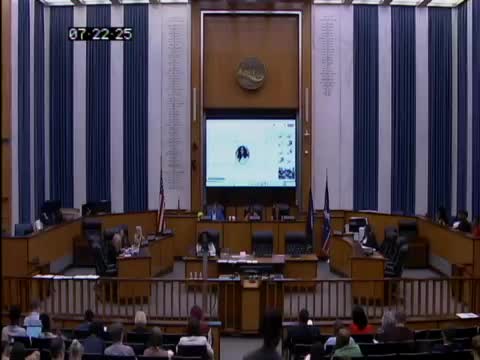
The Land Use, Housing and Transportation Standing Committee on Tuesday continued consideration of ordinance 20 20 five-one 161, which would establish a residential rental inspection program in Richmond.
The proposal, presented by Kevin J. Bonk, director of Planning and Development Review, would create a program (shortened in the draft to RRIP) permitting proactive periodic inspections of residential rental dwelling units under the authority and limits defined in the Code of Virginia and the city’s building code. The ordinance as drafted would not automatically enroll units; council would need to adopt a subsequent ordinance to add any properties to the program.
Bonk told the committee the program is limited to building- and habitability-related violations (not sanitation or tall-grass complaints) and that state law prescribes many of the program’s limits. “For properties with 10 or more units, it allows inspection of 10% of those units. And if there is a violation found in one of those units, it allows all of the units in that particular complex to be inspected,” Bonk said.
The nut graf: Tenants and housing advocates urged adoption as a tool to compel repairs and reduce health and safety risks; property owners and trade groups pressed the committee to narrow the proposal so it targets “bad actors” and does not stigmatize entire neighborhoods or unduly burden small landlords.
During the public hearing, tenants and advocates described repeated code and habitability problems. Omario Gaddafi of the Legal Aid Justice Center said residents need an inspection program backed by enforcement: “We are all here to support a redevelopment of public housing that is resident led and community supported,” he said in public comment that connected to broader housing concerns. Tenants described mold, slow or missing maintenance responses and safety risks; one resident, Sylvia Davis, displayed photographs of water damage and deteriorated finishes she said had persisted for years.
Landlords and trade groups asked for targeted criteria and protections. Latoya Washington, identified as a local property owner, said she supported safe housing but opposed the ordinance as drafted, warning that broad districts could stigmatize low-income neighborhoods and impose costs on small operators. Elizabeth Greenfield of the Homebuilding Association of Richmond and speakers representing the Virginia Apartment Management Association and Virginia Apartment Management Association raised similar concerns and proposed exemptions or different triggers (for example, focusing on repeatedly noncompliant “bad actors”).
Administrators and committee members discussed available data sources and program design. Bonk said staff can provide four years of police, fire and building-inspection call data and notices of violation to help council draw boundaries and justify districts, but matching individual emergency calls to building-code violations would be time-intensive. He recommended a cautious approach that prioritizes complexes where tenants have petitioned for inclusion or where inspectors have documented repeated violations.
Committee members asked about tenant protections and the possibility that repairs could lead to rent increases or displacement. Bonk said the rental-inspection ordinance cannot directly control rent or evictions under Virginia law; the program’s scope is limited to building-code enforcement and inspection timing. He recommended that any district rollout include an implementation plan addressing inspection capacity, housing for displaced tenants if units are placarded unsafe, and tenant notification and education.
After extended discussion and dozens of public speakers, the committee voted to continue the ordinance so staff can prepare amendments and supporting materials. The motion to continue the item to the September Land Use, Housing and Transportation meeting passed unanimously in committee: Mister Britton, Vice Chair Robertson and Chair Jones recorded “Aye.”
The committee directed staff to return with proposed amendments that clarify criteria for designating districts, tenant-notification and education language, an implementation plan describing staffing and capacity, and data runs that map violations and emergency calls where feasible. Bonk said the ordinance as drafted would establish the program but would not add any units until council adopts a separate ordinance specifying districts or parcels to inspect.
The committee set an expectation that staff would bring suggested amendments and analysis ahead of the September meeting so councilors could consider more narrowly targeted approaches to inspection districts.
Ending: The item remains active; council members and advocates signaled continuing differences over scope and triggers and asked staff to return with clearer criteria, tenant-protection measures and implementation steps before the committee resumes consideration.