Get Full Government Meeting Transcripts, Videos, & Alerts Forever!
Get email alerts on the Public Health topic
No spam. Unsubscribe anytime.
Chatham County health agencies publish 2024 community assessment highlighting gaps in care, youth opportunity and substance treatment
Summary
Chatham County Public Health, the Chatham Health Alliance and UNC Chatham Hospital released a 2024 community health assessment identifying top priorities — water quality, affordable housing and more health-care options — and calling for mobile health care, youth programming and expanded substance use treatment and recovery supports.
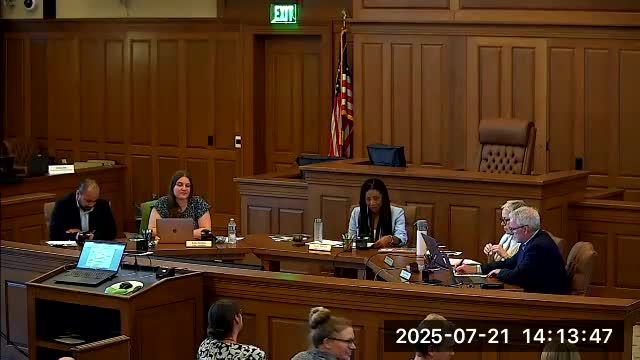
Chatham County officials on July 21 presented a newly released 2024 Community Assessment that county health leaders said shows improvements on some health measures but persistent gaps in care, youth opportunity and substance use supports.
The assessment, produced by the Chatham County Public Health Department, the Chatham Health Alliance and University of North Carolina Chatham Hospital, compiles 17 chapters of data, local focus groups and survey findings to set community priorities and guide grant-writing and planning, presenters said. "The top 3 priorities that were selected as a result of data collected from this assessment were health care access, activities for youth and young adults, and substance use treatment and support," said Kyle Posch, communication strategist for the Chatham County Public Health Department.
Why it matters: County leaders and community organizations use the assessment to identify where services and investments are needed most and to shape a strategic plan that the Chatham Health Alliance said will emphasize systems-level, sustainable changes.
Key findings and priorities - Health-care access: The assessment found that roughly one in 12 Chatham County adults said they did not have a regular health-care provider. Presenters said lack of insurance remained a top barrier: "Just over a quarter (26.3%) report that the lack of health insurance is their top barrier to receiving health care that they need," Alec Higgins, population health data scientist, said. - Mental health: The report found 26.4% of adults reported a previous diagnosis of depression or anxiety by a health-care provider; rates were higher for Black and Hispanic/Latino adults. Among students, 40.5% of Chatham County high school students reported feeling sad or hopeless for two weeks or more. - Youth opportunity: About 12% of county youth and young adults were identified as "opportunity youth" (neither in school nor working), and the Alliance recommended a marketing plan, dedicated youth spaces and greater youth representation on advisory bodies. - Substance use: The report said roughly two-thirds of people who sought help for drug use did not find treatment that was easy to find, high-quality or affordable. Julie Wilkerson, director of the Chatham Health Alliance, said the Alliance has created a behavioral health/substance-use provider list and added referral questions to opioid settlement funding applications to improve matching and communications. - Infrastructure and environment: Residents named water quality as their top infrastructure concern; county data said 21% of tested private wells exceeded the maximum contaminant level for manganese and 21% for iron in the samples cited.
Planned actions: The Alliance and public health staff described specific steps under a results-based accountability strategic plan: a systems navigator network, a leadership collaborative of health-care providers, efforts to expand mobile health events, interviews with organizations providing youth activities to build a shared communications plan, and outreach to expand peer-support locations for substance-use recovery.
Presenters said the report will be distributed as a large booklet and a condensed public booklet in August, with social-media graphics and summary videos planned. The full report is available online at chathamcountync.gov/healthreports, the presenters said.
What commissioners asked: Commissioners pressed for clarity on how much of the county’s better-than-state results (for example, lower overdose deaths) could be tied to specific local programs; presenters said the data are observational and cannot demonstrate a single causal driver, though local programs likely contribute. Commissioners also asked where to direct county resources; presenters pointed to supporting public–community partnerships, mobile health, and continued collaboration on housing and water-quality issues.
Ending: Officials said they will continue Alliance meetings and return to the board with progress updates and to invite county support for policy-level changes that are harder to implement without county and regional coordination.