Get Full Government Meeting Transcripts, Videos, & Alerts Forever!
Get email alerts on the Bradford Pear Replacement topic
No spam. Unsubscribe anytime.
Commission hears detailed proposal to remove and replace 140 Bradford pear trees; seeks funding and volunteer options
Summary
A parks seasonal employee proposed a two-phase plan to remove 140 Bradford pear street and park trees and replace them with native alternatives, seeking shared funding and volunteer involvement beginning in 2026.
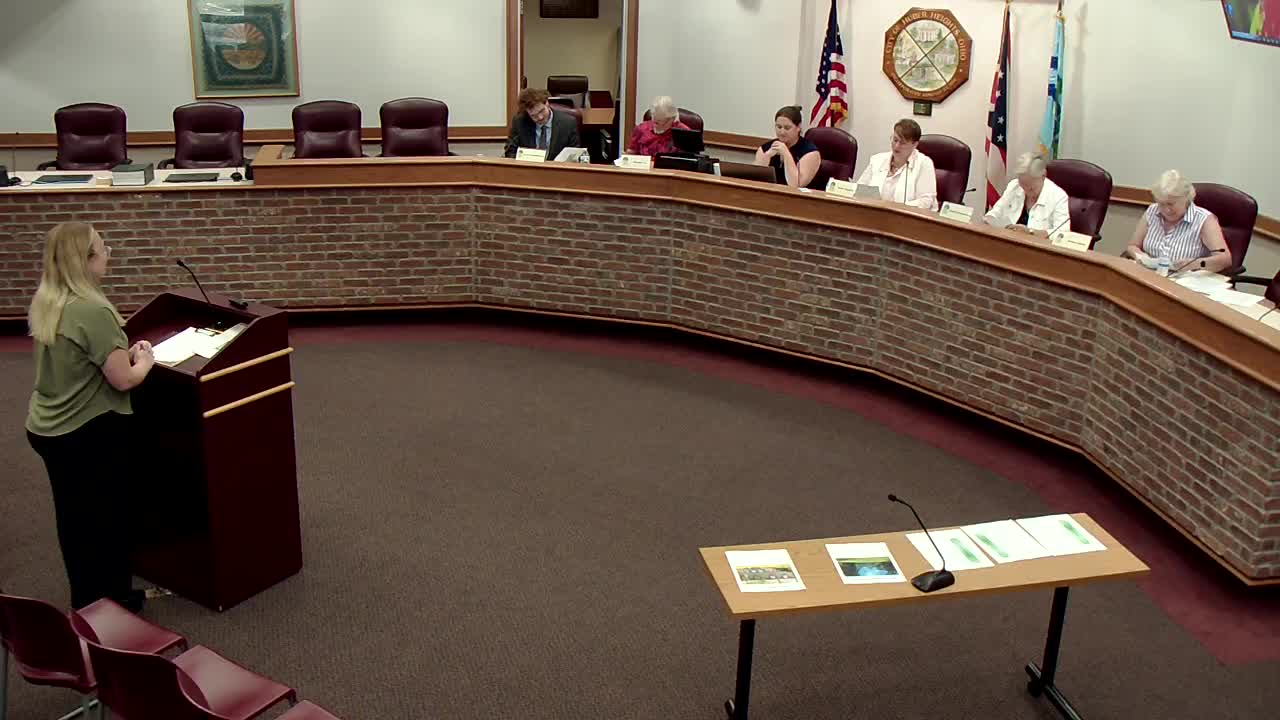
Huber Heights Parks seasonal employee Hannah Fee presented a detailed, two-phase proposal to remove and replace an estimated 140 Bradford pear (Callery pear) trees on public property and replace them with native alternatives; the commission discussed contractor timelines, volunteer participation and grant or donation options.
Why it matters: The presenter said Bradford pears are invasive and structurally weak, and that replacing them would support local ecology, pollinators and reduce storm-related maintenance costs. Fee said the state of Ohio banned the sale and planting of Bradford pears as of January 2023 and reported the city currently has about 140 Bradford pears in public spaces.
Proposal details Fee outlined two phases: (1) contractor removal of the existing Bradford pears to ensure safety and efficiency; (2) replacement plantings done either by contractors or through community volunteer plantings. She said she and Chair Sarah Chapman are pursuing donations and grant options to reduce local costs and proposed splitting project funding evenly between the Arts & Beautification Commission and the Parks and Recreation Department.
Cost and timing Fee provided removal and replacement cost estimates in a handout to the commission and said one contractor estimated that a full removal project could take roughly three weeks, depending on contractor selection and scope. She proposed beginning replacement work in spring 2026 to allow for sapling establishment and community involvement. Fee said alternative timelines — staged plantings over several years — also remain under consideration.
Community engagement and partners Fee recommended recruiting high-school biology students, Future Farmers of America or other youth groups for volunteer planting events and said the volunteer model could also serve as a public-education opportunity. She referenced Licking County as an example of a jurisdiction that has used volunteer tree-planting programs.
Questions and clarifications from commissioners focused on where trees are located (public vs. private property), whether private-property owners could be incentivized to remove Bradford pears and whether donated nursery stock or in-kind support from organizations such as the Arbor Society might be available. Fee said she has not yet reached out to the Arbor Society but welcomed those leads.
Next steps Commissioners did not vote on funding at the meeting. Staff and proponents will pursue grant and donation opportunities, refine contractor estimates, confirm which trees are on public land and return to the commission with a phased calendar and detailed budget for formal consideration.