Get Full Government Meeting Transcripts, Videos, & Alerts Forever!
Get email alerts on the Hurricane Preparedness topic
No spam. Unsubscribe anytime.
Houston OEM outlines hurricane timeline, evacuation sequencing and preparedness steps
Summary
The City of Houston Office of Emergency Management briefed the joint committee on hurricane timelines, evacuation sequencing, continuity planning and preparedness guidance; officials urged residents to prepare kits, know evacuation zones and follow official NWS/Harris County guidance.
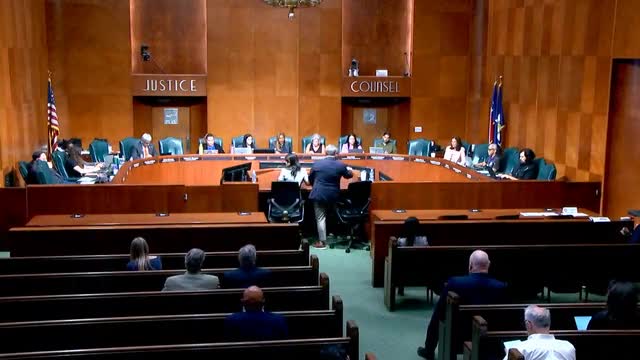
Brian Mason, director of the City of Houston Office of Emergency Management (OEM), told the joint Government Operations and Resilience Committee that hurricane preparation follows a structured timeline and that response actions are calibrated to when tropical-storm-force winds reach the coast.
Mason walked committee members through OEM—s action benchmarks (H-minus timelines), evacuation sequencing, continuity-of-operations planning and public guidance. He emphasized that not all storms behave the same: hurricane category alone does not determine surge or local impacts.
Why it matters: Mason said the city measures response timelines based on the arrival of tropical-storm-force winds (for example H-minus 96, H-minus 72), not only on projected landfall. He noted that some storms form quickly in the Gulf or Bay of Campeche and can provide as little as 32 to 72 hours of notice before impacts reach Houston.
Key preparedness principles: OEM told the committee to —make a plan, stay informed, build a kit and get connected.— Mason recommended residents keep at least three days— worth of food, water and medication (seven days preferred), keep gas tanks above half full, and designate a family rendezvous point if communications fail. OEM also encouraged residents to register for Alert Houston (text ALERT HOUSTON to 888-777) and to rely on credentialed sources such as the National Weather Service and Harris County Flood Control District for evacuation and flood information.
Evacuation sequencing and support: Mason described the city—s prioritization: move people off the coast first (Galveston Island and immediate coastal areas), then inland in sequenced waves. He said mandatory evacuations require additional resources such as evacuation hubs and buses and that those decisions involve coordination with county and state partners. OEM staff said that the TxDOT and state Department of Public Safety lead contraflow planning and that contraflow is not initiated until traffic corridors are outside the immediate metro area.
Infrastructure and continuity: Committee members asked how the city will address internet outages, electric vehicles and fuel shortages during an evacuation. Mason said telecom and internet outages are addressed through business-continuity planning, redundant fiber lines, mobile hotspots and the ability to relocate critical call-taking and other functions to alternate sites; the city also coordinates with TxDOT and DPS for fuel and roadway resource plans. He acknowledged limits: some contingency plans have not been tested in a full real-world citywide evacuation since Hurricane Rita.
Local monitoring and communication: Mason described use of flood-control sensors and field assessments to prioritize sheltering and response after a storm. He said Harris County Flood Control District maintains bayou and sensor networks and that residents can sign up for specific sensor alerts for nearby creeks or bayous. Mason highlighted the city—s multilingual disaster-preparedness guide and said the OEM is expanding translations to reach more of Houston—s diverse communities.
Councilmember concerns: Council members asked about post-disaster communications when cell service is down, how to assist drivers who run out of gasoline or have electric vehicles during evacuations, and about siting of distribution and shelter locations within council districts. Mason invited council offices to submit candidate facility locations for OEM review; he said the city evaluates proposed sites for parking capacity, traffic routing and security.
Ending: Mason said good mitigation and individual household preparedness reduce strain on emergency response and speed recovery. OEM encouraged Houstonians to sign up for Alert Houston, know their evacuation zone and review the city—s preparedness materials and multilingual guides.