Get Full Government Meeting Transcripts, Videos, & Alerts Forever!
Get email alerts on the Bart Silicon Valley Phase2 topic
No spam. Unsubscribe anytime.
VTA updates Santa Clara task force on BART Silicon Valley Phase 2; $5.1 billion federal award narrows funding gap
Summary
VTA staff briefed the Santa Clara Station Area Task Force on construction progress, a $5.1 billion Federal Transit Administration commitment, a newly secured $100 million state SB1 allocation and continuing cost‑reduction work to close a remaining $700 million–$1.2 billion funding gap for the six‑mile Phase 2 extension.
VTA staff updated the Santa Clara Station Area Task Force on July 17, 2025, about the BART Silicon Valley Phase 2 project, saying construction is underway, federal and state grants have reduced but not closed the program’s funding shortfall, and the agency is pursuing deeper cost‑savings and a contractor procurement change.
"We started early construction last summer and have now really moved into that major construction phase," said Ali Mustafa, external affairs team member on the BART Silicon Valley Phase 2 project, describing the six‑mile, four‑station extension and a maintenance facility that will span the San Jose–Santa Clara border. Mustafa said the program aims for revenue passenger service in 2037.
The project summary: Phase 2 is a roughly six‑mile extension with four stations — two below‑grade stations in San Jose (one near 20 Eighth Street and a downtown station between Market and First), a connection at the Diridon/Brid** area, and a street‑level Santa Clara station adjacent to a maintenance facility. Staff said the alignment includes about five miles of tunnel and three below‑grade stations.
Why it matters: the Federal Transit Administration pledged about $5.1 billion last year toward the project — "the second largest award that the FTA has ever granted for a transit project," Mustafa said — but VTA officials told the task force the program still faces a roughly $700 million to $1.2 billion shortfall. Mustafa said the agency also recently secured $100 million from California’s SB1 program.
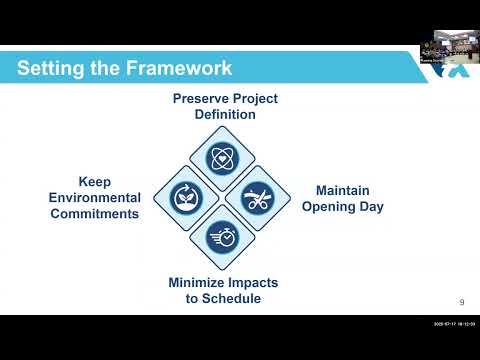
Cost‑savings and procurement: VTA described a three‑level cost‑savings approach. Level 1 changes (station and parking configuration adjustments) produced roughly $300 million in savings; Level 2 produced another ~$50 million. Staff said the board has directed deeper Level 3 work that examines construction methodology changes — including tunnel diameter and tunneling sequencing — and that those scenarios will be discussed with the FTA and taken to a peer review of independent tunneling agencies this summer.
The agency also told the task force that the board approved an "off‑ramp" from the current tunnel contractor to reprocure tunneling work in more competitive packages. Mustafa said select elements of the existing contract will continue: KST is retaining work on the West Portal launch structure, which VTA said represents roughly $400–$500 million of major construction on the critical path.
Construction details near Santa Clara: staff showed images of the West Portal work area and described a 130‑foot‑deep launch structure where a tunnel boring machine will be lowered. Work at that site includes large support walls, slurry rigs, rebar cages (one described as 90 feet tall, another up to 130 feet tall and weighing about 300,000 pounds), groundwater dewatering wells, and a noise curtain that is "about 80% done." Mustafa said crews are working roughly 20–22 hours per day (Monday–Saturday) and that about 75% of truck traffic leaves the site on Newhall Drive and 25% on Brokaw.
Local design and parking: staff said a multistory parking garage originally planned near Brokaw was removed as a cost saving and replaced with an at‑grade surface lot while retaining roughly the same number of parking spaces (staff said the net number of spaces remained unchanged at about 500, a figure they said the project is environmentally cleared to provide). The change required yard redesign and design variances negotiated with BART.
Community outreach and next steps: VTA staff said they will present Level 3 cost‑saving scenarios at an August 1 workshop, at an August 14 oversight meeting that covers BART items, and to a joint VTA/BART board meeting. Mustafa said a peer review of the deeper tunneling scenarios is scheduled for August–September and that the peer review results will be shared with the board and the public. Staff also promoted a community coffee event at Newhall Park and said project newsletters and monthly construction updates are posted at vtabart.org.
Public questions and concerns: members and public commenters asked about station access, pedestrian and bicycle connections, and design standards. Director Jain (public commenter identified as ‘Suds’ in the record) asked whether an opaque overcrossing would create a security problem and whether transparent materials could be used; staff said they would follow up with additional details. Task force members pressed staff on mode‑access assumptions and on whether the maintenance‑facility and station design comply with BART’s facility standards; Mustafa said VTA must design to BART standards and seek variances where needed.
The presentation was informational; the task force did not take formal action on the project at the July 17 meeting. VTA staff said they will post the presentation online and provide follow‑up material to committee members and city staff.