Get Full Government Meeting Transcripts, Videos, & Alerts Forever!
Get email alerts on the Gaza Humanitarian topic
No spam. Unsubscribe anytime.
U.N. warns Gaza fuel shortfalls and restricted aid movement are driving a deepening humanitarian crisis
Summary
The U.N. said limited fuel deliveries and restricted humanitarian movements are forcing critical services in Gaza to shut down, worsening shortages of water, health care and sanitation.
United Nations officials warned Friday that limited fuel deliveries to Gaza and restrictions on humanitarian movement are worsening an already severe humanitarian crisis, forcing hospitals, water pumps and waste-collection services to curtail operations.
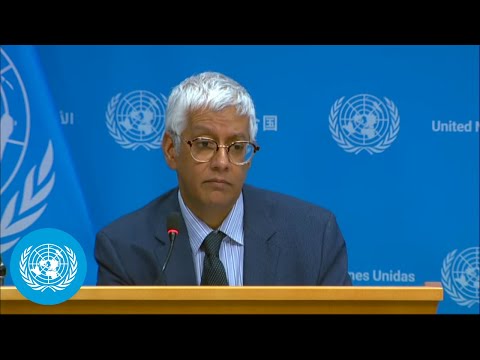
At a U.N. press briefing, spokesperson Farhan said Secretary-General António Guterres described the situation as “mass deprivation” and said daily death, displacement and desperation are being normalized. Guterres’ remarks were read to reporters by the U.N. spokesperson.
Why it matters: The U.N. Office for the Coordination of Humanitarian Affairs (OCHA) and the secretary-general said the volumes of fuel entering Gaza are a fraction of what is needed to sustain life-saving operations. That shortfall is disrupting essential services for civilians across the territory.
The U.N. said that since limited fuel deliveries resumed on July 9, the organization has sent just over 600,000 liters of diesel into Gaza and, for the first time yesterday, 35,000 liters of benzene. Those deliveries were possible after Israeli authorities allowed 14 trucks over the past week. The U.N. calculated that the current deliveries average roughly 55,000 liters per day, including days when the crossing is closed. By contrast, the U.N. said it needs “hundreds of thousands of liters of fuel every single day” to sustain health, water and telecommunications services.
The briefing described the logistics at Kerem Shalom: fuel is offloaded into an underground pipeline on the Israeli side and then extracted on the Gaza side by Palestinian tankers. The compound is fenced and militarized, and U.N. drivers require specific pauses in hostilities and permission from Israeli authorities to access and extract fuel. Those requirements, the U.N. said, create delays and unpredictability in fuel flows.
Humanitarian movements inside Gaza have also been constrained. The U.N. reported that of 13 recent attempts to coordinate movement with Israeli authorities, seven were facilitated and six either were denied or faced impediments on the ground. Facilitated movements allowed teams to retrieve some fuel, collect water, relocate generators, deliver hygiene supplies and transfer medical materials; denied or impeded attempts limited those operations.
The U.N. reiterated its repeated calls for an immediate cease-fire and for parties to permit safe, sustained humanitarian access. The secretary-general’s remarks and OCHA reporting emphasized that dwindling fuel supplies are already forcing pauses in solid-waste collection and the shutdown or reduction of health services, including dialysis, and that further reductions would put more facilities at risk.
The U.N. did not announce any new operational measures at the briefing; officials urged increased, predictable fuel access and fewer impediments to humanitarian movement.