Get Full Government Meeting Transcripts, Videos, & Alerts Forever!
Get email alerts on the Water Infrastructure topic
No spam. Unsubscribe anytime.
Columbus Water and Power proposes $1.9 billion 2025 capital program, advances fourth water plant and reuse study
Summary
Deputy Director John Lee told the finance and governance committee that Columbus Water and Power is seeking roughly $1.9 billion in 2025 capital funding, including money to advance the fourth water plant, water-main rehabilitation, a study into nonpotable “purple pipe” reuse for large commercial customers and Southerly wastewater upgrades.
Columbus Water and Power is proposing a $1.9 billion capital-improvement request for 2025 that the utility says is driven by regional growth and large industrial water demands, including data centers.
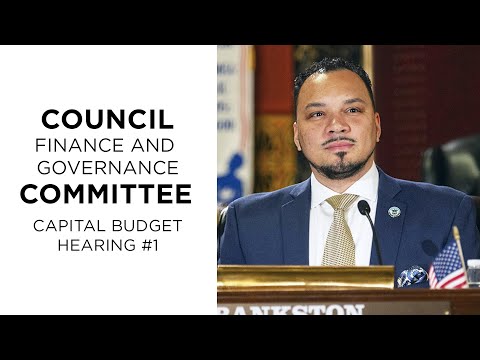
Deputy Director John Lee told the Finance and Governance Committee that the department is requesting about $1.7 billion in new funding and $177 million in carryover, for a total of roughly $1.9 billion. Lee said the largest single effort in the program is the long-planned fourth water plant, currently in final design and expected to be bid in the fall.
"This plant will provide the additional water capacity to meet the growing demand to the region," Lee said. He described the transmission work that will run from the plant through the Dublin area into the city's distribution system and said the plant will be built in stages; bidding is planned in 2025 and construction will continue for several years.
Lee also described an active study of water reuse — commonly called a "purple pipe" system — that would deliver nonpotable reclaimed water to large commercial users. "Water reuse is important, as we're looking at providing water to commercial customers," he said, describing the approach as nonpotable supply for cooling at industrial and data-center sites.
The department also included several other multi‑year, region‑level projects in the board presentation: a water-main rehabilitation program (the department cited 3,600 miles of water line in its system), major sanitary subtrunk extensions in the northeast service area, a stormwater mitigation project in the Arena District and multiple upgrades at the Southerly wastewater plant.
On Southerly, Lee said the plan includes projects to expand treatment capacity. He said the Southerly affluents pump-station expansion project would "increase the plant's treatment capacity by 110,000,000 gallons a day, up to 550,000,000 gallons per day," language used in the presentation to describe the work and its scale.
Lee framed the utility's work as regional rather than strictly cityborne. He said Columbus Water and Power serves more than 1.4 million customers across multiple counties and that rate revenue from that customer base funds the enterprise's operations and capital debt service.
The presentation noted that the fourth water plant is the largest capital project the utility has ever undertaken, with total project cost estimates cited on the slide series in the presentation. Lee also described an ongoing program to replace lead service lines and a multi‑year plan to expand the city’s composting facility to handle higher material volumes arising from wastewater treatment byproducts.
Council members asked about construction disruption and where purple-pipe corridors might be located; Lee said the reuse program is in study and that subsequent design work would identify alignments and potential impacts. He said some reuse alignments would be concentrated in industrial parks and near wastewater treatment sites but acknowledged that portions of any alignment could require street work similar to standard utility projects.
Why it matters: Columbus Water and Power’s projects include long lead-time, high-cost infrastructure needed to keep pace with regional population growth and large commercial water demand. The fourth water plant and related transmission work will be a multi-year, multi‑hundred‑million‑dollar undertaking with implications for system capacity, development planning and rate-funded debt service.
Looking ahead: Lee said the fourth plant's transmission line work would continue through the 2020s while construction of the plant itself will span into the early 2030s, and that the utility will return to council with design and construction milestones as they are finalized.