Get Full Government Meeting Transcripts, Videos, & Alerts Forever!
Get email alerts on the Hydrogen Extraction Zoning topic
No spam. Unsubscribe anytime.
Dickinson County planners weigh rules to block hydrogen extraction applications until research complete
Summary
Planning commissioners discussed hydrogen extraction zoning, potential conditional-use permitting, moratorium limits and a staff directive to research model regulations after leases and seismic testing were reported in the county.
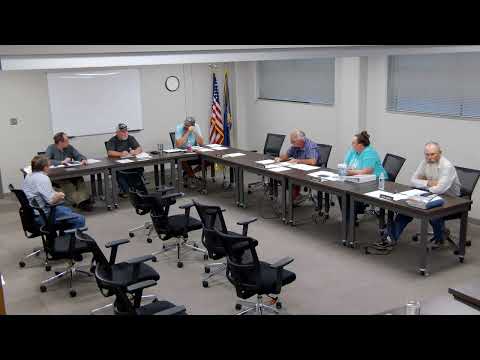
At a Dickinson County Planning Commission meeting, planning staff outlined options to regulate hydrogen extraction and commissioners directed staff to research model regulations and draft language to prevent premature applications while that work continues.
Planning staff described hydrogen as an emerging energy source and distinguished “green” hydrogen, used as a standalone energy source, from “gray” hydrogen, which is tied to fossil-fuel production. The staff presentation said federal and state guidance is still developing and that local information on existing hydrogen facilities is limited: “hydrogen as an energy source is still in infancy,” the staff member said, adding that much of the material provided to commissioners was for transparency so future references could be traced to those documents.
Why it matters: companies are signing leases and early exploration is underway in parts of Dickinson County, raising questions about traffic, public safety and land-use precedence. Commissioners repeatedly pressed staff on whether the county can refuse or delay applications while rules are drafted; staff said options include treating hydrogen extraction as a conditional-use permit with traffic and safety conditions, or adopting administrative or regulatory language that would prevent acceptance or processing of applications until zoning amendments are completed.
Staff emphasized likely permitting overlap with state and federal agencies and recommended requiring applicants to show they have started or obtained relevant state or federal permits before the county accepts an application: “one of the things that would be required for their application packet…would be proof that they have contacted or they're in the process of being approved for, you know, federal permits,” the staff member said. Staff compared hydrogen-extraction sites to oil wells and to electrical substations for planning purposes and highlighted truck traffic and road impacts as a principal local concern.
Commissioners raised legal and timing questions, including limits on moratoria. A staff explanation noted moratoria are time-limited and that a two-year moratorium is typically the statutory maximum: “the moratoriums are limited because you can only the 2 years is the maximum,” the staff member said. Staff advised that a better legal posture than an indefinite prohibition may be to document that the county is still updating zoning regulations and will not accept or process applications on topics the regulations have not yet addressed.
Commissioners and staff also discussed exploratory work reported in the county. Staff said seismic testing has taken place mainly along Camp Road and in the northern part of the county and that companies are signing leases with landowners. Commissioners expressed concern that leases and private investment could create pressure to rush applications and urged staff to draft protections that would prevent the county from being forced into premature review or approvals.
After discussion, commissioners gave consensus direction for staff to investigate how other counties have regulated hydrogen and other alternative energies, and to draft wording—either an administrative policy or zoning amendment—that would allow the county to withhold acceptance or processing of applications for alternative energy uses until the county’s regulatory review is complete. Staff said it would research model language, related federal/state permitting that applicants would need to show, and possible conditional-use standards such as traffic mitigation and proof of state/federal approvals.
Votes at a glance: A procedural motion to approve the minutes for the June 19, 2025 meeting was made and seconded. The commission recorded the motion and it was advanced by consensus during the meeting.
What’s next: Staff will return with sample regulations and proposed language after researching comparable county codes and state/federal permitting requirements. Commissioners said they expect staff to present draft language before the moratorium expiration window creates procedural pressure, noting that a clear regulatory approach would help the county respond to incoming lease activity and exploration.