Get Full Government Meeting Transcripts, Videos, & Alerts Forever!
Get email alerts on the Bart Silicon Valley Phase 2 topic
No spam. Unsubscribe anytime.
VTA/BART update: Phase 2 construction underway, $700M–$1.2B funding gap remains; contractor changed
Summary
VTA and BART staff told the Santa Clara Station Area Task Force on July 17 that major construction is underway for the BART Silicon Valley Phase 2 extension and that while the project has secured a $5.1 billion FTA commitment and $100 million from the state’s SB1 program, a remaining funding gap of roughly $700 million to $1.2 billion persists.
VTA and BART staff told the Santa Clara Station Area Task Force on July 17 that major construction is underway for the BART Silicon Valley Phase 2 extension and that while the project has secured a $5.1 billion Federal Transit Administration commitment and $100 million from the state’s SB1 program, a remaining funding gap of roughly $700 million to $1.2 billion persists.
The presentation, led by project staff Brent (last name not provided) and Ali Mustafa of the external affairs team, summarized the alignment and schedule: Phase 2 is a roughly 6‑mile extension with four stations (three below grade) and a maintenance yard near Brokaw. The agency is pursuing revenue passenger service in 2037, while continuing construction and design in parallel.
Why it matters: the federal award was described as the second‑largest FTA new‑starts grant ever and covers about 40% of the project cost, but staff said additional cost reductions and new funding sources are needed before a full funding and grant agreement can be finalized.
Cost, savings and procurement changes
Staff described a multi‑level cost‑savings program. “Level 1” options — station and yard configuration changes and removing a multistory parking garage in favor of at‑grade parking — yielded about $300 million in savings, staff said. A second set of measures added roughly $50 million more. The presentation said the board has now directed staff to evaluate deeper “Level 3” savings that would change construction methodology for the tunnel (for example, changing tunnel diameter, procuring a second tunnel‑boring machine or altering tunneling method). Those options will be reviewed with the FTA and by an independent peer review planned for August–September.
Staff told the task force the VTA board recently decided to “off‑ramp” the current tunnel contractor after months of negotiation because the existing contract could not deliver the required scope within budget. Staff said parts of the existing contract remain in effect: KST (the incumbent contractor) will continue work on the launch structure and other elements at the West Portal so critical path work valued at “about $400–$500 million” can proceed.
Construction activity near Santa Clara
Staff showed images and described the West Portal work behind the airport near Brokaw. The launch structure is a deep underground box (about 130 feet deep) where a tunnel‑boring machine will be staged and launched. Staff described large reinforced‑concrete “cages” being installed (a 90‑foot rebar cage was shown; staff said the largest will be about 130 feet tall and weigh roughly 300,000 pounds) and estimated about 120 such cages will be installed. Groundwater wells to draw down the water table, vibration monitoring, continuous air/dust monitoring and 24/7 noise monitoring were also described.
Staff said most truck movements (about 75%) are routed via Newhall Drive and roughly 25% via Brokaw, and that work hours currently run Monday–Saturday with long daily shifts (staff described about 20–22 hours of activity per day and stated work windows as “Monday through Saturday, 6 a.m. to 4 a.m.”). A temporary noise curtain that deflects sound over adjacent homes was described as about 80% complete.
Funding, schedule and next steps
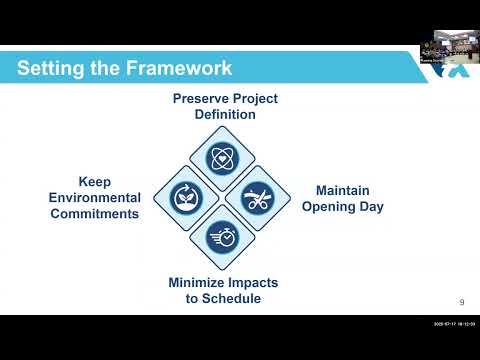
Staff reiterated the project schedule target of 2037 revenue service and said the current priorities are (1) reducing cost, (2) demonstrating deliverability to the contracting market, and (3) securing a full funding and grant agreement with the FTA. They noted the federal award of roughly $5.1 billion does not fully cover the agency’s request and that the state SB1 award of $100 million is a recent milestone.
The team said two public meetings will discuss Level 3 cost‑savings scenarios (an August 1 workshop and an August 14 oversight meeting) and that an independent peer review of deep tunneling scenarios will be completed and shared with the board and community.
Community engagement and mitigation
Staff described outreach plans (quarterly program newsletter, a monthly construction update, social media, community working groups) and local events: a public coffee event at Newhall Park in about two weeks and regular project webpages and phone contacts. Staff emphasized continuous environmental monitoring and the project’s reliance on variances from BART design standards when needed. Construction director Sarah Wilson (VTA) was identified on the record as leading tunneling work and outreach on construction practices.
Questions from task force members focused on access and parking at the Santa Clara station, the retained parking count (staff said the net parking count remains the same as previously environmentally cleared, about 500 spaces, but reconfigured at grade), who sets BART design standards (BART Facility Standards), and whether twin‑bore tunneling was under consideration (staff said board direction is to pursue single‑bore scenarios; twin‑bore has been studied but is not a board‑preferred option).
Documentation and timeline
Staff said the presentation would be posted on the project webpage and that further materials, including the detailed drawings and the upcoming peer‑review report, will be provided in coming weeks. They repeated that deep‑tunnel alternatives and procurement approaches will be presented to the board before any contracting decisions are finalized.
Provenance: excerpts of the presentation and Q&A in the meeting transcript were provided to the task force and will be posted on the project web page.