Get Full Government Meeting Transcripts, Videos, & Alerts Forever!
Get email alerts on the Employee Health Benefits topic
No spam. Unsubscribe anytime.
USI consultant urges Dickinson County to consider partial self-funding, highlights prescription-drug savings
Summary
A USI benefits consultant recommended Dickinson County evaluate partial self-funding and drug-cost strategies, saying specialty drug rebates and biosimilars can materially lower plan costs while noting potential disruption and the need for strong communication with employees.
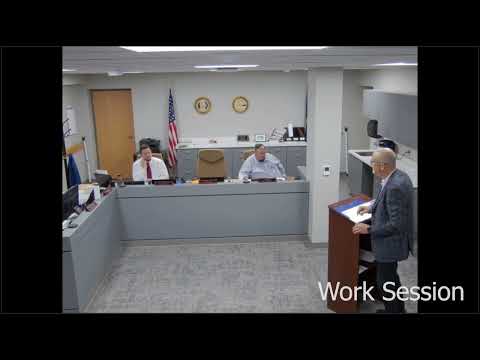
A USI benefits consultant presented to the Dickinson County Board of Commissioners on the county's employee health plans, recommending the county evaluate partial self-funding and a set of prescription-drug strategies intended to reduce long-term costs.
The consultant, identified in the meeting as Steve and described as a USI benefits consultant, told commissioners that prescription drugs now represent a growing share of total plan costs and said a move to partial self-funding can capture manufacturer rebates and other savings that fully insured plans typically do not return to the employer.
Why it matters: The county is paying several million dollars a year for employee health coverage. The presenter estimated the county plan covers roughly 100'150 employees with an annual per-employee cost he approximated at $14,000, producing a plan cost in the range of about $2 million per year. He said drug spending, especially for high-cost specialty medications, is a major driver of increases and a place where employers often can realize savings.
Key points from the presentation
- Self-funding probability model: The USI consultant said a proprietary Monte Carlo'style analysis shows a roughly 72% chance that a partial self-funded plan will cost less than a fully insured plan after one year, rising to about 85% after three years and 90% after five years. He described that analysis as driven largely by prescription-drug cost control and lower fees in self-funded arrangements.
- Specialty drugs and rebates: Using Humira (AbbVie's adalimumab) as an example, the presenter said payers previously received large manufacturer rebates (he cited figures as high as 70% of list cost) that did not flow back to fully insured employers. He said in a partially self-funded model the employer can retain rebates and therefore reduce net plan cost. He also cited lower-cost biosimilar or cost-plus options as ways to cut specialty-drug cost.
- Examples and peer references: The presenter named several public-sector clients who, he said, moved from fully insured to self-funded or partially self-funded arrangements and later reported improved cost outcomes. He suggested Dickinson County contact City of McPherson, USD 465 (Winfield), Reno County and the Kansas Turnpike Authority as references.
- Implementation and disruption: The consultant repeatedly cautioned that any move away from the county's incumbent carrier will involve some disruption for members and that benefits committees and HR must understand and communicate changes in advance. He said plan design choices and the choice of third-party administrator matter; he contrasted Aetna's "mothership" model with Meritain (a third-party administrator that uses the Aetna network) as an example of differing flexibility.
Commissioner and staff questions
Commissioners and staff asked about member service levels when switching carriers, specific savings estimates, and whether drugs without generics would be excluded. The consultant said clients do not generally exclude specialty drugs but may apply utilization management, prior authorization and manufacturer assistance programs to reduce plan cost and shift where appropriate costs to patient assistance or cobenefit arrangements. When asked about coverage of GLP-1 drugs (Ozempic, Wegovy-class drugs) for weight loss, he said many public employers restrict coverage to FDA-indicated uses and add prior authorization to distinguish diabetes treatment from off-label weight-loss prescribing.
Quotes
"When you are partially self funded, that doesn't happen. We get the rebates back," the USI consultant said, arguing that reclaiming rebates is a major source of potential savings.
"Anytime you make a change away from Blue Cross, you will have disruption," the consultant said, urging early and sustained communication to employees.
What was not decided
The commissioners did not take any formal action on the presentation. No vendor change or solicitation was approved at the meeting. The presenter offered to supply references and follow up with county HR and the county administrator.
Ending
County staff and commissioners indicated interest in receiving the consultant's analysis and reference contacts. The presenter said he would send materials to the county HR director and county administrator for follow-up.