Get Full Government Meeting Transcripts, Videos, & Alerts Forever!
Get email alerts on the Tax Incremental Districts topic
No spam. Unsubscribe anytime.
Committee reviews West Bend TID 18 proposal and Slinger TID amendments; supervisors raise fiscal and land‑use concerns
Summary
The Washington County Executive Committee discussed a proposed mixed-use Tax Incremental District in West Bend (TID 18) and amendments in the village of Slinger (TIDs 8 and 4). Staff flagged infrastructure costs, next‑generation housing plans and donor-district proposals; supervisors raised concerns about TID longevity and farmland preservation.
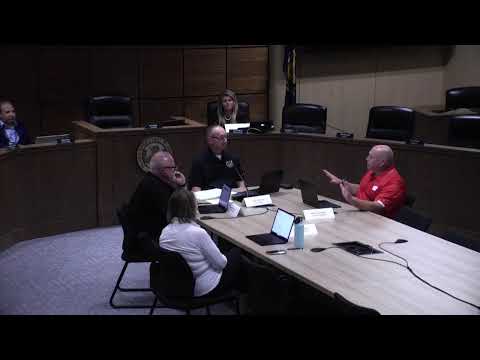
The Washington County Executive Committee reviewed guidance for joint-review participation on three tax incremental district (TID) actions: a proposed TID 18 in West Bend and amendments to TIDs 8 and 4 in the village of Slinger.
Staff described TID 18 as a mixed-use project on Rusco Road (between River Road and County Highway P/South Main Street) that includes next‑generation owner‑occupied housing (about 315 units) and an industrial area that would require rail access. The project plan lists costs for infrastructure (road reconstruction on Rusco Road and two roundabouts) and developer incentives; staff said the city proposes a cost-share for some infrastructure elements and that the city recognizes it will be "tiffed out" (statutorily restricted from creating another TID until closing one).
Supervisor Kelly (a county board member representing the West Bend area) expressed skepticism about the industrial piece and whether residential absorption could cover financing if industrial development lags. "Would that be able to cover and pay the *** off if the industrial component doesn't follow through?" Kelly asked, warning that a TID could be left "holding the bag" if development does not perform as projected.
Deb Silski, county staff engaged on next‑generation housing, told the committee the industrial sites were attractive because of existing rail access at the end of the line on Rusco. She said the next‑generation housing proposal would be owner‑occupied single‑family, ranch duplex and townhomes, and that the TID was considering a mechanism to reimburse owners $20,000 over 20 years similar to prior programs.
On Slinger matters, staff summarized two linked amendments. For TID 8 the village proposed shifting parcels from TID 4 into TID 8 to extend parcel eligibility and spread incentives across a longer schedule, reducing annual tax‑impact spikes. For TID 4 staff described a donor‑district proposal to move increment to TID 6 downtown, where a longer‑stalled redevelopment site (a former funeral home site) needed incentive dollars. The proposed incentive level for the downtown project was roughly 11.5% of project costs, with a development the packet described as about 39 units (roughly 30 apartments and nine townhomes) and some first‑floor commercial space.
Staff and supervising board members said Slinger’s approach was intended to balance district lives and deliver downtown redevelopment that improves parking and reinvests in the central business district.
No formal county-level vote on the joint-review guidance was recorded during the meeting; staff will represent the county on the joint‑review board process and bring recommendations or objections back to the county committee when appropriate.