Get Full Government Meeting Transcripts, Videos, & Alerts Forever!
Get email alerts on the Brownfields Prafke Site topic
No spam. Unsubscribe anytime.
Washington County committee approves county match for West Bend Prafke brownfield assessments and funds reuse planning
Summary
The Washington County Executive Committee approved county matching funds for a $150,000 site assessment grant and separate reuse-planning funding for the Prafke brownfield in West Bend and heard that the county’s Site Redevelopment Committee preliminarily recommended up to $580,000 in U.S. EPA Revolving Loan Fund support for remediation.
The Washington County Executive Committee approved county funding to support environmental assessment and reuse planning for the Prafke brownfield site in West Bend and reviewed a broader remediation roadmap that could lead to a U.S. EPA Revolving Loan Fund loan for cleanup work.
The committee voted to provide a $40,000 match toward a proposed $150,000 Wisconsin Economic Development Corporation (WEDC) site assessment grant for the Prafke site; the city of West Bend will contribute $10,000 as part of the match. The committee also approved $38,000 from the county’s site redevelopment program toward a $47,500 reuse-planning contract, with the city committing a $9,500 match.
Why it matters: the Prafke site sits adjacent to residential neighborhoods and the local trail and has a documented history of hazardous-material storage and partial cleanup. Committee members and staff said getting assessment and reuse plans in place will strengthen future loan or grant applications and reduce redevelopment costs for a private buyer.
County staff presented a full “road map” of work from Phase I environmental site assessment (ESA) through remedial action planning. Aaron Dahl, who led the staff overview, said the county received a U.S. EPA revolving loan fund award in 2020 that must be used before the award expires in September and that the revolving loan program is intended to support remediation work.
"It is a loan. It's a loan program," Dahl said, explaining the RLF funds must be repaid and that loan paperwork and community-involvement requirements make municipality-owned sites the best candidates.
Staff reported that the county's Site Redevelopment Committee (SRC) already approved funding for a Phase I ESA (under $10,000) and recommended, preliminarily to the EDWC revolving loan committee, up to $580,000 in RLF loan support for abatement, demolition, subsurface remediation and reporting. The SRC also approved limited RLF-funded tasks (eligibility determination, community involvement plan, cleanup analysis and decision memorandum) not to exceed about $16,000 to support future loan applications.
Supervisor Chaudhry asked whether remediation funding would include building demolition or only cleanup; Dahl replied that demolition can be financed if necessary to reach contamination sources. "Potentially. So we can utilize the cleanup loans for demolition if we need to get to the contamination itself," Dahl said.
Supervisors expressed concern that previous assessment work (some from the 1980s and 1990s) must be confirmed under current regulations and that an additional unassessed contaminant plume exists on the property. Staff said some historic testing was completed by private parties and by the city with DNR and EPA support; waste removal and partial asbestos abatement have already occurred.
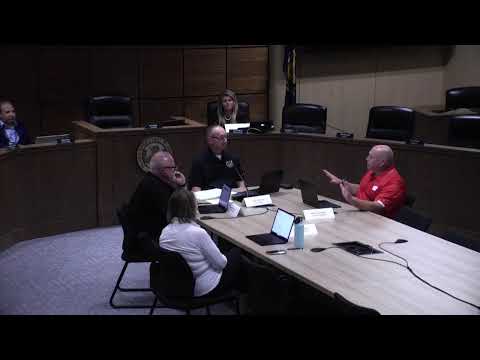
Formal actions: a motion to recommend the county expend $50,000 (county share $40,000; city share $10,000) as the match for a WEDC site assessment grant (agenda item 3c) was moved and seconded and passed by voice vote. A second motion to provide $38,000 from the county site redevelopment program toward a $47,500 reuse-planning contract (agenda item 3d) was also moved, seconded and approved by voice vote. The minutes record the outcomes as "motion carries"; no numerical roll-call was recorded during the meeting.
What’s next: staff said the reuse plan contract will produce concept plans, a site analysis and a market analysis to guide developers and help secure additional funding such as the EPA revolving loan. The SRC/EDWC revolving loan committee will consider any actual loan request; the committee’s recommendation to the EDWC was described as preliminary in the meeting.
The committee’s discussion and votes were taken as part of the county’s efforts to remove barriers to redevelopment by clarifying contamination, financing remediation, and producing community-engaged reuse plans that make the site marketable.