Get Full Government Meeting Transcripts, Videos, & Alerts Forever!
Get email alerts on the Vehicle Regulation topic
No spam. Unsubscribe anytime.
Council asks legal review on rental-car rules, low-speed vehicle limits and 'courtesy' cars
Summary
After correspondence about island rental operators, councilors asked the town attorney and staff to research whether the town can license or otherwise restrict rental vehicles and to clarify whether operators providing loaner cars are engaged in a rental business.
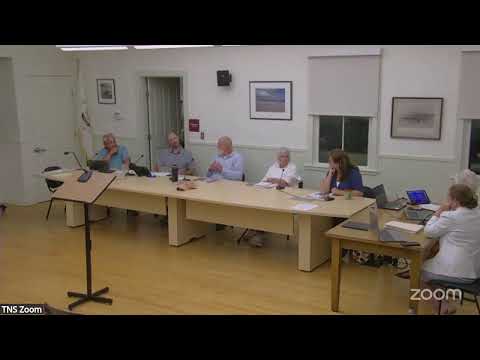
Councilors on July 16 asked town counsel and staff to research the town's authority to regulate rental vehicles and low-speed vehicles (LSVs) following resident correspondence and questions about operators providing loaner or courtesy cars.
Background and concerns: The council reviewed a memo and letters raising two related issues: (1) whether the town can require rental-car licensing or other local controls to ensure an operator's advertised rental limit matches operations on the ground, and (2) whether operators who provide temporary loaner cars to customers who cannot use rented mopeds are effectively operating a car-rental business without the proper license. One speaker described instances where a moped customer who could not operate the moped was given access to a car after already paying for the moped rental.
What staff and counsel said: Town Attorney James and staff said state motor-vehicle law and DMV regulations make the area complex and that licensing authority for rental businesses is not clearly provided for in available state statutes. Zoning currently controls whether a rental operation is permitted in a particular location; the existing zoning approvals set maximum fleet sizes for specific operators. Counsel suggested two avenues: (a) request a detailed legal opinion and memo on whether the town can enact a local rental-vehicle licensing regime or other enforceable controls, or (b) seek state enabling legislation if local authority is insufficient.
Courtesy/loaner cars: Councilors asked for clarification about whether loaner vehicles provided in connection with another paid service become a rental when money is exchanged. The council directed staff to begin by asking police to clarify how the practice is being used locally and to reach out to the named operator for an explanation of their business model; if the conduct appears to be a rental-for-fee, the council asked for enforcement options.
Low-speed vehicles and night operation: Several councilors said they are particularly concerned about LSVs operating after dark. Counsel indicated that targeted restrictions based on public-safety concerns (time, road classes, or town vs. state roads) may be possible and that staff will prepare a draft of options for limiting LSV operations on town roads if public-safety criteria are met.
Next steps: Town Attorney James and staff will provide a legal memo outlining town options, including whether a local licensing regime is feasible, what changes to zoning would be necessary, and whether state-level enabling action would be required. The police department was asked to follow up with the operator named in correspondence to clarify whether money was exchanged for a car loaner and whether enforcement action is needed.
Ending: The council did not adopt new rules at the meeting but asked the town attorney and staff to report back with a written legal analysis and enforcement options.