Get Full Government Meeting Transcripts, Videos, & Alerts Forever!
Get email alerts on the Broadband topic
No spam. Unsubscribe anytime.
County roundtable: fiber grant narrowed to north; private providers and Starlink shaping rural internet plans
Summary
Attendees heard updates that a federal planning grant has narrowed to the county’s north end after private fiber deployment in the south, and officials encouraged outreach to the private provider to clarify coverage and timing.
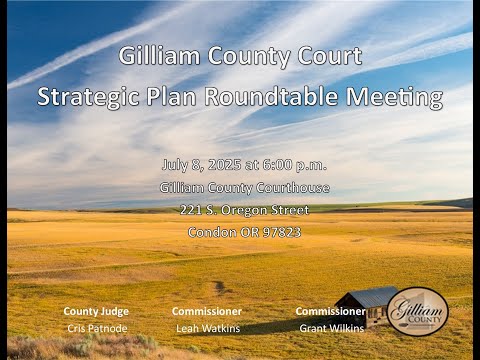
Gilliam County officials and community members used the July 8 roundtable to update one another on broadband efforts, where a previously broad federal planning grant has been narrowed following private fiber installation in the county’s southern area.
County staff said the original broadband planning grant pre‑qualified the county but later changed as federal program requirements and private deployments shifted. A private provider has installed fiber into parts of southern Gilliam County, and county leaders said the federal grant’s eligible geography narrowed to the north as a result.
County participants recommended that the court invite the private provider to present maps and timelines so the county can identify remaining unserved households and determine whether public support or coordination is needed to extend service. Several attendees also highlighted satellite options as a lower-cost, near-term option for many rural households; one resident noted monthly costs for Starlink start around $50 to $100 depending on service tier.
A local resident who identified themselves as Wilkins said they had been in discussions with the local fiber builder about a five‑year rollout and that some locations may not see fiber service until 2028. County staff and residents discussed options including pole‑attachment agreements, tapping existing municipal infrastructure and whether to treat broadband as a public utility for countywide coverage planning.
Why it matters: broadband access affects schools, businesses and remote households in the county. County participants said better mapping of provider plans and targeted grant applications would help match funding to areas that remain unserved.
No formal action was taken; attendees asked staff to invite the private provider to a future meeting and to continue pursuing grant opportunities and pole/utility agreements where applicable.