Get Full Government Meeting Transcripts, Videos, & Alerts Forever!
Get email alerts on the Social Services Shelter Policy topic
No spam. Unsubscribe anytime.
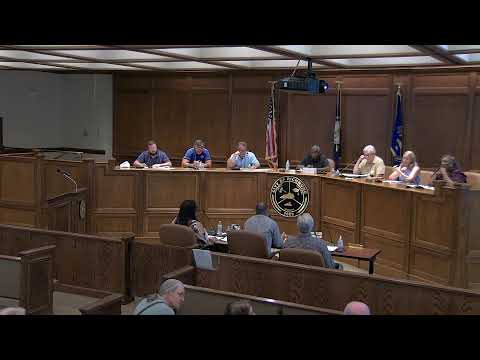
Commission discusses making overnight shelters a conditional use; local providers urge single, regulated facility and offer to help draft rules
Summary
Planning staff proposed adding overnight homeless shelters as a conditional use requiring Board of Adjustments review; local shelter organizers offered operational experience and asked for a single, regulated facility with 24/7 oversight and consistent standards.
Planning staff told the commission they studied approaches used by comparable cities and recommended adding overnight shelters as a conditional use, to be decided by the Board of Adjustments and accompanied by stringent site, safety and inspection requirements.
Staff described Lexington's approach, which makes shelters conditional (daytime only unless a religious institution is involved), and Louisville's model, which permits shelters with rigorous conditions including fire and building inspections and public inspection access. “What Kevin and I would like to do is just add it as a conditional use to go to the Board of Adjustments in our different zoning classifications,” a staff member said.
Commissioners raised concerns about placing shelters in residential zones and about how conditions would apply where churches already provide temporary overnight shelter. One commissioner said churches often rotate and provide stable support, while others worried about policing and medical support for people with mental illness or substance‑use issues in decentralized sites.
Monica Barnes, founder of Madison County Haven of Hope, addressed the commission on behalf of shelter organizers and operators, described existing local sheltering experience and asked the city to plan for one consistent, licensed facility rather than many scattered sites. Barnes said the local group has run rotating church shelters and is now working with a partner church to shelter a small number of people. “We are constantly looking at what kind of rules do we need, what kind of standards do we need,” Barnes said, noting previous models used a three‑strike system and coordinated with police and fire officials. She said the group planned to visit Volunteers of America in Louisville to study their model.
Barnes said clinical and medication management are real needs and that local volunteers and nurses have supported current small operations; she urged formal guidelines and consistent staffing if the city permits overnight sheltering. “There will be 24 hour a day care and oversight. It won't be just a shelter where people are on their own and not being supervised,” Barnes said.
Commissioners suggested a work session to develop a local approach and asked staff to bring model ordinances and guidelines. Staff and commissioners agreed it would be useful to wait until shelter organizers complete their planned site visits (including Louisville) and then hold a work session to bring in practitioners and refine conditional‑use language, permitted zones and standards for oversight, background checks, incident handling and buffers between shelters and residences.
No formal vote or ordinance change was taken at the meeting; staff will return with recommended zoning classifications, draft conditional‑use language and suggested inspection and oversight requirements for future consideration.
The commission invited shelter organizers to a future work session to discuss standards and operations.