Get Full Government Meeting Transcripts, Videos, & Alerts Forever!
Get email alerts on the School Policies topic
No spam. Unsubscribe anytime.
Board reviews multiple policy updates and a first reading; naloxone possession option noted
Summary
Superintendent Egan Brzezinski briefed the board on several policy updates prompted by recent Minnesota legislative changes and model policy corrections; optional policy language allowing high school students to possess naloxone was highlighted for board feedback.
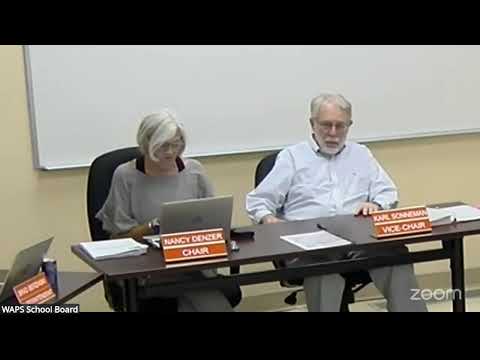
The Winona Area Public Schools board received a briefing on multiple policy updates and one first reading at the July meeting, most reflecting new Minnesota legislative language or corrections to Minnesota School Boards Association (MSBA) model policies.
Superintendent Egan Brzezinski walked the board through the list, which included model-policy-driven changes to transportation of nonpublic students (policy 708), student publications (policy 512), mandated reporting (policy 414), drug-free workplace and student cannabis registry notice (policy 418), school weapons reporting (policy 501), excused absence language (policy 503), directory and pupil record protections (policy 515), student medication language (policy 516), optional language on overdose medications (policy 516.5), school meals (policy 534), calendar start dates (policy 602), literacy and the Read Act (policy 621), transportation of public school students (policy 707), student transportation safety (policy 709), disposition of obsolete equipment (policy 802), and scribe/record management (policy 806).
Brzezinski said the district found an error in an MSBA model-policy update to policy 512 and will remove one line that "gives greater student voice, student control over content and editorial style of any student publication." He also noted a substantive set of additions to the literacy/read-act policy related to dual-language screening that align with the district's existing practices for the Rios program.
On optional overdose-medication language (policy 516.5), Brzezinski explained the draft contains language that would permit students in grades 9–12 to possess and administer an opioid antagonist (naloxone) to another student. He said the statewide requirement that schools keep an opioid antagonist on-site already exists, but the new optional language would allow individual students to carry such medication. Board members requested staff research administration methods and potential safety considerations (for example, aerosol vs. delivery-system distinctions) and return with recommendations.
Most of the legislative-driven updates were presented as briefing items and will return as a batch for board action on Aug. 7, except for the first-reading policy and the overdose-medication policy 516.5, which the board chose to schedule for more discussion on Aug. 21 paired with policy 512.
Why it matters: Several changes reflect state statutory requirements and model-policy corrections; the optional naloxone-carry provision raises questions about on-person possession and administration in secondary schools and was deferred for further review.
What comes next: The board will take action on the full batch of legislative updates at its August meeting; staff will research naloxone administration routes and report back for the Aug. 21 packet.