Get Full Government Meeting Transcripts, Videos, & Alerts Forever!
Get email alerts on the Capacity Building topic
No spam. Unsubscribe anytime.
Historic Landmarks Commission receives refresher training on reuse and restoration of deteriorated buildings
Summary
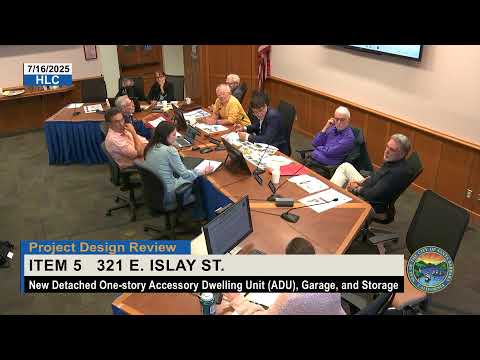
Historic Landmarks Commission members received a training briefing July 16 on techniques and case studies for reusing and restoring deteriorated buildings, with examples from Sacramento, New Orleans and local projects.
Historic Landmarks Commission members received a training briefing July 16 on the reuse and restoration of deteriorated buildings, with case studies from the California Preservation Conference and the presenter’s work in New Orleans.
Staff member Nicole Hernandez opened the session by reminding commissioners that the city’s charter-appointed expertise matters to the Commission’s decisions: the commission currently includes licensed architects, an architectural historian, and a landscape architect whose professional advice should be weighed when the body evaluates projects.
Hernandez presented three types of case studies to illustrate preservation strategies: (1) small historic houses in Sacramento converted into multiple rental units to add “missing middle” housing while retaining architectural features; (2) industrial and warehouse rehabilitations — including a hardware warehouse converted into 132 apartments and a hotel repurposed by Mercy Housing into 134 units for formerly homeless residents — where reuse was cited as comparable in cost to new construction; and (3) New Orleans rehabilitation programs that revived entire streetscapes (removing twentieth-century curtain walls to reveal and restore nineteenth-century facades) and nonprofit efforts to buy and restore derelict houses so neighborhoods could repopulate.
Hernandez also showed local examples, including a Pasadena–era car dealership building that was adaptively reused as a restaurant and brewery and a recent restoration of a community recreation building (a Julia Morgan–designed facility) that retained original details and restored public space above the gym. The training emphasized that “old buildings just need new ideas,” quoting Jane Jacobs, and urged commissioners to consider rehabilitation as a way to add housing and community services while preserving city character.
Several commissioners thanked staff for the training and encouraged regular refreshers; a commissioner suggested the session also serves public outreach when televised. Hernandez closed by noting preservation tools, local design guidelines, and practical considerations such as how reuse can be financially feasible and often competes favorably with new construction.
The session did not include formal votes; commissioners asked staff to continue sharing successful precedents and to coordinate design guidance available to applicants.