Get Full Government Meeting Transcripts, Videos, & Alerts Forever!
Get email alerts on the Impact Fees topic
No spam. Unsubscribe anytime.
Council grants Dr. Grenier an individual assessment, approves charging one-third of traffic impact fee
Summary
After extended public debate, the Middleton City Council approved an individual assessment for Dr. Grenier’s relocation and directed staff to charge one-third of the calculated transportation impact fee for his proposed new dental office.
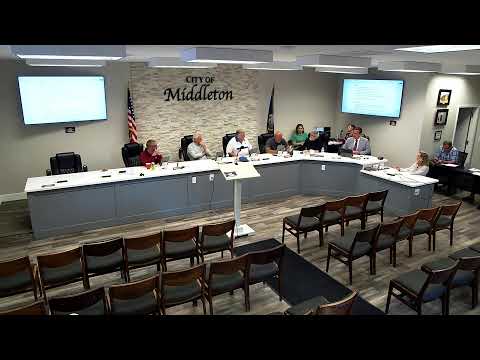
MIDDLETON, July 16 — The Middleton City Council approved an individual assessment for Dr. Grenier’s proposed move and directed staff to charge one-third of the city’s calculated transportation impact fee for his new building, after more than two hours of public testimony and council deliberation.
Dr. Grenier said he and his practice have served Middleton for about 20 years and that moving to a larger, newly built dental office would not materially increase city service demands because the practice’s patient base and staff count would remain substantially the same. He asked the council to consider his situation differently from a brand‑new business and requested an individual assessment, proposing to pay approximately one-third of the transportation impact fee to reflect only the incremental increase in service demand.
Dr. Grenier: “We are simply moving our location, and we are not increasing city services a single amount,” he said.
City staff and the city attorney urged caution. City Attorney Douglas told councilors the code allows an applicant to submit a new traffic study and that an individual assessment is permissible but requires supporting evidence. Staff said Dr. Grenier had not submitted a traffic study or other clear, site-specific data to demonstrate that the city’s calculated fee was inapplicable.
Douglas said the city had recently spent more than $100,000 on updated impact-fee analyses and warned that granting an exception without clear and convincing evidence could undermine the basis for the city’s fee schedule and make consistent application difficult. He also noted that the impact-fee update by consultant Kittelson is scheduled for council consideration later in August.
Despite those cautions, Council President Kiser moved that the council approve Dr. Grenier’s individual assessment on the basis that his business is an owner‑occupied practice relocating within Middleton and that the transportation impact fee be set at one‑third of the calculated figure for the new building. The motion was seconded and approved by roll call.
Clarifying details discussed at the meeting: staff said the transportation impact fee for Dr. Grenier’s proposed new building was calculated at about $78,491.40. Police and fire impact fees combined were listed at roughly $3,611; other permit and connection charges cited by the applicant (for building permit, utility connections and similar) are separate from the transportation impact-fee calculation and were not part of the council’s action.
Why it matters: Transportation impact fees are intended to have new development pay for the transportation improvements it necessitates. The council’s exception applies only to Dr. Grenier’s individual assessment and does not automatically change the city’s fee schedule. City attorneys and staff said applicants seeking similar relief should expect comparable evidentiary showings under the city code.
What’s next: The city will apply the one-third transportation impact fee to Dr. Grenier’s permit. The council was urged to consider changes to the overall fee schedule when it reviews the consultant’s transportation impact-fee study at the August meeting; staff warned that wholesale changes should be supported by analysis.