Get Full Government Meeting Transcripts, Videos, & Alerts Forever!
Get email alerts on the Grid Flexibility topic
No spam. Unsubscribe anytime.
Beckers SB 541 seeks to unlock local load flexibility, requires reporting and distribution planning changes
Summary
Sen. Beckers SB 541 would require reporting and planning changes to encourage local load flexibility and demand shifting as a tool to lower peak demand and delay distribution upgrades.
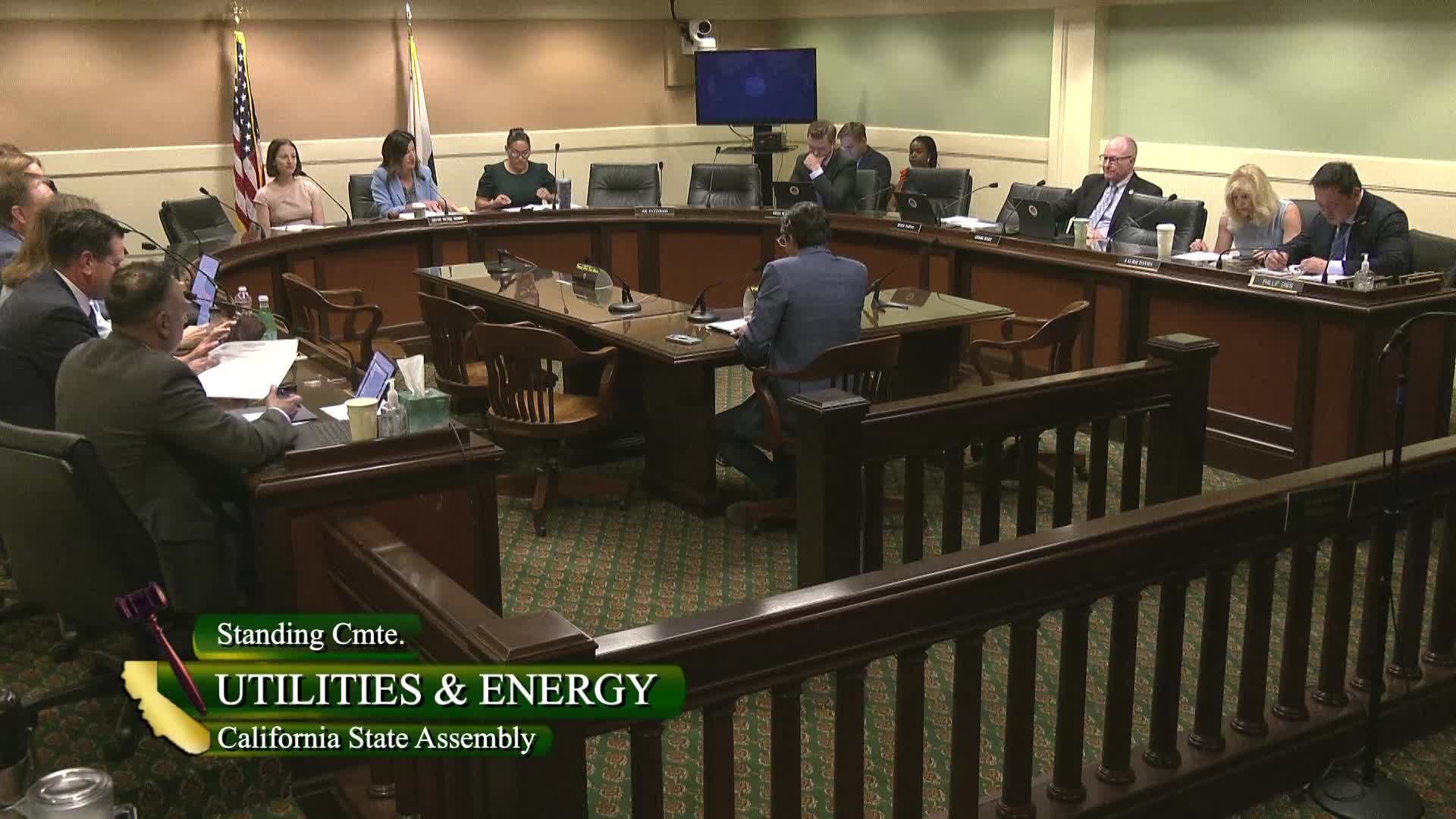
Sen. Becker presented SB 541 to the Assembly Utilities and Energy Committee as a measure to increase the use of load flexibility (demand shifting) to reduce peak demand and avoid distribution upgrades.
The bill would require the California Energy Commission to report estimates of each load-serving entitys cost-effective load-shifting potential and how much has been captured in near-term plans, and would require investor-owned utilities to provide data and consider local load flexibility in annual distribution planning. Supporters, including economic consultants from Brattle Group, said studies show more than 7,000 megawatts of cost-effective load flexibility in California and that harnessing it could save households hundreds of millions annually and avoid distribution upgrades.
Opponents from community choice aggregators, municipal utilities and IOUs asked for language clarifications and opposed any provision that would be read as a procurement mandate. Committee amendments removed language dividing the statewide goal among retail suppliers and added cost-effectiveness guidance; the committee moved the bill to appropriations as amended.
Why it matters: If successful, the measure could allow more customers, batteries, EVs and local flexibility resources to be used to avoid costly upgrades, connect new load sooner and shave the 45 peak hours a year when the grid is under the most strain.
Key testimony: Ryan Lehi of The Brattle Group said his firms study found over 7,000 MW of achievable load flexibility; he told the panel that capturing it could save households more than $500 million per year. Utilities and municipal associations urged careful drafting; the California Community Choice Association warned dividing the statewide goal among load-serving entities could be read as a mandate.
Ending: The committee adopted amendments to clarify cost-effectiveness language and to remove binding allocation of the statewide goal; SB 541 passed to appropriations as amended with the committee noting continued stakeholder discussions.