Get Full Government Meeting Transcripts, Videos, & Alerts Forever!
Get email alerts on the Utilities Water Rates topic
No spam. Unsubscribe anytime.
Queen Creek council approves 15% water rate increase after outreach; residential bills to rise roughly $3–$6 per month
Summary
After a public hearing and months of outreach, the Queen Creek Town Council unanimously approved a 15% increase to water rates intended to cover utility operating costs, infrastructure and replenishment needs. Town staff said the change will raise utility revenue by about $4.3 million and affect roughly 42,000 accounts.
The Town Council voted unanimously to approve a 15% increase in water rates that town officials said is needed to pay rising costs for infrastructure, operations and supplies.
Deputy Town Manager and CFO Scott McCarty and communications staff outlined the multimonth process and public outreach before the vote, noting that the town has about 42,000 water accounts and the rate increase would generate about $4.3 million in additional annual utility revenue. Staff said roughly $3 million of that increase would come from single‑family residential accounts (about 40,000 accounts).
Why it matters: The water utility is operated as an enterprise fund separate from the town’s general revenue. Staff said revenues pay for electricity, maintenance, replacement, and new construction for the water utility; they said the utility does not make a profit and the rate is designed to cover costs and planned capital needs.
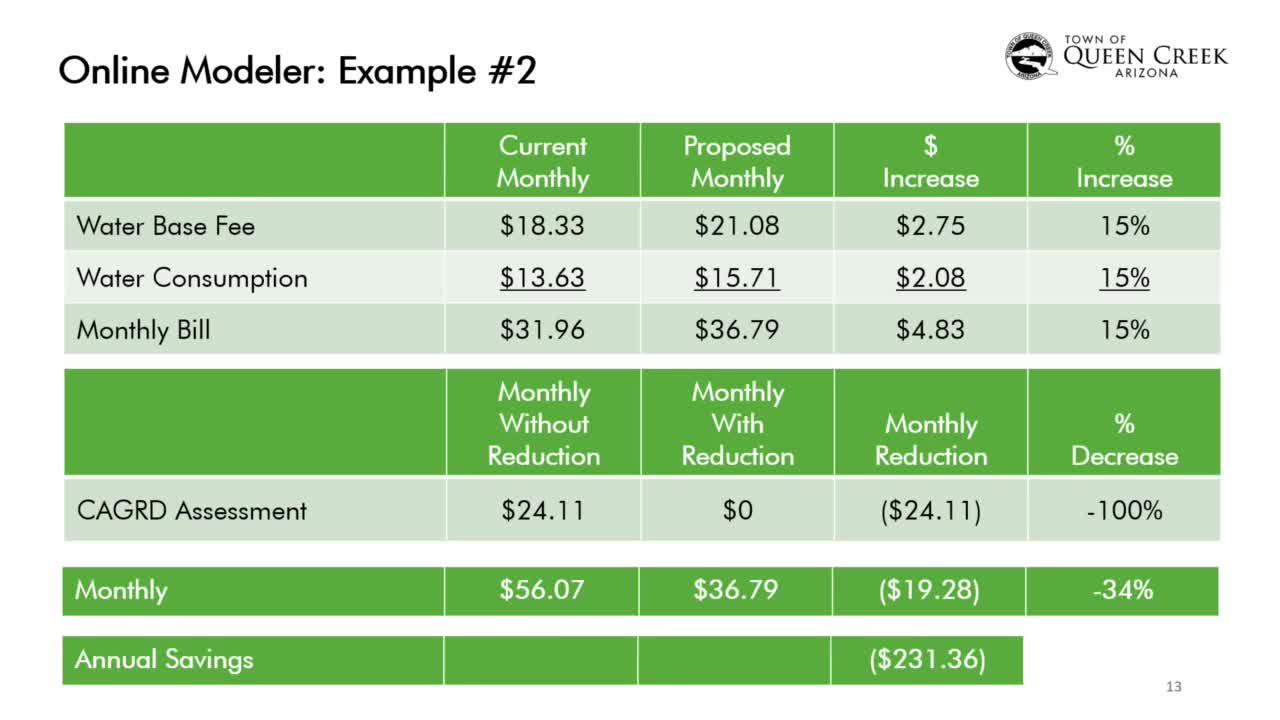
Town staff presented examples to make the change tangible: for an average single‑family residential account, monthly bills would increase about $3 in low‑use months and about $6 in high‑use summer months — roughly $58 annually in the example. Staff also noted that the town’s work to reduce groundwater replenishment district (CAGRD) assessments over prior years offsets some customer impacts and that for many customers the combined effect (rate increase plus past reductions) keeps their total water‑related costs lower than several years ago.
The council conducted a formal public hearing before voting. Scott McCarty outlined procedural steps and the schedule for when new rates will begin to appear on bills: if approved, a 30‑day waiting period is required after adoption and billing cycles mean the new rates will appear on bills in the late summer/early fall billing cycles.
Public comment included opposition from Michael McAllister, a customer who lives in San Tan Valley and said fixed‑income and stretched households will feel the change and that homeowners associations may pass costs on to residents. McAllister said, “I totally understand the need to maintain infrastructure … but this increase is a heavy burden, especially for those on fixed incomes.”
Council members noted the long gap since the town last raised rates: staff said the utility’s last rate change was in 2010. Council discussion emphasized the separate enterprise nature of the utility fund (water costs and revenues are kept separate from the town’s general fund), the need to cover rising costs for renewable water supply and infrastructure, and the outreach the town undertook (a dedicated web page with an interactive bill calculator, emails, press releases, presentations, HOA and school outreach and more). Communications reported more than 5,000 views of the dedicated landing page and roughly 14,000 social impressions on outreach posts.
Motion and vote: Council Member Brown moved to approve the rate adoption resolution (public hearing item 9B); Council Member Benning seconded. The motion passed unanimously.
Clarifying details: the town identified roughly 42,000 billed water accounts (about 40,000 single‑family residential), projected additional utility revenue of about $4.3 million, residential monthly increases of roughly $3–$6 depending on season, and examples showing some customers’ combined bills (water plus prior CAGRD reductions) remain below prior years’ totals. Staff noted a 30‑day waiting period and staggered billing cycles that delay full implementation until bills generated later in the summer and fall.