Get Full Government Meeting Transcripts, Videos, & Alerts Forever!
Get email alerts on the Solar Ordinance topic
No spam. Unsubscribe anytime.
Planning Board reviews utility-scale solar ordinance edits; seeks developer feedback and considers battery rules
Summary
Board members reviewed modest edits to the utility-scale solar ordinance — including revised setbacks and a new fire-suppression/ emergency-services section — and voted to solicit feedback from developers before a public hearing; members also discussed adding clearer battery-storage language and a proposed 250-foot/100-foot setback standard.
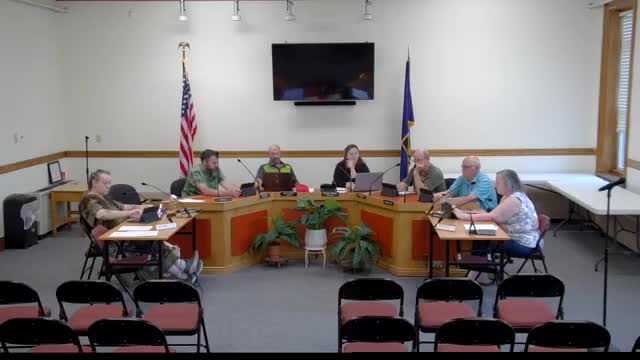
The Planning Board reviewed proposed edits to the town’s utility-scale solar ordinance and agreed to solicit feedback from solar developers before scheduling a public hearing. The board’s edits include revised setback language, a new emergency-services subsection addressing fire suppression and a deletion of a previous subsection (section k).
The board discussed outreach: staff will email developers on an internal list and encourage recipients to share the draft with peers; staff will also prepare a one-page notice for the town website and social media. Board members said they prefer soliciting developer feedback first, then holding a later public hearing for residents.
Substantive edits discussed in the meeting include revised setbacks and fire-suppression requirements. A planning-board speaker proposed a minimum buffer of 250 feet from any property line and no closer than 100 feet from any dwelling unit. Members also discussed battery-storage facilities as an emerging issue and suggested requiring battery storage systems to sit on a noncombustible surface (for example a gravel or rock pad) and to be set within a contained area to reduce fire risk. Staff said they would research sample battery-storage language used by other Maine municipalities to add a single, imperative provision to the draft ordinance.
Fire-suppression measures drew extended discussion. Board members noted that existing ground-mounted arrays have rarely experienced fire incidents locally but that the growing use of battery storage and the differing designs of utility projects make emergency response planning more urgent. Suggestions included vehicle access routes, cleared perimeter strips, and coordination with local fire departments on suppression training and equipment needs.
The board approved sending the draft ordinance to developers for review and directed staff to compile any written comments and present compiled feedback at a future meeting. The board did not set a public-hearing date during the meeting, and the ordinance will not be adopted until subsequent hearings and votes.