Get Full Government Meeting Transcripts, Videos, & Alerts Forever!
Get email alerts on the Skatepark Expansion topic
No spam. Unsubscribe anytime.
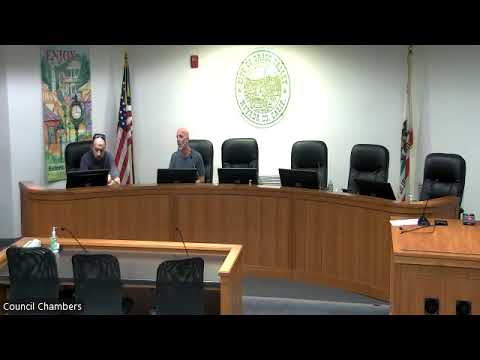
Grass Valley skatepark ad hoc meeting frames grant, site and volunteer plans for expansion
Summary
Grass Valley residents, council representatives and city staff met to discuss fundraising, grant opportunities and potential locations to expand skateboarding features around Conant Park, including smaller “pocket” skate features and a possible larger expansion on land adjacent to the newly constructed skate facility.
Grass Valley residents, council representatives and city staff met to discuss fundraising, grant opportunities and potential locations to expand skateboarding features around Conant Park, including smaller “pocket” skate features and a possible larger expansion on land adjacent to the newly constructed skate facility.
The meeting, convened as an ad hoc committee, focused on three near-term paths: (1) pursuing multiple smaller grants and community fundraising, (2) preparing environmental and site documents so grant applications score higher, and (3) identifying smaller, quickly implemented skate features across the city. City staff said they have begun preparing environmental documents for areas adjacent to the current skate park “to be ready for that expansion.”
Why it matters: organizers and city staff said paired preparation and fundraising increase competitiveness for grants. City staff also noted Measure E — a local special sales tax — can be designated for parks but that designation and distribution of Measure E funds is a multi-year process, so matching grants and community-raised money remain important to speed projects.
City planning and grant steps City staff present at the meeting said they have started the site-preparation and permitting steps that often improve a grant application’s score. A staff member noted they are assembling maps and environmental documentation for land adjacent to the current park so applications can proceed as fundraising solidifies. The staff member cautioned that no final funding commitments or council votes were announced during the meeting.
Councilman Tom Ivy and other city representatives said staff would continue to research and prepare for potential options. A staff participant said that Tim Kaiser had indicated the city could make about 15,000 square feet available adjacent to the current footprint as a possible expansion site; staff said that availability will be verified as part of their homework and brought back to the group.
Grants, matches and fundraising Community organizers discussed a mix of grant sizes and sources. Joseph Bonamulo, a community organizer, said, “I personally went online and looked at opportunities for grants because I think that grant consultant that we work with tends to look for bigger grants,” and urged local coalitions to pursue smaller state and nonprofit grants in parallel with the city’s consultant.
Speakers identified a sample $25,000 grant opportunity that community coalitions could jointly apply for; multiple coalitions pooling match funds could yield $50,000–$75,000 of combined resources, participants said. Members also discussed applying to national nonprofit grantmakers such as the Skatepark Foundation (formerly the Tony Hawk Foundation) and state or county grant programs. The city confirmed it works with an external grant-consulting firm and that staff can forward candidate grant opportunities to that consultant for evaluation and possible application assistance.
Speakers also said the city had applied for larger park grants. Meeting comments reflected that the larger park funding package previously obtained included roughly $3,000,000 in grant funds overall, with about $1,500,000 identified specifically for the skate park (participants discussed the numbers during the meeting and described them as the grant breakdown presented earlier in the project process).
Pocket parks, features and fundraising ideas Multiple residents proposed smaller, quick-to-build features as an alternative or complement to a full expansion. Will, a participant, proposed a dual-purpose feature that could serve as a skate element and a recycling/CRV donation point to generate ongoing funds. Participants suggested movie nights, skate-a-thons, and partnerships with local businesses and the Grass Valley Police Department as fundraising avenues. Several speakers emphasized community volunteer labor and in-kind donations as ways to reduce costs for small features.
Operational and facility questions Participants raised infrastructure issues that would affect future use and safety. City staff said the current project will include conduit for future lighting where feasible; staff also confirmed the park’s bathroom facilities are scheduled for replacement “within this year.” Organizers asked how quickly lighting or other amenities could be approved; staff said funding needs to precede procurement and installation and that some items may require additional approvals.
Timeline and next steps Staff and council representatives repeatedly framed the work as preparatory: assembling grant-ready documents, identifying funding matches, and exploring small, incremental features while pursuing larger grant opportunities. Staff reported the major new park construction remains “on track for November” (meeting participants did not specify a calendar year in the public discussion). The group agreed to continue meeting monthly (second Monday) and to consider holding future meetings at the park.
Tensions from earlier project phases Several speakers addressed lingering community tension about decisions made during the prior project phase, including removing older skateable features during the recent construction. Eric Gorman summarized that concern: “the reason that this ad hoc committee exists is because of the shortcomings of the previous effort to build scalable space in this community,” and said advocates must learn from the earlier process. City representatives acknowledged the history and encouraged continued public participation.
What was not decided No new formal council votes or legally binding commitments were taken at the meeting. Staff did not commit the city to a funding timetable; city representatives described options, said they would continue preparatory work, and invited community coalitions to pursue grants and to share findings with staff and the city’s grant consultant.
Ending Organizers and staff closed the meeting by reaffirming plans for ongoing monthly meetings, continued coordination between city staff and community coalitions, and follow-up on the environmental and site-preparation work intended to strengthen grant proposals. Community members were invited to sign up for the city newsletter for updates and to bring grant leads and demographic data to staff for use in applications.