Get Full Government Meeting Transcripts, Videos, & Alerts Forever!
Get email alerts on the Student Safety Anonymous Reporting topic
No spam. Unsubscribe anytime.
Committee approves anonymous tip-reporting MOU after extended debate over benefits and risks
Summary
After extended public comment and committee discussion, Chariho approved a memorandum of understanding to continue an anonymous tip-reporting system for students and community users; supporters said it aids suicide-prevention and safety, critics raised concerns about false or vindictive reports and the MOU's vendor affiliations.
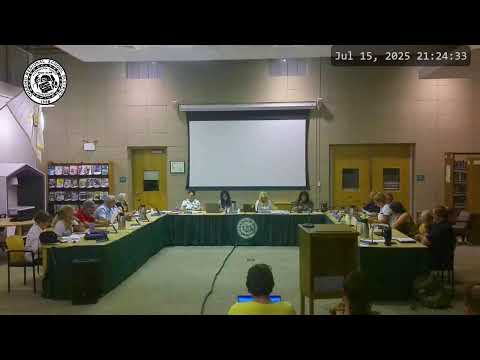
The Chariho Regional School Committee voted July 15 to approve a memorandum of understanding (MOU) to continue using an anonymous tip-reporting system (often known as Say Something or similar platforms) for students, families and community members.
The item drew the meeting’s longest public comment period and extended committee debate. Supporters — including students, parents and law-enforcement advocates who addressed the committee — said the tool provides an important channel for peers to alert school officials and police to life-threatening risks when students are reluctant to make in-person reports. “If this saves one child, it’s worth it,” said Greg Abadesian of Huntington.
Several speakers described personal cases in which peer reporting led to timely interventions. Lola Fleishman said repeated peer reports about her daughter’s self-harm attempts led to emergency assessment and follow-up care; she told the committee she was “so grateful” that her daughter’s classmates reported the incidents.
Opponents raised concerns about anonymous, cross-district submissions and false or vindictive tips. Amy Rodriguez, identifying herself as chapter chair of the Washington County chapter of Moms for Liberty, described an incident in which a tip from outside her child’s district triggered a police welfare check at home and a subsequent school psychologist evaluation she said she had to contest. “My parental rights were completely violated and brushed aside,” Rodriguez said, urging the committee to reject the MOU.
Committee members debated the balance between anonymous reporting and potential harms. Diane asked how administrators guard against vindictive reports; Gina Picard said administrators and police “know how to do it appropriately” and described coordination protocols whereby life-threatening tips generate simultaneous notifications to school and public-safety partners. Picard also said the district already teaches the program in advisory classes for grades 5–12 and that peer reporting had produced a number of interventions: “In the fall, there were 23 students report that they were concerned about a friend who was going to harm themselves,” she said.
Several committee members requested additional data and process clarification. Karen asked for state-level statistics; Picard said she could provide district-level reports and asked that police and program partners be invited to a future meeting to brief the committee on local use and false-report safeguards.
The committee voted by roll call after discussion. Several members publicly explained their votes; the motion carried.
What comes next: the MOU will be executed so the district can continue the anonymous tip line; staff agreed to provide usage statistics and invite law-enforcement or program representatives to a future meeting to address questions about false positives, cross-district submissions and response protocols.