Get Full Government Meeting Transcripts, Videos, & Alerts Forever!
Get email alerts on the Functional Zero Unsheltered Homelessness topic
No spam. Unsubscribe anytime.
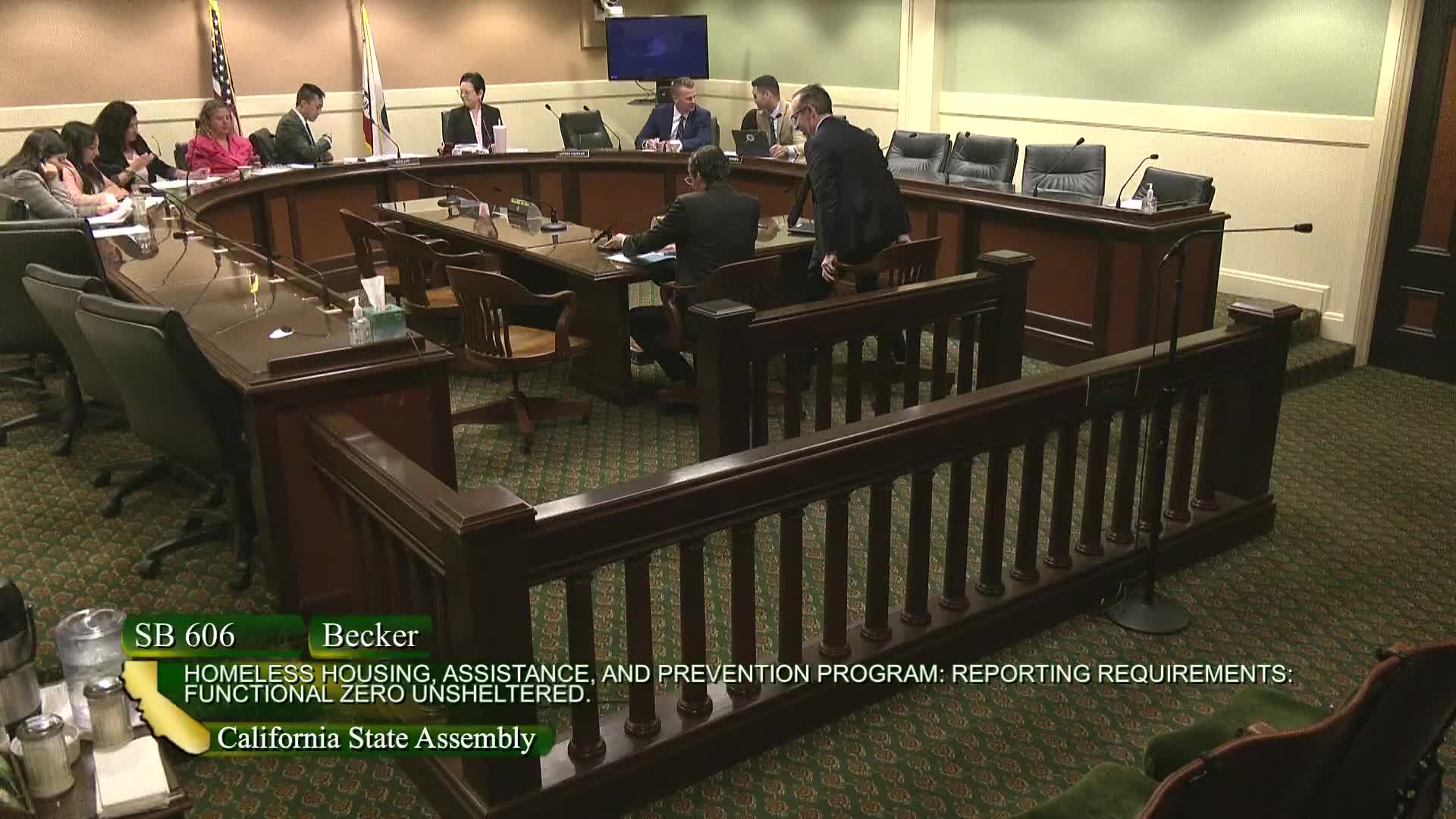
Committee advances SB 606 requiring local planning toward 'functional zero' unsheltered homelessness
Summary
SB 606 would require jurisdictions and continuums of care to plan to achieve and maintain 'functional zero' unsheltered homelessness and to analyze housing unit needs; supporters said the bill uses planning and accountability to accelerate interim and permanent housing creation.
Senator Becker presented SB 606, called the Functional Zero Act, requiring cities, counties and regional continuums of care to plan for and track progress toward achieving functional zero unsheltered homelessness as part of the regionally coordinated Homeless Action Plan (HAP) process.
The sponsor described California's particularly high rate of unsheltered homelessness compared with the national average and said the bill ties eligibility for certain dollars in a funding cycle to having a detailed plan that calculates the number and types of housing units needed to reach functional zero. The senator cited Santa Barbara, San Jose and San Mateo County as jurisdictions making progress through detailed planning and interim housing projects.
Supporters included Adrian Covert of the Bay Area Council, who testified about California's low shelter-to-resident ratios and the human costs of unsheltered homelessness, and other cosponsors and local governments, including Dignity Moves, the Housing Action Coalition and the City of San Jose.
Housing California representatives told the committee they were moving from an initial "opposed unless amended" position to neutral after the senator accepted committee amendments.
Committee members commended the author for incorporating accountability into the HAP process and observed that achieving functional zero unsheltered is a step toward the broader goal of ending homelessness; the committee voted to pass SB 606 as amended to the Assembly Appropriations Committee.
Action and next steps: The measure passed committee and was forwarded to Appropriations. The committee record shows the motion was seconded and the roll call passed; supporters emphasized planning, unit-count analyses and use of tools the Legislature has previously provided to local governments.
The bill refers to the HAP planning process and to prior legislation (referenced as AB 1395 in testimony) as context for enabling tools and incentives to accelerate interim and permanent housing production.