Get Full Government Meeting Transcripts, Videos, & Alerts Forever!
Get email alerts on the Public Health topic
No spam. Unsubscribe anytime.
Bangor public health reports 26 confirmed HIV cases; Ryan White medical case management service gap cited
Summary
Bangor Public Health and Community Services reported 26 confirmed HIV cases linked to a roughly 20-month cluster and warned the region currently lacks a Ryan White Part C medical case management provider after Regional Medical Center at LeBach stopped providing the service.
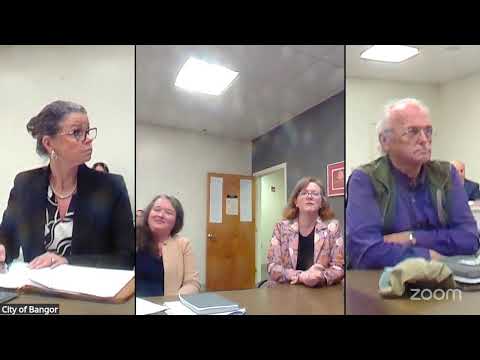
Jen Gunnerman, director of Bangor Public Health and Community Services, told the City Council workshop on July 14 that the city has documented 26 confirmed HIV cases over roughly a 20-month period and that health officials believe the true number is higher.
"We are at a total number of 26 cases, over now, gosh, a 20 month time for you," Gunnerman said. She added that testing barriers — stigma, fear of learning a test result and unstable living situations — mean the 26-person count reflects only those who have been tested and diagnosed.
The update also said the Regional Medical Center at LeBach has ceased providing Ryan White Part C HIV medical case management for five counties, leaving a gap in services the city considers a "significant blow." "I cannot begin to describe to you what a significant blow this is to our community," Gunnerman said.
Gunnerman and councilors discussed which agency controls Ryan White funding; Gunnerman said the federal Health Resources and Services Administration (HRSA) oversees allocation and that Maine CDC and other state partners are in talks to determine next steps. "It's the federal government. It's HRSA," she said.
Public-health staff described ongoing response work: outreach testing (free for high-risk people and available for medium-risk clients), distribution of free self-test kits provided by a Portland nonprofit, collaboration with Northern Light and PCHC for treatment and medication delivery, an enrollment incentive program for medication adherence, and plans to add an infectious-disease specialist and a clinic site for testing, wound care and telehealth visits.
Gunnerman said the department is also helping people complete Ryan White Part B paperwork to secure medication assistance and is coordinating with local partners, including Wabanaki, to enhance syringe-service provision. She said an August hire — a master of public health-level staff member named Elizabeth — will begin work assisting with case navigation and infectious disease tasks.
Councilors pressed on timelines and funding; Gunnerman said some federal funding likely returned to HRSA when prior providers closed, and that her team is pursuing short- and long-term options with Maine CDC, MaineCare and community partners. "Right now, we need to operate that those funds aren't there," she said.
The council and staff did not adopt any new policy at the workshop; the presentation was an informational update on the outbreak and response activities.
Upcoming steps cited by Gunnerman include continued coordination with Maine CDC and MaineCare, outreach to secure alternative Ryan White Part C arrangements for the five-county region, pursuing grant funding (including an approved Gilead grant application the city may pursue), and rolling out the medication-adherence incentive program.