Get Full Government Meeting Transcripts, Videos, & Alerts Forever!
Get email alerts on the Utility Scale Solar topic
No spam. Unsubscribe anytime.
Pulaski supervisors deny Sicily Solar special-use permit after residents raise water, value and safety concerns
Summary
Pulaski County supervisors voted to deny a special-use permit for a proposed 5-megawatt Sicily Solar project after hours of testimony from neighbors, developer presentations and expert testimony. Staff and the Planning Commission had recommended approval.
The Pulaski County Board of Supervisors voted to deny a special-use permit for Sicily Solar, a proposed 5-megawatt ground-mounted solar project on roughly 30–31 acres off Route 11 and Black Hollow Heights Lane.
The project, proposed by Sicily Solar LLC and developed by 1 Energy Renewables, would have placed photovoltaic panels on two parcels leased from landowners Frederick and Stephanie Hajduk and would connect to existing Appalachian Power Company distribution lines. Company representatives told the board the project would generate enough energy for about 1,200 average Virginia homes, take the parcel out of agricultural assessment for higher property tax revenue, and include a decommissioning plan and a 50-foot vegetative buffer around the fenced array.
Alyssa Miller, project manager for 1 Energy Renewables, described the revised site plan the company submitted after an earlier deferral, including changing the access point from Black Hollow Heights Lane to an existing gravel entrance off Route 11. Miller said the developer would provide a voluntary cash payment of $15,000 per megawatt (a stated $75,000 total) and that the project could come online as early as 2026 if permitted and financed.
The developer and an appraiser, Rich Kirkland of Kirkland Appraisals, asserted the project would not depress nearby property values and cited appraisal surveys and assessor responses from other states. Kirkland said the closest existing home identified in his analysis was about 320 feet from the proposed array.
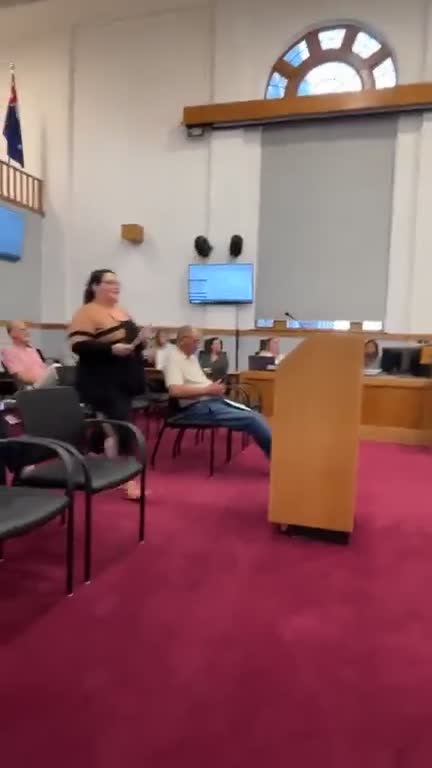
Opposition from neighbors dominated the public hearing. Dozens of residents and landowners told the board they worried about impacts to private wells, potential contamination during construction, fire risks and emergency response (citing lack of hydrants and water access near the site), loss of scenic views, deed restrictions limiting non‑agricultural uses, and the presence of karst geology and nearby springs and streams. Several speakers requested additional geotechnical investigation, and at least one resident said endangered-species habitat should be checked.
Board staff had recommended approval, and the Planning Commission voted 5–2 to approve the permit at its hearing (the planning commission’s approval used the earlier access configuration). The county’s solar ordinance and Unified Development Ordinance require a special‑use permit for a utility‑scale solar facility in the agricultural district and a 50‑foot buffer; staff reported the application met those standards and other UDO requirements. The applicant noted the Federal Aviation Administration conducted a study under 49 U.S.C. § 44718 and had no outstanding airport concerns.
Supervisors debated the application after public comment. Board members who spoke in opposition emphasized constituent concerns about water, roads, deed restrictions and local impacts; those who supported the project cited property rights and the county’s need for electricity infrastructure. After motions and discussion, the board voted to deny the permit, overturning staff and the Planning Commission recommendation.
The denial ends county permitting for the Sicily Solar special-use application as presented; the developer stated it would need to complete additional environmental and geotechnical studies before construction in any case and that the special-use permit was the first formal step in permitting. The company representative also said if the project could not be financed or if due‑diligence studies revealed environmental constraints, the project would not be built.
Votes on the permit were taken by roll call at the meeting; the motion to deny prevailed. The board did not adopt any conditions to allow a revised application during that meeting.