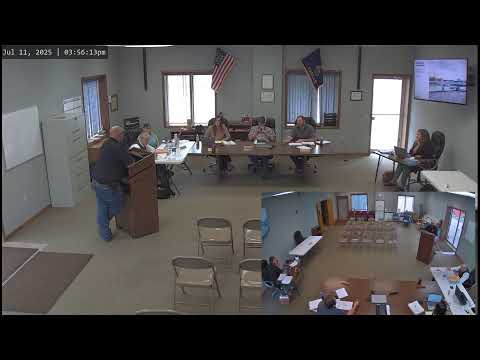
Linn County commissioners weigh revenue-neutral option as cash reserves fall in budget workshop
Loading...
Summary
County staff presented budget scenarios showing cash at the end of 2024 of about $5.0 million and a projected drop to roughly $3.0 million in 2025; commissioners discussed whether to keep the same mill levy, move to the revenue‑neutral rate, or use contingency and cash carryover to cover shortfalls.
Linn County commissioners and staff spent the workshop reviewing the county’s draft budget and options for the 2026 levy, with the presentation showing last year’s mill levy at 38.238 and countywide receipts that staff said total about $1 million under that levy.
The county’s budget adviser said cash at the end of 2024 was about $5,000,009.50 and projected cash at the end of 2025 would be roughly $3,000,009.47 under current assumptions; that projection, he said, would leave the county below a six‑month reserve and produce a six‑month shortfall in the general fund of roughly $1,000,093 if no changes are made. Staff showed a revenue‑neutral rate of about 35.087, and explained that staying at the same mill levy as 2025 would raise additional tax dollars because assessed values had increased.
Why it matters: commissioners said the choice is essentially between reducing the levy toward the revenue‑neutral rate (which keeps tax dollars roughly level year over year), maintaining the current levy (which raises more revenue because assessed values increased), or taking some money from contingency/cash carryover. Staff described three specific cash items that were affecting projections: an approximately $332,000 adjustment on a “STARS” line, a $400,000 landfill‑closure transfer recorded in the 2026 column that staff recommended converting to a recurring $25,000 annual transfer tied to the solid waste budget, and a $3.75 million transfer that had been budgeted as a one‑time item in 2025 (staff said that $3.75 million would come out of the agency line in the current year).
Discussion and options: staff outlined three basic approaches commissioners could adopt: 1) keep the mill levy at the same rate as 2025 and accept a higher cash balance but higher tax dollars collected; 2) lower the levy to the revenue‑neutral rate to avoid raising residents’ tax bills but accept drawing down county cash and contingency; or 3) a mixed approach — reduce some expenditures, move certain sums back into contingency as lines rather than carryover, and negotiate or reexamine large budget items (health insurance, sheriff payroll requests, ARPA encumbrances) to reduce the need to use one‑time cash.
Commissioners and staff repeatedly noted that staying revenue‑neutral for multiple years risks eroding reserve balances over time; staff cited other counties that went years without adjusting levies and later faced much larger increases. Commissioners asked staff to prepare a revised set of numbers reflecting the options discussed ahead of the Monday meeting and to provide a final draft for the publication and public hearings required by state law.
What was not decided: the commission did not vote on a final mill levy at the workshop. Staff said the commission must decide whether to exceed the revenue‑neutral rate at the next meeting; if so, the motion should specify the upper limit they will not exceed so the clerk can publish the appropriate notices.
Ending: staff said they would revise the draft to reflect the discussion, circulate it by email, and be prepared to present an updated budget at the next public meeting so commissioners could set a final levy and schedule the hearing.