
Council hears debate on Workforce Investment Act documents and governance of local workforce board; item continued to next day
Get AI-powered insights, summaries, and transcripts
Subscribe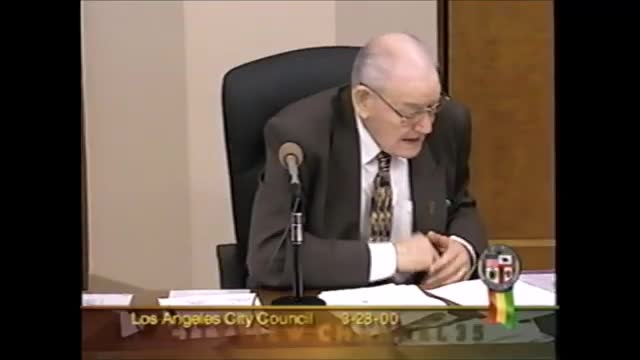
Summary
The Los Angeles City Council continued a multi-agency WIA package to allow the city attorney, staff and the Workforce Investment Board to finalize an enforceable governance agreement before the state application deadline.
The Los Angeles City Council heard an extended briefing on three required documents tied to the federal Workforce Investment Act and on an ensuing agreement that defines the workforce investment board's governance and city liability. The council agreed to continue the item to the next day to allow outstanding issues to be resolved.
Council member Hernandez led the discussion and asked for clarity because the city's WIA application and business plan were due to the state by April 1. Anne Gianni of the Community Development Department told the council the packet before them included a five-year plan (a policy framework that has had public hearings and can be amended), a required MOU among mandatory federal partners and a JTPA closeout plan intended to protect participant services. Gianni said the city's JTPA closeout estimate included about $2.5 million in closeout costs and about $5.5 million in unspent JTPA funds that could roll into WIA.
Jessica Hines of the City Attorney's Office told the council the central legal issue concerned liability: the Workforce Investment Board (WIB) makes substantive funding decisions as a private association appointed by the mayor, but the city remains legally liable for grant decisions. "In exchange for this, the WIB as a private association is going to be indemnified and held harmless for their role and their activities in running this program in the city by the council," Hines said, adding the city attorney's office wanted a final text rather than a 30-day agreement-to-agree because courts may reject open-ended agreements.
Charlie Wu, interim president of the WIB, asked for more time to review last-minute changes to the draft LEO agreement and said private-sector participation required clear, understandable rules. "The only way you get private business owners to participate is you have rules and regulations that are easily understood," Wu said.
Because the city attorney expressed concern about submitting the application with an incomplete governance agreement, and the WIB said it needed time to review edits, the council agreed to continue the item to the next day so staff, the city attorney and the WIB could finalize language. The council instructed staff to report back promptly and to use a 30-day interim filing process with the state only if the city attorney was satisfied with enforceability.
Why it matters: The documents under discussion determine how approximately tens of millions in federal workforce funding are administered locally and which body bears legal liability for funding decisions. The governance language affects private-sector participation and the WIB's willingness to make decisions.
What happens next: The council continued the item to the next day to allow final language to be negotiated and requested staff, the city attorney and WIB leadership finalize a form of agreement the city can submit with its WIA application.