Get Full Government Meeting Transcripts, Videos, & Alerts Forever!
Get email alerts on the Monument Avenue Street Trees topic
No spam. Unsubscribe anytime.
Neighborhood group urges coordinated replanting plan for Monument Avenue trees; city staff to advise
Summary
Historic Monument Avenue neighbors presented an inventory showing many missing or declining street trees and urged a coordinated planting plan that preserves the avenue’s historic character while increasing species diversity; the city’s urban forester and DPW committed to follow-up on permitting and planting coordination.
Historic Monument Avenue neighborhood representatives asked the Urban Design Committee to support a coordinated street‑tree replanting strategy after presenting an inventory showing dozens of missing or declining trees and the risks of returning to a sugar‑maple monoculture.
Alice Massey and Janice Knuckles, representing Historic Monument Avenue (HMA), told UDC that an 11‑year city tree inventory plus a recent on‑the‑ground survey by an arborist firm documented approximately 51 vacancies and numerous trees in decline along the avenue. The group said the original sugar maple planting pattern that historically defined the avenue is now vulnerable to pests, heat stress and other decline, and they urged a resilient but historically sensitive replacement approach.
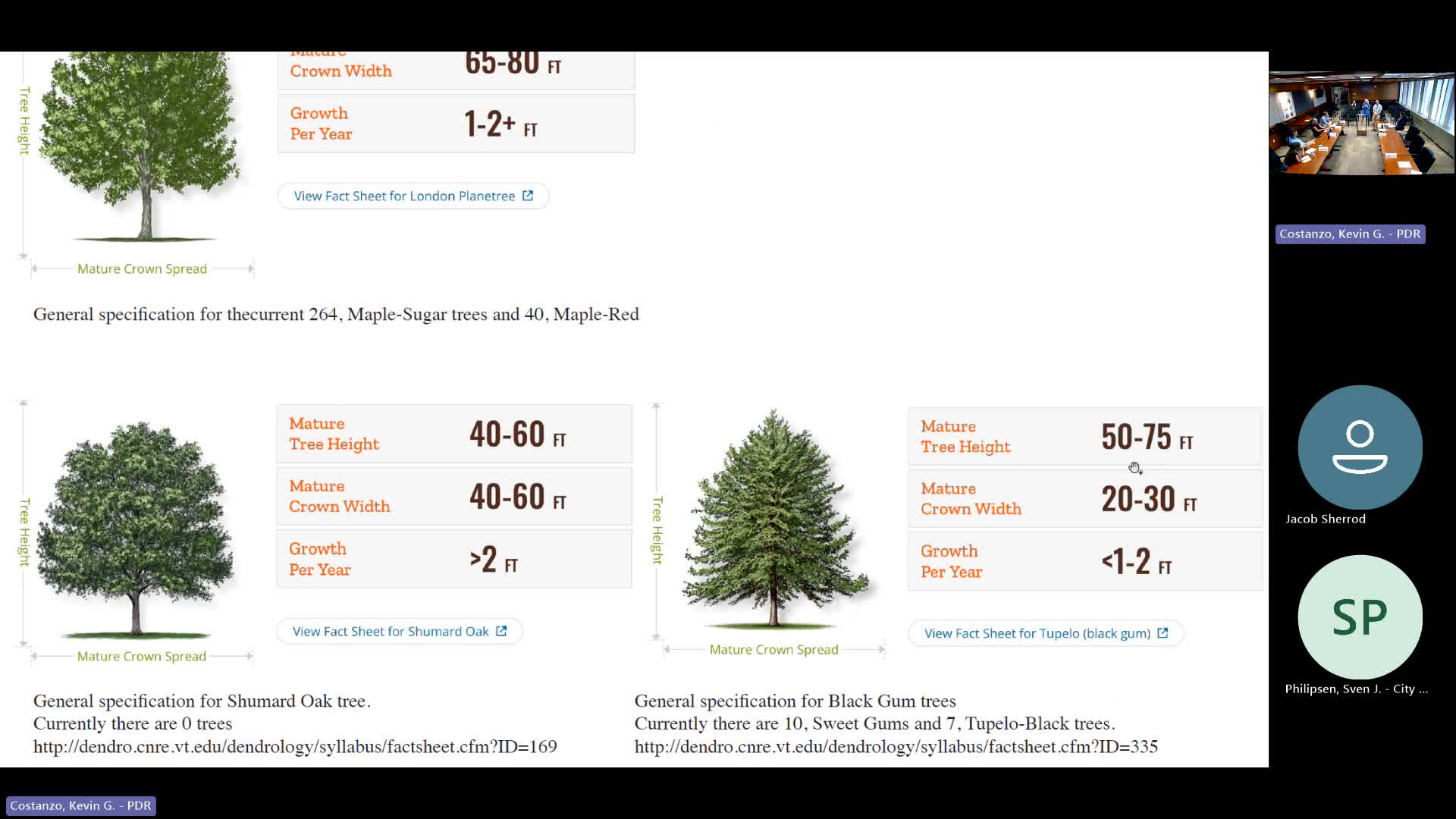
Massey and Knuckles said their survey and consultations with arborists led them to recommend two species — the Shumard oak (Quercus shumardii) and black gum (Nyssa sylvatica) — as candidates that match the avenue’s historic canopy scale, fall color and non‑fruiting requirements, while providing greater resilience than sugar maple. They proposed block‑by‑block selection so each block would be largely consistent while alternating species between blocks to avoid a future monoculture.
City urban forester Michael Webb and DPW staff participated in the discussion and confirmed the city’s existing permitting process for street‑tree planting and removal. Webb noted sugar maples are increasingly stressed in local conditions and supported diversifying species. Staff advised the neighborhood to present a planting plan and work through the department’s permit process; neighborhood leaders said many residents are prepared to contribute funding and wanted clear, city‑endorsed guidance so residents do not install inappropriate trees independently.
UDC members praised the neighborhood’s proactive survey and asked staff and neighborhood leaders to coordinate next steps, including determining an actionable planting sequence, confirming nursery availability for proposed species and routing a proposed planting/maintenance plan through the city’s tree‑permit process and, if appropriate, Historic Resources input. The committee did not take formal regulatory action but asked staff to advise on the permitting timeline and next steps.