Get Full Government Meeting Transcripts, Videos, & Alerts Forever!
Get email alerts on the Governance topic
No spam. Unsubscribe anytime.
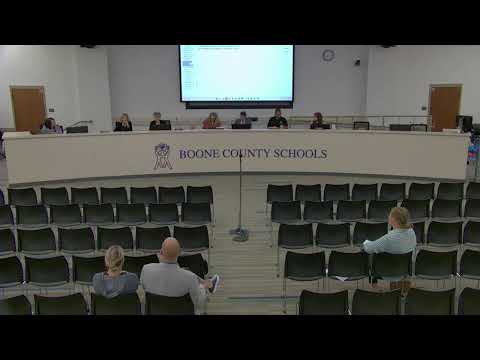
Boone County board makes legislative committee a standing committee, adds cochair roles for committees
Summary
After extended debate the board voted 4–0 to revise official board committees, add cochair roles for greater board involvement in agendas and convert the legislative committee into a standing committee with flexible meeting cadence.
The Boone County Board of Education voted 4'0 to revise its official committee structure and add cochair roles for board members, and after extended discussion converted the legislative committee from an ad hoc listing to a standing committee.
Superintendent Dr. Hauswald presented the July'5 to December'5 revision of board committees, noting changes that include articulating a cochair role so a board member can help shape committee agendas and creating a Student and Staff Experiences Committee to review retention and workforce data. "We did stay interviews this year of approximately 259," he said in describing where staff data would feed committee work.
Debate and the legislative committee: several board members pushed for the legislative committee to be elevated to a standing committee with a more regular meeting cadence, arguing the board needed sustained engagement with state legislators and earlier preparation. One board member said the legislative committee should meet monthly or every other month rather than wait until October to prepare for the legislative session.
District staff explained the ad hoc label had been chosen to allow schedule flexibility when legislators or stakeholders were only available at nonstandard times; other members said that ad hoc status risked underutilization. The board eventually agreed on a compromise: make the legislative committee a standing committee but allow flexibility in meeting frequency so it can meet more often during peak legislative months.
Why it matters: board members described legislative engagement as critical to local priorities, including funding and policy topics such as universal preschool. Board members said earlier and more frequent legislative work will help the district's advocacy and planning.
Vote and next steps: the motion to approve the committee revisions with the amendment to make the legislative committee a standing committee passed 4-0. The board instructed staff and committee chairs to publicize meeting times and to ensure meetings remain open to the public.
Ending: Board members asked staff to provide meeting cadence proposals and to report committee activity to the full board.