Get Full Government Meeting Transcripts, Videos, & Alerts Forever!
Get email alerts on the Nonprofit Funding topic
No spam. Unsubscribe anytime.
Kodiak nonprofits press assembly for FY26 funding as borough reviews budget shortfalls
Summary
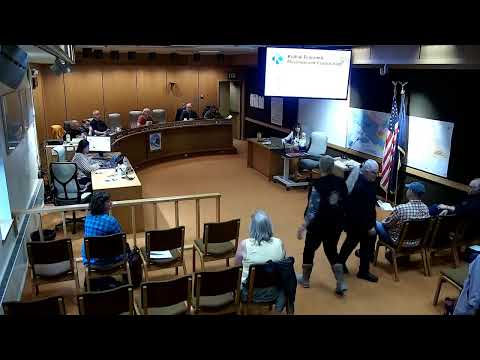
At a July 10 Kodiak Island Borough work session, volunteers and nonprofit leaders urged the assembly to maintain or increase funding for local programs addressing addiction recovery, reentry services, shelter operations and local public broadcasting while staff outlined gaps in the FY26 nonprofit budget and possible sources to cover shortfalls.
Citizen speakers and nonprofit representatives used the assembly’s public-comment period to press for continued borough support of volunteer and social-service programs, then stayed for the assembly’s initial review of FY26 nonprofit funding requests.
Sean Olsen, representing the Kodiak Area Mentor Program, asked the assembly to “continue to support the Kodiak Area Mentor Program.” He said the program is 100% volunteer-run and reported that, from Jan. 3 to June 27, it had helped 112 children and 584 adults; he also said he spent 363 hours mentoring inmates this year.
Tammy Scribe, a peer-support specialist and founding member of Kodiak Reentry, told the assembly Kodiak Reentry is part of the Alaska Reentry Partnership and provides reentry planning, housing assistance, employment help and peer support. "We are part of the Alaska reentry partnership, the largest the largest collaborative of individuals, organizations, community advocates, and public entities that support life after incarceration," she said.
Christina Van Hoagmoet and Andy Olsen, speaking for public radio station KMXT, asked the borough to continue supporting the station in FY26. Van Hoagmoet said federal grant funding is at risk and estimated that a federal grant loss could cut the station’s funding by up to 25 percent. Susan Smith, director of Brother Francis Shelter, summarized last year’s shelter work, saying the shelter provided 3,636 bed nights, 14,651 meals and served 211 unduplicated clients in overnight services; she described increased demand and asked for continued borough support.
Other public commenters raised separate issues: Leanna Harrington described repeated unresolved service problems with Alaska Waste and asked the borough to consider strengthening community representation on the solid-waste advisory board; Sandra West urged continued investment in trails and outdoor recreation; several speakers urged continued funding for the Kodiak Area Mentor Program.
On the staff side, borough finance and management staff walked the assembly through the nonprofit funding worksheets and historical awards. Municipal staff reported a shortfall in the health and social-services nonprofit category of about $75,000 (this gap will increase slightly once a Kodiak Reentry request is re-categorized into the health line). Education, culture and recreation and college/library pools also show mismatches between budgeted amounts and requests.
Assembly members discussed several options: (1) moving $30,200 from the education/culture/recreation pool into health and social services (staff indicated a surplus in that category), (2) using a fisheries economic-development project fund (approximately $98,437 on hand, comprised largely of fishery-disaster assistance) to cover a $28,000 request from the Kodiak Seafood & Marine Science Center because those activities are fisheries-related, and (3) drawing on the borough’s opioid-settlement fund (staff reported $122,877 on hand) for eligible addiction- and reentry-related programs. Borough staff cautioned that opioid-settlement receipts are episodic and that fund restrictions must be confirmed before committing money.
Assembly members asked staff to confirm legal and restriction details before reallocating funds; the manager and finance staff said they would return with the specific language and recommendations at upcoming meetings. Assembly members also encouraged applicants to appear at future work sessions to present case details.
Next steps: staff will verify restrictions on the opioid-settlement and fisheries project funds, report back with draft allocations, and continue nonprofit application review at scheduled future work sessions and the Aug. 7 regular meeting.