Get Full Government Meeting Transcripts, Videos, & Alerts Forever!
Get email alerts on the Transportation Trails topic
No spam. Unsubscribe anytime.
Fairfax City reviews Pickett Connector Trail plans as staff weigh tree loss, SmartScale funding and Fairfax Water alignment
Summary
City staff told the Fairfax City Council on July 8 that the Pickett Connector Trail would add about 1,300 linear feet of paved trail linking Fiese Park to Fairfax Boulevard but would cut into a forested floodplain and require removal of dozens of trees.
City staff told the Fairfax City Council on July 8 that the Pickett Connector Trail would add about 1,300 linear feet of paved trail linking Fiese Park to Fairfax Boulevard but would cut into a forested floodplain and require removal of dozens of trees. The presentation said the project’s $5 million construction estimate is fully funded by a $6.4 million SmartScale award, and staff reported $650,000 has been spent on preliminary engineering to date.
The stakes for trees and future maintenance rose during the session after staff said Fairfax Water plans a north–south water main along a largely overlapping alignment about 10 years from now. City transportation director Wendy Sanford said the overlap would mean the paved segments disturbed now would be “disturbed again” when Fairfax Water installs the main, and Fairfax Water told staff it intends to use much of the same alignment to limit additional impacts. Sanford said the two shorter bridges in the plan would avoid overlap with Fairfax Water work and that the city’s urban forester characterizes the project’s forest impact as low because much of the area contains invasive species that the project could allow the city to remove.
Why it matters: The trail was identified in the city’s multimodal and parks plans to close a missing link in an off‑road network connecting the Cross County Trail, George Snyder Trail and other routes. But neighbors, environmental advocates and some council members have questioned building a new off‑road path where a close county connection already exists and where utility work may require the corridor to be cleared again a decade later. The SmartScale award pays for construction but also creates a repayment obligation to the state if the city cancels the project after federal funds were accepted.
Staff outlined three paths forward: (1) continue with the current alignment and unpause the project, (2) modify the alignment (for example, move it to the west side of Pickett Road), which would require a SmartScale rescoring and city‑funded redesign, or (3) cancel the project and repay roughly $650,000 spent to date. Sanford said a west‑side realignment would likely increase right‑of‑way and construction costs and that a formal rescoring can take about a year and would require roughly 15%‑level engineering and cost estimating before submission to VDOT’s SmartScale process.
Details from staff and consultants: Sanford said the design currently calls for two bridges (about 125 feet and 50 feet) and that the trail mostly parallels Pickett Road, skirting the Fairfax Water pump station. She told council the SmartScale award was received in FY2018 and that $650,000 has been spent on preliminary engineering. The project team reported 91 trees slated for removal if the city proceeds; staff said 68 of those trees overlap the trees Fairfax Water expects to remove for its future water main, leaving a net of about 23 trees attributable to the city project alone. Anna Stafford, the city urban forester, reviewed the alignment and recommended shifting it away from some high‑quality trees while using the opportunity to remove invasives the city would not otherwise fund.
Public comment and neighbor concerns: Philip Latasa, speaking for Friends of Accotank Creek, urged council to forego the Pickett Connector Trail, saying the connector would run “through the forested floodplain” and that the route duplicates an existing connection “within a literal stone’s throw.” Nearby resident Susan Kyler asked staff to analyze alternative alignments and funding impacts, including whether the city would be liable if the project costs exceed current estimates; staff confirmed the SmartScale project agreement would require repayment of funds if the project is canceled.
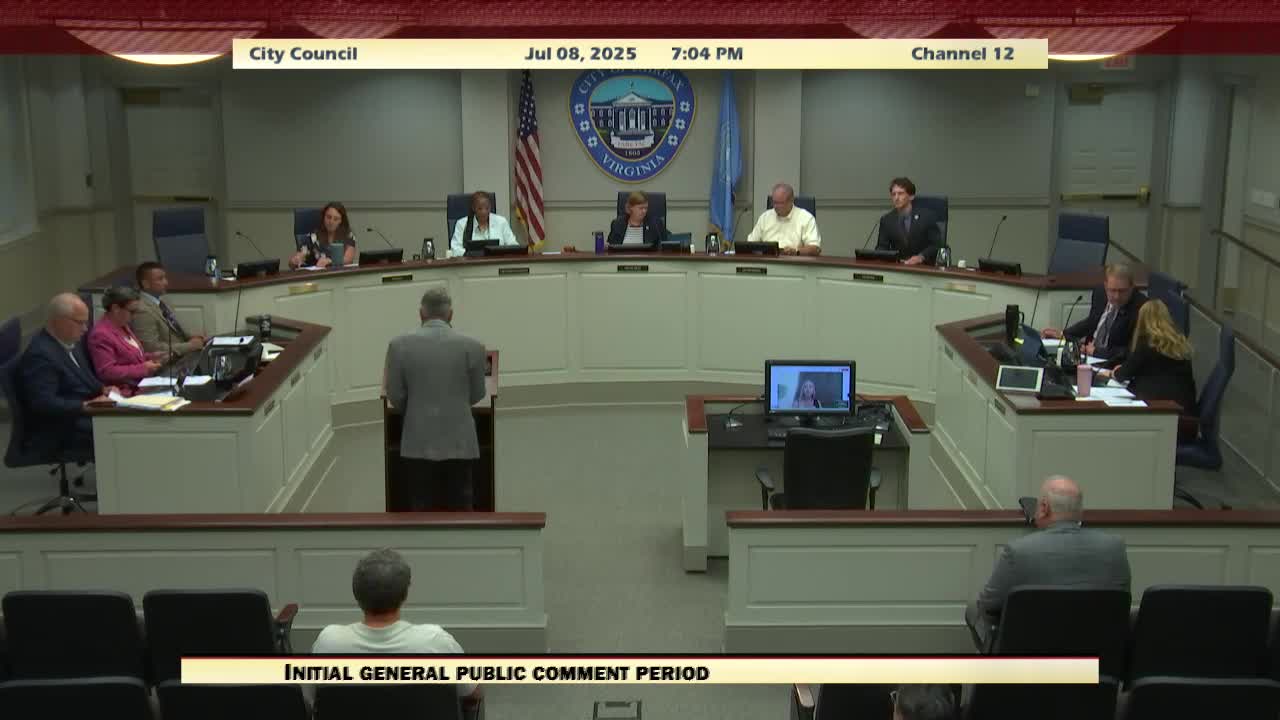
Council response and next steps: Council members asked targeted questions about flood risk, bridge design, right‑of‑way needs and maintenance obligations. Public works staff and the capital projects manager said parks would maintain the trail and estimated relatively low operating costs in early years, with potential modest annual repairs after a decade. Council did not take action to unpause or cancel the project during the work session; instead members agreed to reconvene when all council members are present to consider whether to continue, modify, or cancel the project and whether to pursue a SmartScale rescoring for an alternate alignment.
Planning and procurement implications: Staff said a west‑side alternative would likely require survey, environmental and engineering work that the city would have to fund (staff estimated preliminary engineering to support a rescoring could be on the order of six figures) and that Fairfax Water’s future procurement and its 15‑foot maintenance corridor would limit replanting within the shared easement area. If the city continues as‑designed, staff said Fairfax Water has told the city the water main would likely come 8–12 years after construction, at which point Fairfax Water would repave asphalt segments that overlap their work and would shoulder that repaving cost.
What council asked staff to do: Council members asked staff to provide additional cost estimates for alternative alignments, to report on public outreach performed during the project’s earlier design and the rationale for the current east‑side alignment, and to return with a recommendation and costed options when the full council can consider the matter.
Ending: Council members left the item paused pending a future meeting with a full council quorum to decide whether to proceed, redesign or cancel the Pickett Connector Trail project; staff will supply supplemental costing, right‑of‑way and rescoring details ahead of that decision.