Get Full Government Meeting Transcripts, Videos, & Alerts Forever!
Get email alerts on the Prendergast Variance topic
No spam. Unsubscribe anytime.
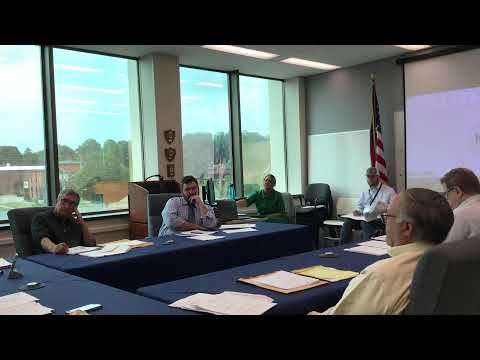
Zoning board renews area variance for 626 Prendergast; board says prior conditions (six-foot fence) remain in effect
Summary
The Jamestown Zoning Board of Appeals renewed an area variance for 626 Prendergast Avenue that permits a two-family dwelling on a substandard lot and confirmed that prior conditions — including a six-foot privacy fence and protections for adjacent property during construction — remain in effect.
The Jamestown Zoning Board of Appeals approved a renewal of an area variance for 626 Prendergast Avenue to allow a two-family dwelling on a lot smaller than required in the R-2 zone.
The petition filed by Long Associates Architects lists a proposed lot size of about 6,025 square feet and a proposed width of 50 feet where the R-2 zone requires a minimum lot size of 10,000 square feet and a 70-foot width (Section 300-0306c). The board reviewed the application and heard public comment from nearby property owners.
Dr. James Scarpino, who said he has practiced next to the property for 39 years, told the board he was concerned that conditions agreed to in the previous approval — including a six-foot privacy fence and protections to prevent damage to his adjacent parking area during construction — would continue under a new zoning officer. Board members and staff assured him that prior conditions remain part of the approval and that an approved variance that was renewed continues to carry previous conditions.
Tom Whitney, identified at the meeting as an executive director for one of the applicant organizations, and the project representative indicated the application is a renewal; the group plans to reapply for state housing funding in the fall and expects to know whether funding is approved within a year. The board said the original one-year approval period requires reapplication even when the development plan itself has not changed.
The motion to approve the area variance was on the floor and seconded; the transcript records the motion and a second but does not include a roll-call count. The board noted that construction timing, sequencing and any building permits will be addressed through later permitting and are not resolved by the variance renewal itself.
The board specifically retained the six-foot fence and construction-protection expectations that were imposed in the earlier approval, addressing the neighbor’s concerns but leaving engineering and scheduling details to the construction permit process.