Get Full Government Meeting Transcripts, Videos, & Alerts Forever!
Get email alerts on the Affordable Housing topic
No spam. Unsubscribe anytime.
Eau Claire housing authority proposes ADU/manufactured‑housing pilot as zoning, tree and park fees could raise costs
Summary
At an unofficial Housing Opportunities Commission meeting, City Housing Authority Executive Director Jessica Olson outlined plans to pilot small one‑bedroom rental units and explore manufactured or modular homes while staff warned pending zoning, tree preservation and park impact fees could increase development costs.
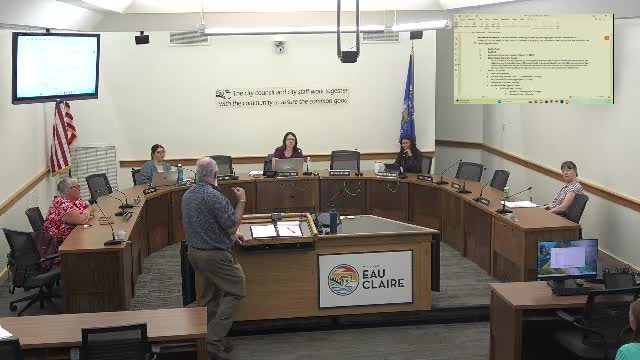
At an unofficial meeting of the Housing Opportunities Commission in Eau Claire, Jessica Olson, executive director of the City Housing Authority and housing division manager for the City of Eau Claire, described plans to explore accessory dwelling units (ADUs) and manufactured/modular housing as a way to add one‑ and two‑bedroom rental units for low‑income residents.
Olson said the housing authority owns and operates about 300 rental units and is responding to a long waiting list: “we have over 700 families at this point on our waiting list, and 300 units which are occupied,” and reported that, “as of May … there’s 524 households on our wait list for a 1 bedroom unit.” She described the plans as exploratory and said funding remains the central constraint.
The meeting combined three threads: a recap of the zoning code update and plan commission recommendations, discussion of a proposed tree preservation ordinance and related fee schedule, and Olson’s presentation of possible housing prototypes and financing partnerships. Because the commission did not have a quorum, the session was informal and no formal actions or votes were taken.
Why it matters: zoning changes, tree‑preservation requirements and park impact fees in the draft code would directly affect the cost and feasibility of infill and small‑scale housing. At the same time, the housing authority and the city’s Redevelopment Authority (RDA) are examining options to acquire sites, subsidize development and operate rental units that would remain publicly owned.
Key zoning and fee details Madison, who opened the update for the commission, summarized the plan commission’s recommendation on the zoning code. The plan commission recommended two amendments: allowing garages on two‑, three‑ and four‑unit buildings to project 15 feet in front of the house (matching single‑family garages) and reducing required building‑design elements for some multifamily buildings from three of seven items to two. Staff said any amendments adopted by city council that were not previously reviewed by the plan commission must be returned to the plan commission for review before final adoption, a process they attributed to state statute.
Staff also outlined proposed tree preservation standards in the draft code. A “high‑value tree” would be any tree with a diameter at breast height (DBH) of 12 inches or more. For properties with trees over that threshold, 30% of the aggregate diameter must be preserved, replanted on site or replaced via a fee‑in‑lieu. The draft sets a fee at $400 per inch of tree diameter; staff said the consultant’s materials include an alternative calculation per 2 inches and that the exact method would need council approval.
Staff gave one example of the potential cost impact: removing three 30‑inch white pines on a 15,000‑square‑foot lot could trigger roughly $8,400 in fee‑in‑lieu costs in addition to removal and replanting expenses. On a densely wooded one‑acre lot, staff estimated tree fees could total roughly $20,000, but noted that site specifics and tree species would change the figure.
Park impact fees in the draft code were also discussed. Staff said the draft lists single‑family park impact at $2,355 (total per home), duplex‑to‑quadplex at $19.32 per unit, multifamily at $16.82 per unit and mobile/other (potentially ADU) at $22.10 per unit. Staff emphasized those dollar figures were part of a newly released spreadsheet on the Century Code updates website and are proposed amounts that council would set later.
Housing authority proposal and financing constraints Olson presented an example ADU plan — a roughly 560‑square‑foot, one‑bedroom unit — and said the housing authority is exploring whether it could place one or more of these on city‑owned parcels, infill lots or potentially on excess parkland. “This is kind of a mix between like a tiny house … perfectly suitable for a single person or even a couple,” she said.
She identified funding sources and constraints. The housing authority has about $75,000 in HOME (Home Investment Partnerships Program) funds that can be used with income restrictions tied to the grant; Olson and staff also noted $250,000 remains available now in a flexible housing fund and the capital improvement program (CIP) includes $250,000 borrowed funds for the next fiscal year. Staff cautioned that CIP borrowed funds must be used for tangible capital expenses and cannot be repurposed for rental subsidies or recurring operating support.
Olson said the housing authority hopes to pilot a small number of rental units (she mentioned a goal of three or four pilot units) but that the $75,000 in HOME funds would not cover development costs alone.
Manufactured, modular and panelized options Commissioners and staff discussed differences between manufactured homes, modular homes and panelized construction. Staff said units placed on a permanent foundation (axles removed, slab on grade and utility hookups per building code) are treated differently from units left on wheels and axles, affecting inspection, licensing and financing. Participants noted financing for manufactured housing commonly has shorter terms (for example, 20‑year loans rather than 30‑year mortgages) and that dealers estimated modular options can add to upfront cost but can also change classification and longevity.
One cost example offered by staff or a developer contact was an $80,000 per‑unit estimate for a unit “placed” on a prepared pad with full connections; staff emphasized site work, utilities and lot conditions materially affect total cost. A dealer quoted at a separate conference was reported to say moving from manufactured classification to modular could add roughly $100,000 in some cases; staff said that figure depends heavily on build method and foundation.
RDA role and ownership models Aaron, speaking for RDA staff, described several tracks the RDA is exploring. The RDA can use bonding or acquisition authority to assemble sites, acquire blighted properties for redevelopment, and own assets that the housing authority would operate under contract. Aaron said draft maps and program ideas will go to the RDA board soon; if the board approves a redevelopment district, council review follows and the RDA can then act within the district.
Commissioners’ questions and concerns Commissioners asked about tenant selection, length of tenancy and property maintenance. Olson said the housing authority generally seeks permanent rental housing with one‑year leases renewed as appropriate, but that some restrictions derive from funding source rules (for example, HOME funding income limits). She said some HUD rules require a household to leave public housing after 24 consecutive months if they are over income.
Several commissioners urged caution about displacement and gentrification when redevelopment is pursued in low‑income neighborhoods, noting past downtown redevelopment that resulted in higher‑value reuse and limited replacement of affordable housing. Others raised practical concerns about unit size and accessibility for seniors and people with mobility needs.
Next steps and public process Staff said they will model how many ADU/manufactured units could fit on typical infill lots under the proposed zoning code (including carriage‑court or garden‑court configurations that allow clustering around shared drives). The RDA will present a draft area of focus at its next meeting and staff will generate technical density and cost modeling in the coming weeks. Because the HOC did not have a quorum, no endorsements or votes were taken; staff reminded the group that council public hearings and votes on the zoning code and any amendments will occur in the coming weeks, and that any new amendments adopted by council would need to return to the plan commission for review before final adoption per state statute.
Olson asked for informal feedback and volunteers to speak at an upcoming council session about the plan commission recommendations: a commissioner nominated “Laura” to speak on behalf of an advocacy group at the council public hearing.
Ending Staff and commissioners said they will return with modeling on unit counts per lot, refined cost estimates and funding scenarios; the RDA will continue to shape its redevelopment district and present a draft to the RDA board. Because the meeting was unofficial and no formal votes were taken, the commission will discuss implementation and possible pilot projects at a future meeting with a full quorum.