Get Full Government Meeting Transcripts, Videos, & Alerts Forever!
Get email alerts on the Cannabis Tax Policy topic
No spam. Unsubscribe anytime.
Committee backs temporary freeze on planned cannabis excise increase in AB 564
Summary
The committee voted to pass AB 564, which would keep the cannabis excise tax at 15% for a multiyear period rather than letting a recently scheduled 25% increase take effect; supporters said the pause will stabilize the licensed market, opponents said it will cut funds for youth, environment and enforcement.
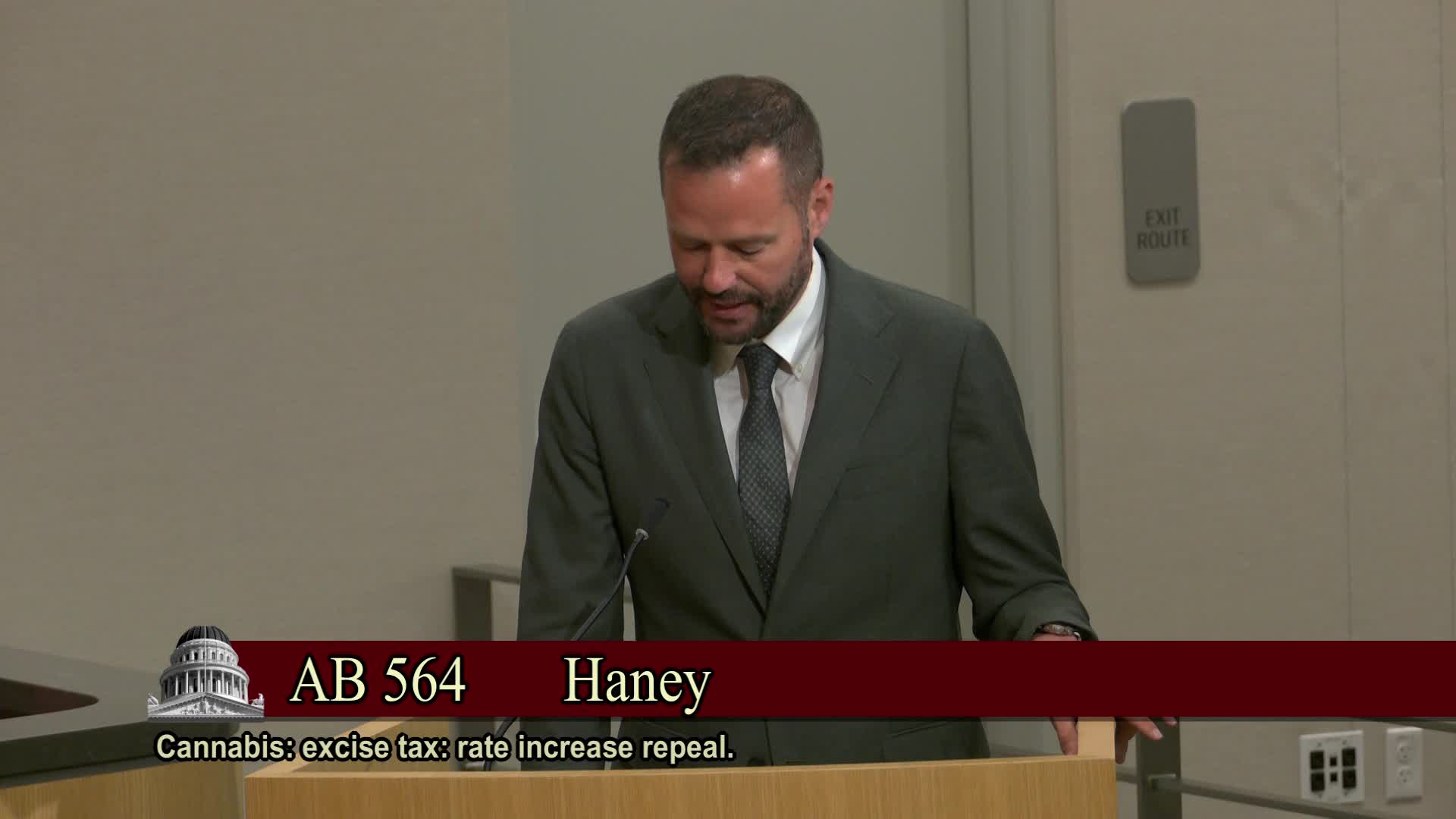
Assemblymember Haney presented AB 564 to the Senate Revenue and Taxation Committee and said the bill would "provide tax relief to California's struggling cannabis industry by reversing an unprecedented 25% excise tax increase." Haney told the committee the goal is to delay an increase that she and supporters say will force more legal retailers and suppliers to close and push consumers to the illicit market.
Supporters included cannabis business owners, labor and equity operators who described closures, rising rents and uninsured losses. Camille Ferguson, owner of several cannabis businesses, told the committee her dispensary was burglarized twice in six months and cited high rents and insurance problems; she said a 25% excise increase would accelerate closures. Budtender Joshua Thube said customers were cutting purchases after a recent excise increase and that some patients had left empty‑handed because legal options had become unaffordable.
Opponents — a broad group of tribal, youth, environmental and children‑service organizations — warned that AB 564 would reduce funding previously allocated under Proposition 64 for childcare, youth programs, environmental cleanups and grants to local government to enforce cannabis laws. Witnesses including Cornesca (Pascua Yaqui tribal nation/YOUTH FORWARD) and Corey Brown (Resources Legacy Fund) told the committee the DTFA and other analyses show net funding losses totaling hundreds of millions of dollars over the multiyear window the bill targets. Brown testified that the measure would result in a net loss to children, the environment and law enforcement of about $900 million over five years.
Senators questioned witnesses about market size, whether lower taxes would bring consumers back into the regulated market, and whether enforcement funding cuts would reduce the state's ability to crack down on illegal grows. Some committee members said they supported stabilizing the legal market; others emphasized that the state must preserve funding for tier‑three (Prop 64) programs and asked the author to work with stakeholders on assurances. The author said she supports both stabilizing the legal market and protecting funding but argued a pause gives the industry time to stabilize and for further policy solutions (market access, enforcement) to take effect.
The committee accepted amendments and voted to pass AB 564 to the Committee on Appropriations. The clerk recorded the motion and committee tally (committee recorded outcome: passed; roll calls recorded varying tallies in session but the committee summary recorded the measure as advancing). The bill will go to appropriations for fiscal review and potential budget language to protect tier‑three programs.
Ending: AB 564 advances to the appropriations process where fiscal and distributional effects will be examined further and the author committed to continue negotiations to protect funding for youth, tribal and environmental programs while stabilizing licensed businesses.