Get Full Government Meeting Transcripts, Videos, & Alerts Forever!
Get email alerts on the Human Services topic
No spam. Unsubscribe anytime.
DAS and Meals on Wheels San Francisco win four‑year $37.1 million grant for home‑delivered meals; funding flatness may lengthen wait lists
Summary
The Department of Disability and Aging Services received committee approval to enter a four‑year grant with Meals on Wheels San Francisco valued at about $37.1 million for home‑delivered meals; staff said flat funding and rising costs will reduce total meals provided and expand wait lists, particularly for multicultural meal service.
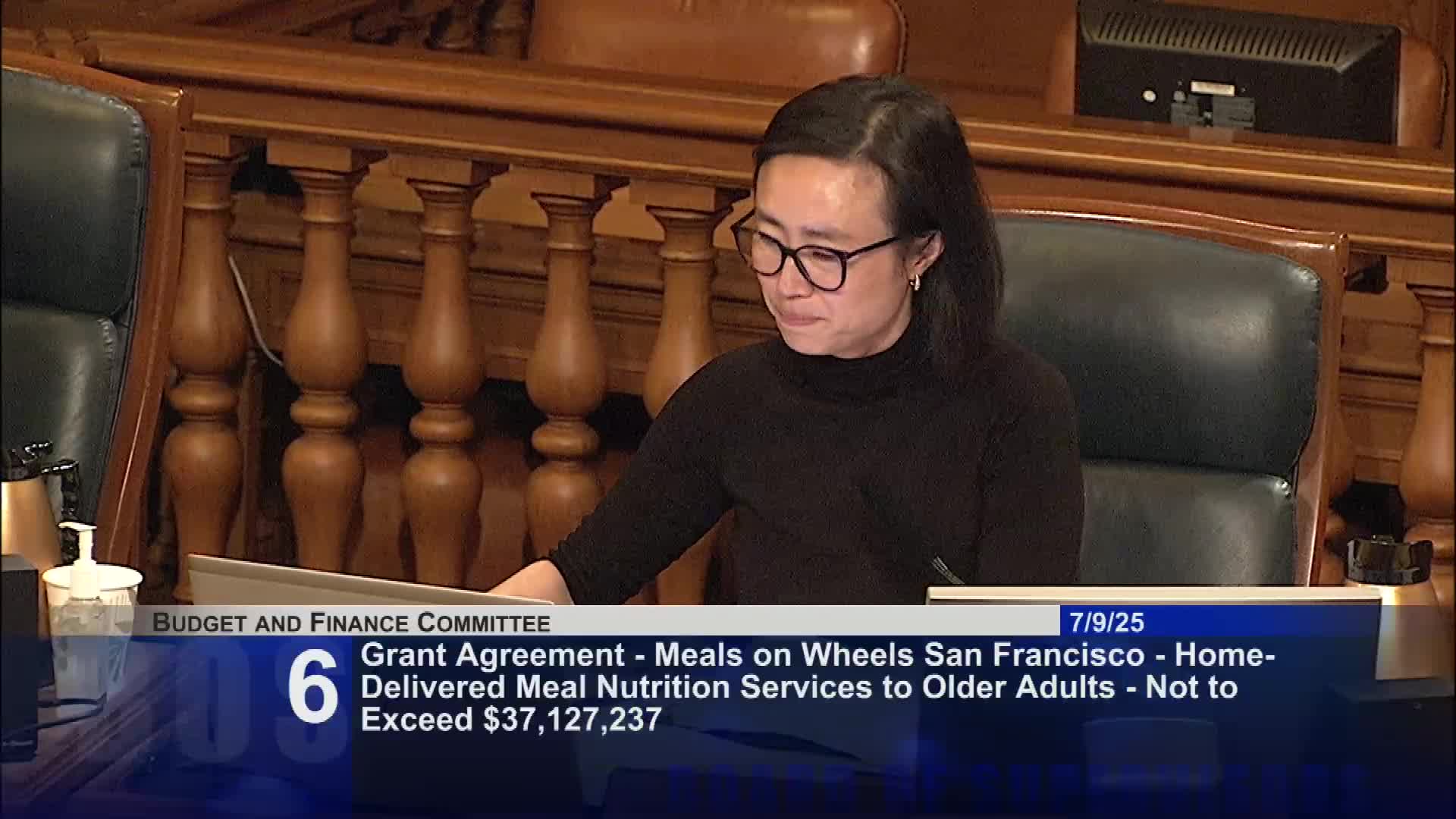
The Budget and Finance Committee voted July 9 to forward a four‑year grant agreement between the Department of Disability and Aging Services (DAS) and Meals on Wheels San Francisco for home‑delivered meals to older adults, with a not‑to‑exceed value of approximately $37,100,000 (term July 1, 2025 through June 30, 2029).
Tiffany Kearney, lead nutritionist at DAS, said Meals on Wheels is the largest provider in the city’s home‑delivered meal network and serves clients in every supervisorial district. The department reported recent performance: last fiscal year the provider delivered 99% of contracted meals and in FY24–25 delivered at least 96% of contracted meals, producing more than 1.3 million meals for over 3,800 seniors.
The Budget and Legislative Analyst noted in its report that flat funding from the city, combined with rising food and labor costs, will reduce the total number of meals the program can finance next year—producing an estimated 27% reduction in meals compared with prior funding levels and lengthening a wait list. DAS staff said there were about 150 clients on the wait list for multicultural meals as of the recent quarter, up from single‑digit counts earlier in the year. In response to supervisor questions, Meals on Wheels CEO Jennifer Steele (public commenter) said the nonprofit remains committed to serving all existing clients, and DAS said it would work with the provider to prioritize those most at risk.
The committee forwarded the grant to the full Board with a positive recommendation (Dorsey, Engardio, Chan — 3 ayes). Committee members requested follow‑up coordination between DAS and supervisors to explore funding solutions to reduce wait lists.